New York City Bill Seeks to Restrict Police Unit at Protests
A new NYC bill introduced Thursday seeks to bar the NYPD's Strategic Response Group from protest deployments, reviving a years-long fight over a unit whose budget grew from $13M to $133M.

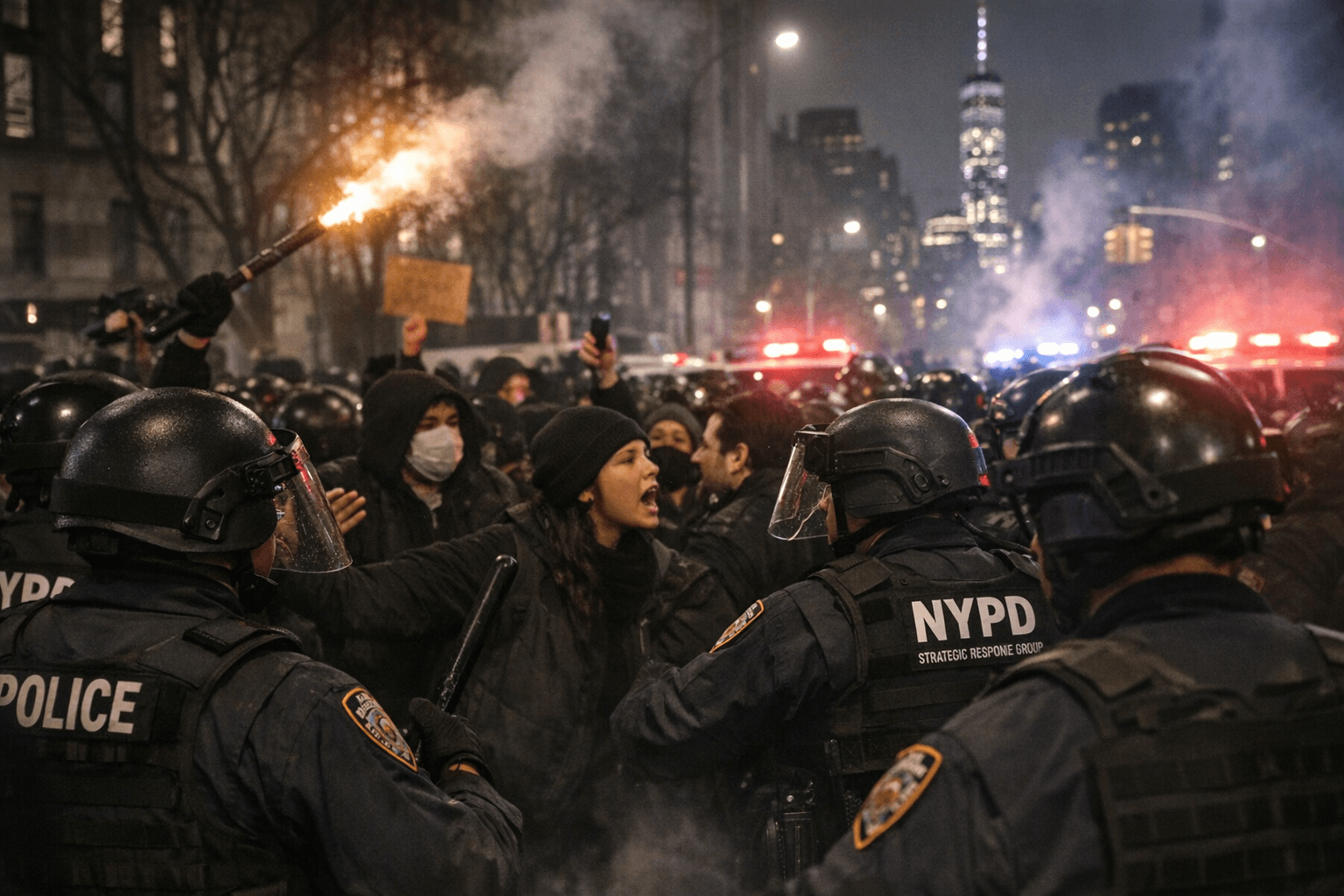
The City Council introduced a bill that would prohibit the NYPD from sending the Strategic Response Group to nonviolent demonstrations, reigniting a battle over one of the department's most contested units. The legislation lands as Mayor Zohran Mamdani is separately pressing to dismantle the unit entirely, and as a recent failed bombing near a protest site at Gracie Mansion has sharpened the debate over whether one unit should handle both counterterrorism and crowd control.
The Strategic Response Group was formed in 2015 by then-NYPD Commissioner Bill Bratton as a way to consolidate eight separate borough task forces, originally framed as a counterterrorism asset. The SRG, which includes at least 700 officers, started as a counterterrorism unit a decade ago but was quickly deployed to protests, and its budget has increased from $13 million to $133 million since 2015 with no public oversight.
The unit's record at demonstrations has generated years of litigation. A Department of Investigation report from December 2020 found that the SRG's tactics "may have unnecessarily provoked confrontations between police and protesters, rather than de-escalating tensions." In one incident, SRG officers descended on protesters in Mott Haven in the Bronx before the city-imposed curfew, arresting hundreds and injuring over 60, conduct Human Rights Watch said "amounts to serious violations of international human rights law." A 2023 settlement subsequently placed new limits on the unit's protest deployments.
The current bill echoes prior legislative efforts. New York City Councilmember Chi Ossé previously rallied with advocates to launch the Communities United to Reject Brutality Act, legislation which would stop the NYPD from deploying the SRG to protests and other First Amendment-protected activity. In addition to ending the SRG's deployment at protests, the earlier version of the bill would also ban the NYPD from kettling protesters, deploying tear gas, indiscriminately targeting protesters with pepper spray, using acoustic weapons, and would prohibit the SRG's tactic of using bicycles to attack protesters.
The debate now has a notable voice from within the department's own history. Anthony Raganella, a retired NYPD deputy inspector who said he was integral in the formation of the Strategic Response Group, told Gothamist he now backs a complete overhaul of the unit. Raganella said he first had qualms about the SRG's design soon after it launched, partly because officers in the unit were being trained to carry heavy weapons while also being trained to respond to peaceful protests. His concern about what a reorganization might actually produce is blunt: "My concern is that the department, if left unchecked, is just going to rebrand this and give it a new name and it's going to be the same old, same old, and we're going to end up right back where we started again," he said.
Mayor Mamdani has been unequivocal about his intentions. "Mayor Mamdani remains committed to disbanding the Strategic Response Group, and the administration is currently working with the police department on how to do so in a manner that both keeps New Yorkers safe and protects First Amendment rights," City Hall spokesman Sam Raskin said. Mamdani cited the unit's competing responsibilities as a reason why he believes the SRG should be disbanded, saying: "We don't believe there should be a unit that has both counterterrorism responsibilities and responsibilities to responding to protests."
Civil liberties groups say the settlement that went into effect in late 2025 does not go far enough. Molly Biklen, the legal director of the New York Civil Liberties Union, has said, "The SRG should not be deployed as a first responder to protests. We've seen with too many times, with too many protests, that doing that leads to the very violence at issue." SRG members have higher misconduct complaints than the NYPD as a whole, and the SRG's pattern of abuse has drawn condemnation from international human rights groups and litigation brought by the NYCLU and Legal Aid Society.
Since October, the NYPD has been operating under a phase of the settlement that creates a four-tier response system for police at protests, a framework that supporters of the new bill argue remains insufficient so long as the SRG itself retains the authority to show up at demonstrations at all.
This article was produced by Prism’s automated news system from verified source data, official records, and press releases, then run through automated quality and moderation checks before publishing. The system is built and supervised by the people who set the standards it runs under. Read our full AI policy.
Did this article answer your question?

