New York Eases Hudson River Fish Consumption Rules After 50 Years of PCB Restrictions
Pregnant people and children can eat Hudson River striped bass for the first time in 50 years, as PCB declines prompt New York's first consumption guidance easing.
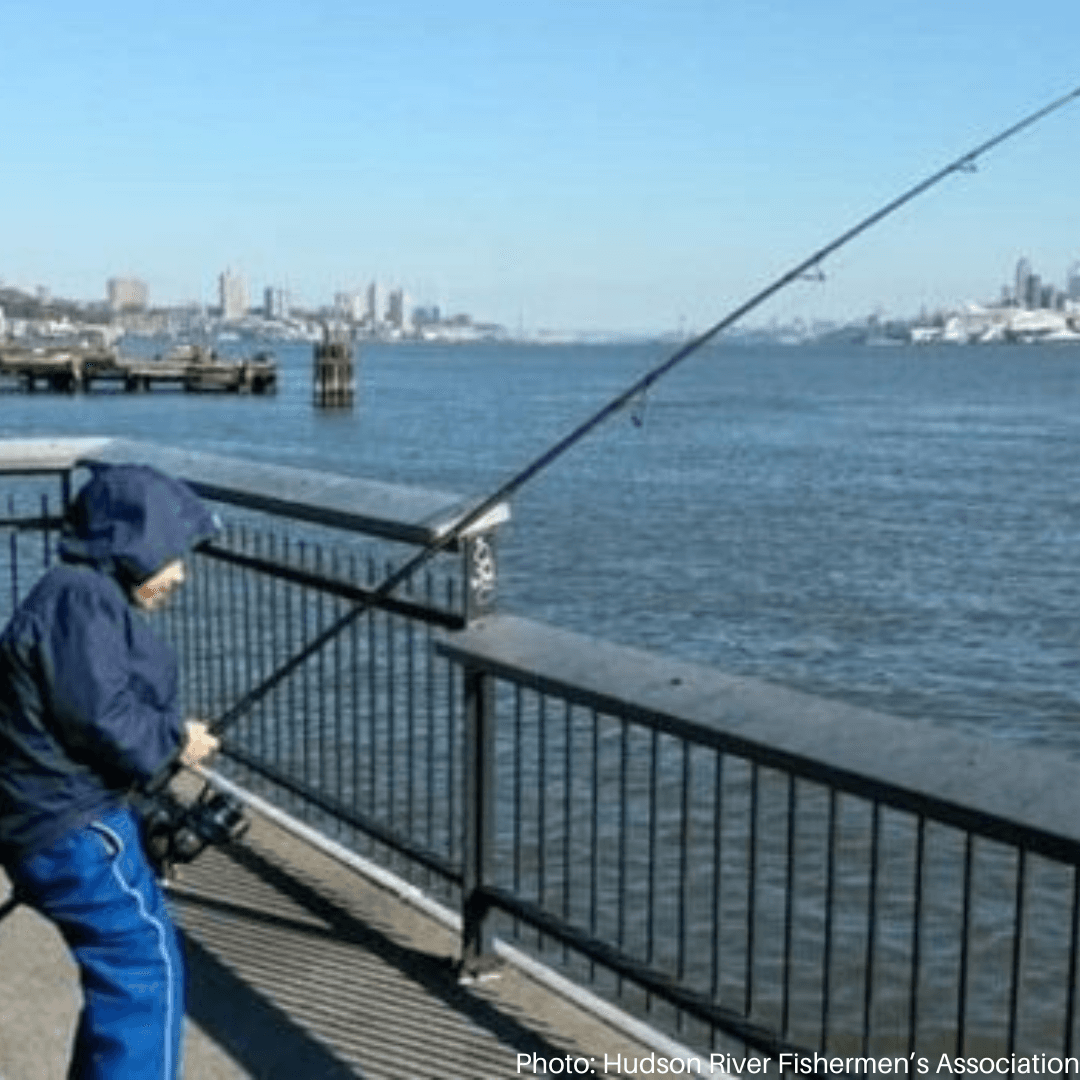
For the first time in roughly 50 years, every member of a family can now eat fish caught from the lower Hudson River. New York State health officials updated fish consumption guidance on April 1, relaxing restrictions for the stretch running from the Rip Van Winkle Bridge in Catskill south to the Battery at the tip of Manhattan, citing measurable declines in polychlorinated biphenyl concentrations in fish tissue.
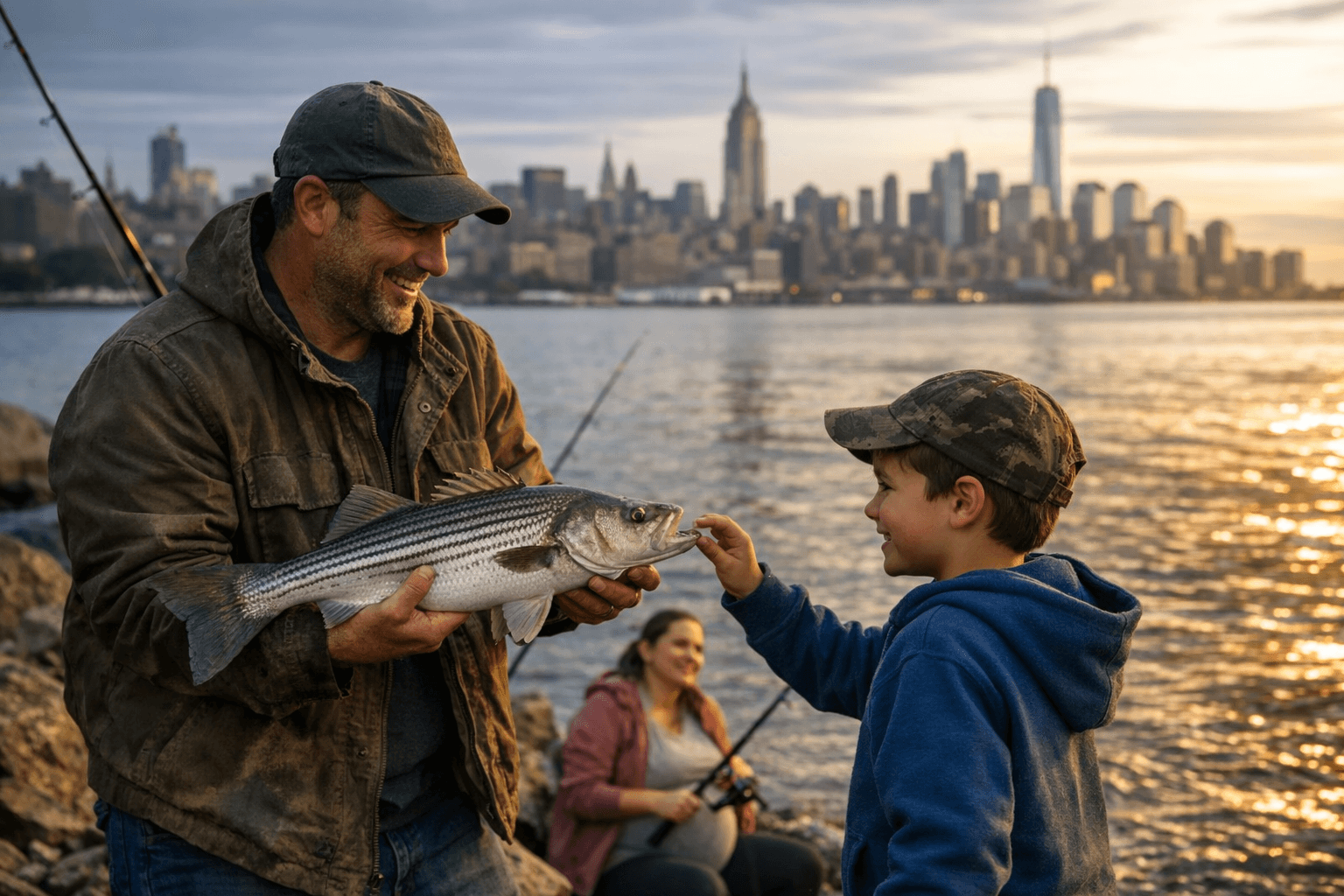
The most significant shift affects the most vulnerable populations: people who can become pregnant and children under 15 are now permitted to eat up to one 8-ounce meal per month of striped bass from that stretch. The general population can now safely eat up to four striped bass meals a month. Both figures represent the first loosening of such guidance since the state began imposing fish-eating restrictions in the 1970s.
State Health Commissioner Dr. James McDonald called it "a great day when the Department can relax guidance for certain fish in the lower Hudson River, allowing people who may become pregnant and children to eat fish from one of the most important fisheries in New York State."
Not all species were cleared. Carp and smallmouth bass remain off-limits for everyone due to persistent PCB levels. Further upstream, between Hudson Falls and the Federal Dam at Troy, the DEC's catch-and-release restriction remains fully in force: no fish may be taken or consumed. The mid-Hudson section between Troy and Catskill saw no advisory changes, as contaminant levels there did not warrant revision.
The updated guidance reflects a contamination story that spans generations. Between approximately 1947 and 1977, General Electric discharged roughly 1.3 million pounds of PCBs into the Hudson from capacitor manufacturing plants at Hudson Falls and Fort Edward. The chemicals, produced by Monsanto under the brand names Aroclor 1242 and Aroclor 1016, accumulated in river sediment and fish tissue. The National Academy of Sciences has described PCBs as "the largest potential carcinogenic risk of any environmental contaminant for which measurements exist," with documented effects on the liver, kidneys, nervous system, and reproductive health.
The EPA designated a roughly 200-mile contaminated stretch as a Superfund site in 1984. After years of GE litigation, the agency ordered dredging of approximately 2.65 million cubic yards of contaminated sediment in February 2002. Work began in 2009 and concluded in 2015 across two phases, at a cost to GE of roughly $1.6 to $1.7 billion.
The revised guidance is grounded in the state DOH's fish monitoring program, which performs several thousand chemical analyses annually on more than 1,000 fish samples, using PCB thresholds established in 2020. Practical cooking steps can further reduce exposure: removing skin and fat before cooking, then letting fat drip away during preparation, cuts PCB intake from a single meal by roughly half. For Hudson River crabs, discarding the tomalley and cooking liquid eliminates the portion of the animal where most PCBs concentrate.
The change carries particular weight for low-income communities who rely on the river as a food source. A 2010 angler survey found 27% of respondents cited obtaining food as a reason for fishing the Hudson that day, underscoring how consumption advisories have historically placed the burden of industrial contamination on those least able to bear it.
Environmental watchdogs including Riverkeeper, Scenic Hudson, and Hudson River Sloop Clearwater have warned that PCB concentrations in the upper Hudson are still not recovering at rates needed to meet original cleanup goals, a finding reflected in the EPA's Third Five-Year Review finalized in January 2025. Simultaneously, the state issued tighter advisories for other New York water bodies due to elevated PFOS, a prevalent form of PFAS "forever chemicals," a reminder that the fight for safe fishing extends well beyond any single contaminant.
This article was produced by Prism’s automated news system from verified source data, official records, and press releases, then run through automated quality and moderation checks before publishing. The system is built and supervised by the people who set the standards it runs under. Read our full AI policy.
Did this article answer your question?