Newport Relocates Skating to Golf Course Pond Amid Drought
Newport officials announced January 7 that, because Gilman Pond, the town’s primary drinking-water source, is at historically low levels from drought, the town will not flood the town common for skating this winter. Instead, the recreation department accepted an offer to use a smaller pond at Newport Golf Course, a move that conserves water but alters logistics for Winter Carnival programming and municipal planning.
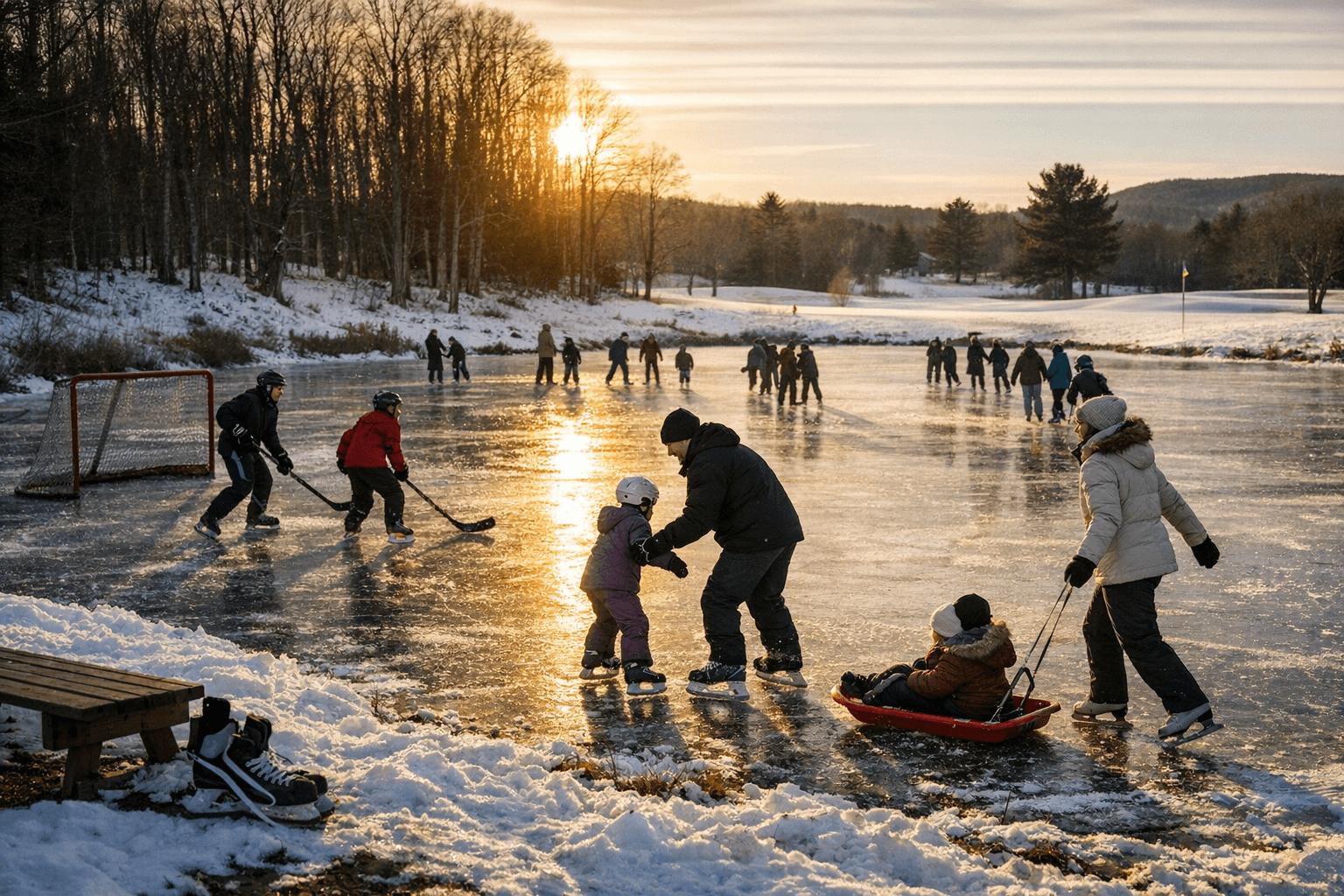
Newport chose an alternative site for public skating after municipal leaders determined that flooding the town common would strain Gilman Pond, the community’s main drinking-water source, now at historically low levels due to drought. On January 7 the recreation department informed the Selectboard that the town would not create the customary rink on the common and instead accepted an offer from the owners of Newport Golf Course to allow skating on a golf-course pond.
The golf-course pond is roughly 100 by 60 feet and was reported iced to about 16 inches at the time officials made the decision. Recreation Director PJ Lovely told the Selectboard the golf-course pond option was the least expensive and logistically simplest choice, and that the pond may be used for events tied to Newport’s Winter Carnival. Town officials said conserving water remains necessary and that alternate ideas, including trucking water to the common, presented greater complexity and cost.
For residents, the change means a smaller skating surface and a different event footprint for seasonal activities that traditionally took place on the town common. Organizers and families who rely on free, centrally located ice will see programming adjustments as officials coordinate safety checks, supervision, and scheduling with the private landowners. The move also shifts some operational responsibilities: using a private pond reduces the volume of water required, lowers pumping and flooding logistics, and avoids immediate pressure on the municipal drinking-water supply.
Beyond recreation, the decision highlights growing tensions municipal governments confront as climate-driven droughts affect routine services. Newport’s choice to prioritize drinking-water reserves over recreational flooding is a practical, short-term adaptation, but it underscores longer-term policy questions for town governance: how to budget for emergency water delivery, how to set priorities between utility services and quality-of-life programming, and how to engage residents when scarce resources force trade-offs.
Town officials expect to provide more details about event schedules and safety measures as Winter Carnival plans firm up. The relocation demonstrates a precautionary approach to resource management that residents can expect to shape municipal decisions if drought conditions persist.
Sources:
Know something we missed? Have a correction or additional information?
Submit a Tip