NHS gives pharmacists power to prescribe for five more conditions
Pharmacists will gain power to prescribe for five more conditions, but the £340m plan will be judged on whether it really cuts GP waits.
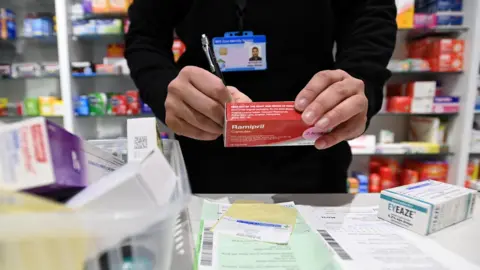
The government is betting £340 million that community pharmacies can take more pressure off general practice, but the test is not whether pharmacists can do more work in principle. It is whether enough patients can reach them, and whether the new system trims GP queues rather than creating one more stop in the NHS pathway.
The agreement with Community Pharmacy England will let pharmacists with an Independent Prescribing qualification assess patients and prescribe medicines directly under a nationally commissioned NHS service from autumn 2026. NHS England says that should bring advice, treatment and medicines closer to home while reducing referrals back to GPs and other parts of the service.

The move builds on Pharmacy First, which launched on 31 January 2024 and already allows community pharmacists in England to assess and treat seven common conditions. NHS England said 10,265 pharmacies were participating when the service began. From September 2026, all newly qualified pharmacists will register as independent prescribers, widening the workforce able to deliver the next stage of care.

That workforce expansion matters because the early evidence points to real clinical activity, not just convenience. NHS England’s pathfinder sites for community pharmacy independent prescribing delivered more than 33,000 patient consultations across 164 pharmacy sites, and more than 59% of those consultations resulted in prescribing interventions that started, stopped or changed medicines that otherwise would have been handled by a GP or hospital clinician.
Pharmacy First has also already become a significant part of day-to-day NHS demand. In 2024/25, it delivered 2.42 million clinical consultations, alongside 407,329 oral contraception consultations and 3.1 million blood pressure checks. Those figures suggest pharmacies are already absorbing work that would otherwise land elsewhere in primary care, but they also show how uneven the system remains. A service can handle millions of interactions and still leave gaps if the right pharmacist is not available, if the patient does not know the service exists, or if access is patchy outside better-served high street locations.
Reaction from the pharmacy sector was broadly positive. The Company Chemists’ Association called independent prescribing a “generational opportunity” to expand care and improve access, while the Royal Pharmaceutical Society has previously described it as a significant moment for community pharmacy.
The political stakes are straightforward: ministers want a visible, faster route for routine care, and the NHS wants more capacity without a wholesale redesign of primary care. Whether this is a convenience upgrade or a meaningful shift in frontline NHS care will depend on how quickly the new prescribers are trained, deployed and used by patients who have been waiting too long for a GP appointment.
This article was produced by Prism’s automated news system from verified source data, official records, and press releases, then run through automated quality and moderation checks before publishing. The system is built and supervised by the people who set the standards it runs under. Read our full AI policy.
Did this article answer your question?