Nigerian court sentences four men to death for Owo church massacre
Four men were sentenced to death for the Owo church massacre, while a fifth walked free for lack of evidence after a trial that tested Nigeria’s handling of mass sectarian violence.
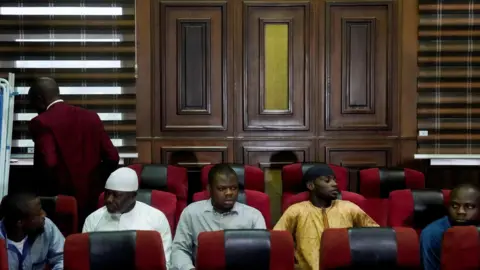
The Federal High Court in Abuja sentenced four men to death by hanging on Tuesday for the June 5, 2022 attack on St. Francis Catholic Church in Owo, Ondo State, a rare courtroom reckoning in a country where mass killings have too often outpaced justice. A fifth defendant, Momoh Otuho Abubakar, was discharged and acquitted after the court found insufficient evidence against him.
Justice Emeka Nwite convicted Idris Abdulmalik Omeiza, 25, Al Qasim Idris, 20, Jamiu Abdulmalik, 26, and Abdulhaleem Idris, 25, on nine terrorism-related counts. He also sentenced each of them to 20 years in prison for belonging to a terrorist group. The defense said it would appeal.
The assault tore through a Pentecost service as mass was ending, turning a church in a quiet southwestern town into a scene of panic and carnage. Accounts of the death toll have varied, with one count putting the number of worshippers killed at 41 and another at at least 50, including children, while more than 100 others were wounded. Hospital workers were overwhelmed as casualties poured in from the attack.
Prosecutors told the court that the men were members of al-Shabab and operated from a cell in Kogi State, north-central Nigeria, about 200 kilometers from Abuja. The case was handled as an accelerated hearing after the trial began on August 1, 2025. Nwite said the evidence against the four convicted men was not shaken in cross-examination and that the prosecution had proved its case beyond reasonable doubt.
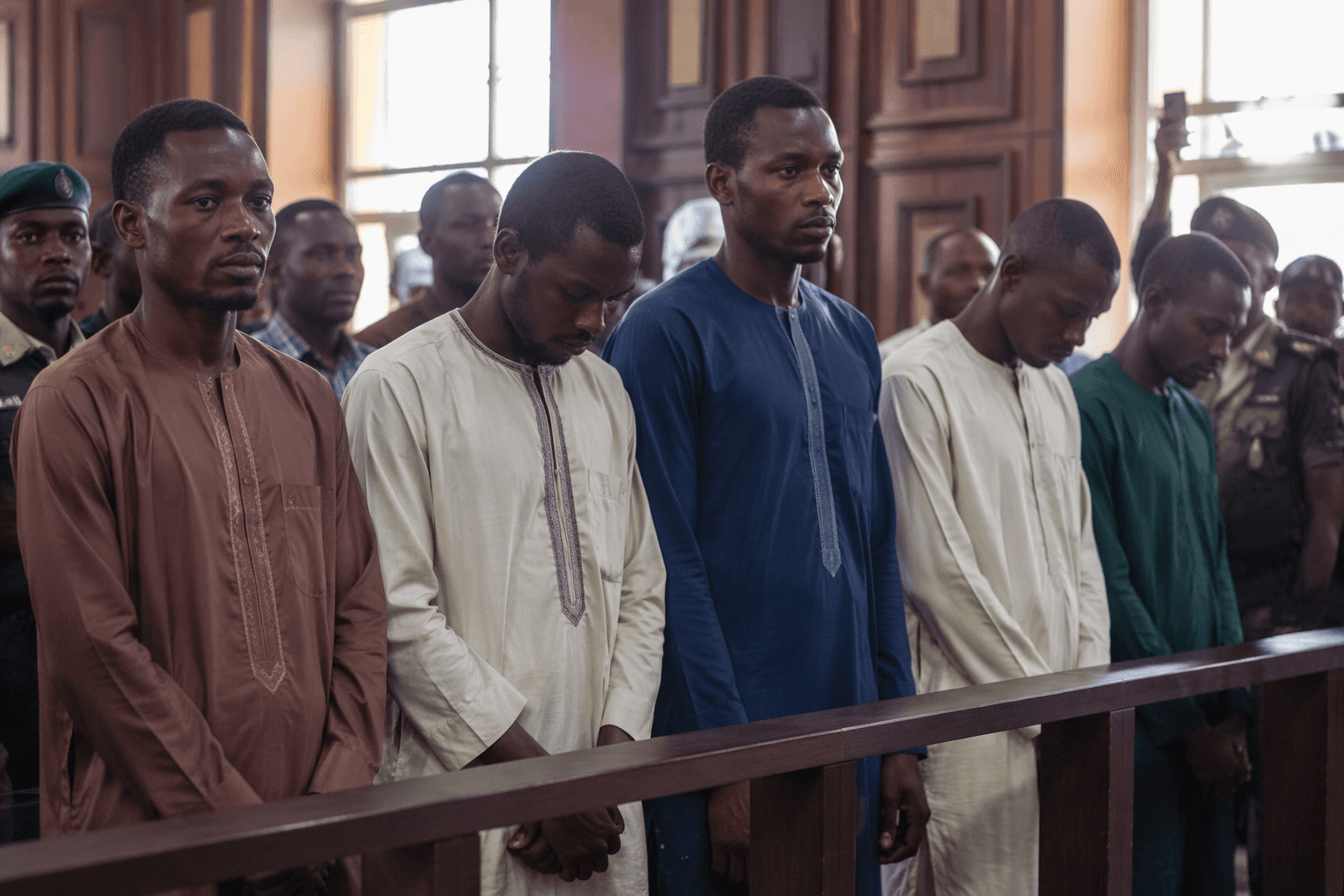
The acquittal of Abubakar gives the ruling its sharpest legal edge. In a case defined by public outrage, the court did not treat the verdict as a single sweep of guilt; instead, it separated the defendants and demanded proof for each one. That distinction matters in a country where terror cases often collapse under weak investigations, contested confessions or missed forensic evidence. During the trial, the defendants alleged they had been tortured, underscoring how much weight the court placed on the record rather than the broader horror of the crime.
One witness testified that she lost both legs below the knees and her left eye in a dynamite explosion during the assault, a reminder of the lasting injuries that remain after the headlines fade. The sentence now moves into a legal system that requires presidential assent before any death penalty can be carried out, and Nigeria has had no executions for several years. For the families of the dead and wounded, the ruling is a measure of accountability; for the country, it is also a test of whether punishment in one of its most notorious attacks can become the exception that proves how often such crimes still go unanswered.
This article was produced by Prism’s automated news system from verified source data, official records, and press releases, then run through automated quality and moderation checks before publishing. The system is built and supervised by the people who set the standards it runs under. Read our full AI policy.
Know something we missed? Have a correction or additional information?
Submit a Tip