Nine engagement-ring trends for 2026: warm metals, sculptural shanks, colored gemstones
Warm metals, sculptural shanks and colored gemstones have moved from fashion notes to mainstream: 2026 favors confident silhouettes, personal stones and bespoke finishing.
There is a clear pivot this season away from the delicate, demure ring of the past decade toward jewelry that reads as a statement and a story. Leah Blundell, content editor for Rock My Wedding, captures the shift plainly: “In 2026, we’re going to see couples move even further away from traditional ‘rules’ around engagement rings. Colored diamonds, emeralds and gemstones speak to a desire for individuality and emotional storytelling. Couples want rings that feel personal and symbolic rather than purely classic. Social media and celebrity proposals continue to normalize non-traditional choices, while increased access to bespoke design and alternative stones makes experimenting with color feel both aspirational and achievable. Ultimately, engagement rings are becoming less about conformity and more about creating a piece that reflects a couple’s identity.”
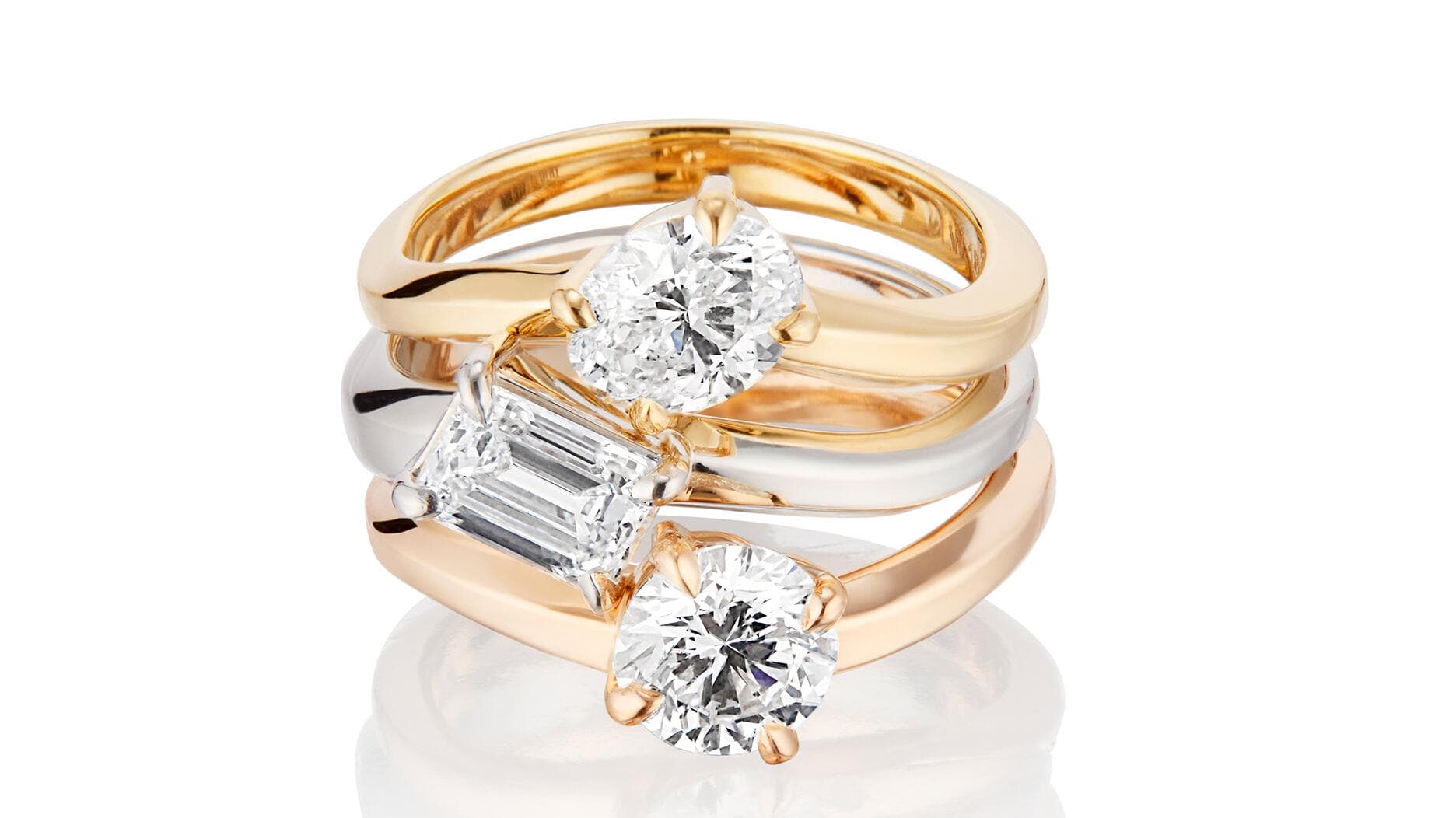
Warm metals and mixed-metal pairings Yellow gold has reclaimed center stage: Austenblake Us lists yellow gold as the metal topping sales, while trend reporting singles out “high‑polish yellow gold” as a leading aesthetic. Mixed-metal combinations are simultaneously gaining momentum—think yellow gold set against white-gold shoulders or a platinum bezel around a rose-gold band—which allows a single ring to read differently depending on the outfit. 100layercake and Zuvelio both identify mixed metal as a buyer-friendly way to modernize heirloom shapes and make daily wear more adaptable.
Chunky, sculptural shanks and cigar bands The era of wafer-thin shanks is fading. Zuvelio’s headline—“Chunky Gold Is Back: Yellow, White & Mixed Metals Dominate”—captures the direction: substantial, solid bands that register visually and wear reliably. Cigar‑band widths commonly settle between 3mm and 6mm, offering what Zuvelio calls “visual stability and strength” and a long-wearing profile that resists the tenderness of ultra-delicate rings. For brides and buyers who prize durability as much as silhouette, a sculptural shank can be both practical and distinctly modern.
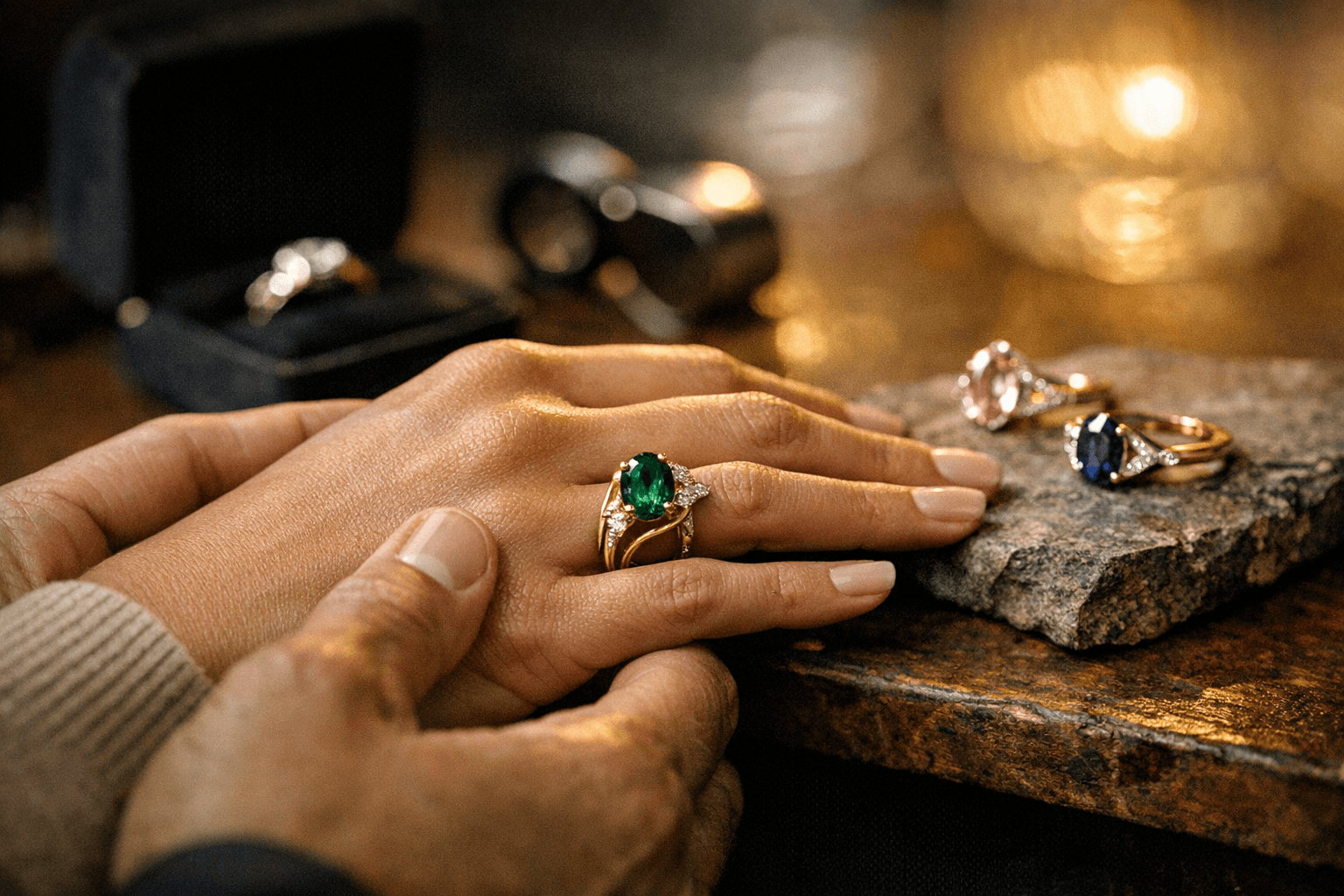
Colored gemstones and Toi et Moi duos Color continues to matter. Sapphires, emeralds, rubies, morganite and even yellow diamonds are cropping up as center stones or partnered with diamonds for accent, and Valeriemadison and 100layercake point to vivid hues as shorthand for individuality. The Toi et Moi revival—“two stones, one love”—is singled out by 100layercake as the most-searched and most-saved engagement trend heading into 2026, from asymmetric oval-plus-pear pairings to diamond-and-sapphire duos. These combinations invite endless customization: one stone can hold the symbolic weight while the other offers chromatic contrast.
A renewed taste for vintage: Victorian and Art‑Deco details Designers are mining the past with a distinctly modern eye. Valeriemadison highlights a return to Victorian romance and Art‑Deco geometry—milgrain edges, filigree, hand engraving and architectural silhouettes—while cautioning buyers to choose embellishment that enhances rather than overwhelms. As the VM Tip advises, “Look for delicate embellishments that highlight the center stone, not overshadow it. Vintage doesn’t need to feel busy to feel romantic.” The result: rings that feel like an heirloom on day one, but built with contemporary tolerances and finishes.
East‑west and low‑profile orientations Turning the center stone on its side is no longer a novelty but a favored way to elongate the finger and reframe classic cuts. VRAI lists east‑west settings among the season’s most sought-after styles, recommending elongated shapes such as Elongate Cushion, emerald and marquise for maximum effect. Practical pairings—hidden halos or pavé bands—soften the directional emphasis while adding shimmer, and low‑profile east‑west placements are especially helpful for wearers who prioritize comfort under sleeves or over gloves.
Step cuts, cushion cuts and a shifting shape palette Step cuts—emerald and Asscher—are prized for their calm, mirror‑like facets and a focus on clarity rather than scintillation; VRAI describes their “clean lines” and understated brilliance as a contemporary counterpoint to overt sparkle. Cushion cuts, too, are seeing renewed attention, particularly when mounted in chunky, sculptural settings that marry soft faceting with bold metalwork. Austenblake Us’s shape snapshot still places round and oval at the top of buyers’ lists, but notes pear, emerald, marquise and princess gaining ground as shoppers broaden their shape vocabulary.
Settings that conceal as much as they reveal: bezels, hidden halos and three‑stone configurations Settings are doing more storytelling. Bezel settings have moved from protective afterthought to stylistic choice—Zuvelio lists bezel as a defining element of 2026’s bolder designs—while VRAI emphasizes hidden details such as surprise halos, personalized engravings and subtle pavé for depth. Trilogy and three‑stone compositions, echoed in Austenblake Us’s findings that trilogy and gemstone rings are on the rise, give designers a natural architecture for narrative: two flanking stones can signify past and future while a larger center stone anchors the present. These approaches balance visual impact with engineered longevity.
Custom, bespoke processes and the lab‑grown conversation Personalization is not only aesthetic but technical. VRAI’s bespoke offerings illustrate the point: the Cut For You™ process—where, VRAI says, “a rough VRAI created diamonds is precisely cut to the client's exact specifications”—lets buyers dictate proportions and performance from the ground up. That appetite for bespoke extends beyond cut to unique hidden halos, custom settings and sculptural shanks. At the same time Austenblake Us reports lab‑grown diamonds remain popular, giving buyers an accessible route to size, color and ethical preferences without compromising design intent.
Market signals and what buyers are actually doing The stylistic shifts are underpinned by measurable behavior: Austenblake Us’s “2026 at a glance” shows solitaires still lead sales while trilogy and gemstone rings rise, yellow gold tops metal sales, lab‑grown diamonds remain in demand, men’s engagement‑ring sales are up an astonishing +205% and the average spend sits at £1,922. Purchase timing is seasonal too—November tops the list (driven in part by Black Friday and festive proposals), followed by August, June, October and July—suggesting that retailers and designers should time launches to fit holiday and summer rhythms. Meanwhile 100layercake’s data that Toi et Moi rings are the most‑searched and most‑saved trend underscores the role of discovery platforms in shaping what buyers want.
Taken together, the year’s dominant motifs are warmth, scale and story: warm metals and mixed pairings, sculptural shanks and cigar bands, bold center stones and the intentional details that personalize a ring. For anyone choosing an engagement ring, the practical takeaway is simple—decide what you want the ring to say about the relationship, then select the metal, shape and setting that will carry that message day after day. Designers and buyers are increasingly treating rings as wearable narratives rather than templates, and in 2026 those narratives favor confidence, color and craftsmanship.
Know something we missed? Have a correction or additional information?
Submit a Tip