No Research Notes Provided to Generate a Headline From
One of two U.S. airmen from a downed F-15E Strike Eagle was rescued Friday on Iranian soil; a second crew member remains missing as Tehran offers a civilian bounty.
The ejection seats worked. That may be the only clean piece of news from southwestern Iran on Friday, where both crew members of a U.S. Air Force F-15E Strike Eagle survived being shot down and at least one was pulled to safety by American special forces operating inside Iranian territory. The second remains unaccounted for, and what happens to him in the coming hours will be determined, in large part, by training he received long before he ever climbed into the cockpit.
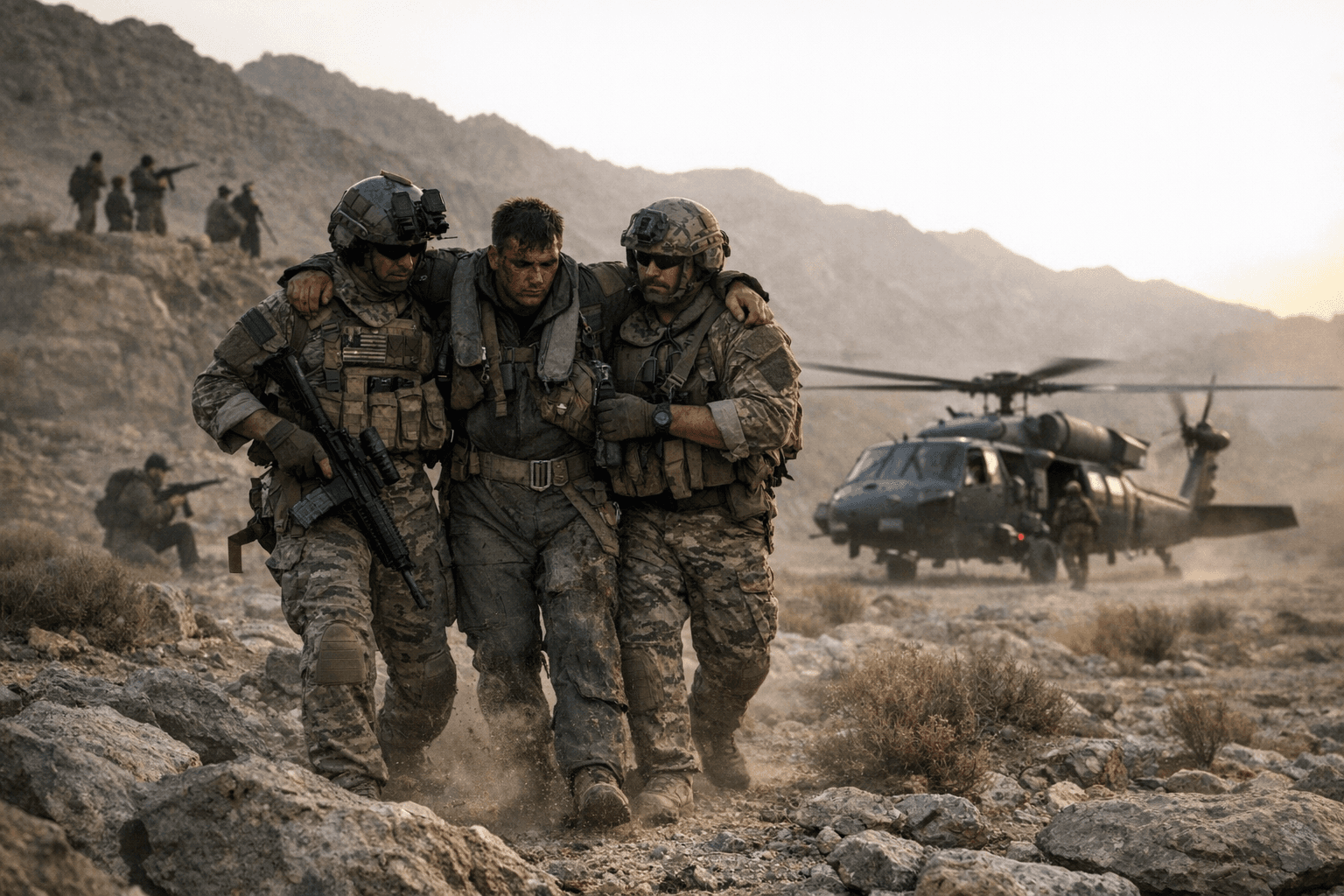
One of two U.S. F-15E Strike Eagle crew members shot down by enemy fire in Iran was rescued, with U.S. special forces locating one of the crew members and rescuing him alive on Iranian territory. Both crew members had ejected safely after being struck by Iranian fire. A search for the second crew member is ongoing.
This is the first time since the beginning of the war that a U.S. jet was downed by enemy fire. The conflict, which began on February 28 when the United States and Israel launched operations against Iran, is now in its sixth week. Iranian Parliament Speaker Mohammad-Bagher Ghalibaf mocked Trump's repeated claims of victory in the war following news of the shootdown.
The F-15E is a two-seat aircraft. F-15E Strike Eagles fly with two crew, a pilot and a weapons systems officer. Both are required to complete the Air Force's SERE program before flying combat missions. That program, whose acronym stands for Survival, Evasion, Resistance, and Escape, is structured around a sequence that maps almost precisely onto what those two aviators faced Friday over Kohgiluyeh and Boyer-Ahmad Province.
The first phase of SERE, survival, teaches participants how to survive in the immediate aftermath of a shootdown, covering the basics of wilderness survival including constructing shelters, procuring safe sources of water, and navigating in austere environments. The sparsely populated, mountainous region in southwestern Iran where Iranian television reported the ejection occurred is precisely the kind of austere environment that phase was designed for. Iranian state media showed photos of the wreckage of the jet and what appeared to be an ejection seat with an attached parachute, confirming both crew left the aircraft.
Phase two, evasion, focuses on movement discipline, detection avoidance, and terrain use. Students learn how quickly exposure degrades performance, with an emphasis on decision-making under fatigue. The goal is not comfort, but staying alive long enough to either be recovered or reach friendly forces. The terrain complicates that goal severely. CNN quoted a retired officer who noted ejecting over a country like Iran is difficult for survivors because "we don't really know if the population there is for us or against us." Iranian state television rapidly urged residents to turn over any "enemy pilot" to authorities and said a reward would be offered. Local traders in Kohgiluyeh and Boyer-Ahmad Province offered a reward of 10 billion tomans, roughly $76,000, for the crew. A provincial governor stated that anyone who captures or kills the crew would receive a special commendation. Many civilians drove to the area around the crash site in private cars attempting to find the pilot, though Iranian armed forces called on people not to mistreat anyone they found.
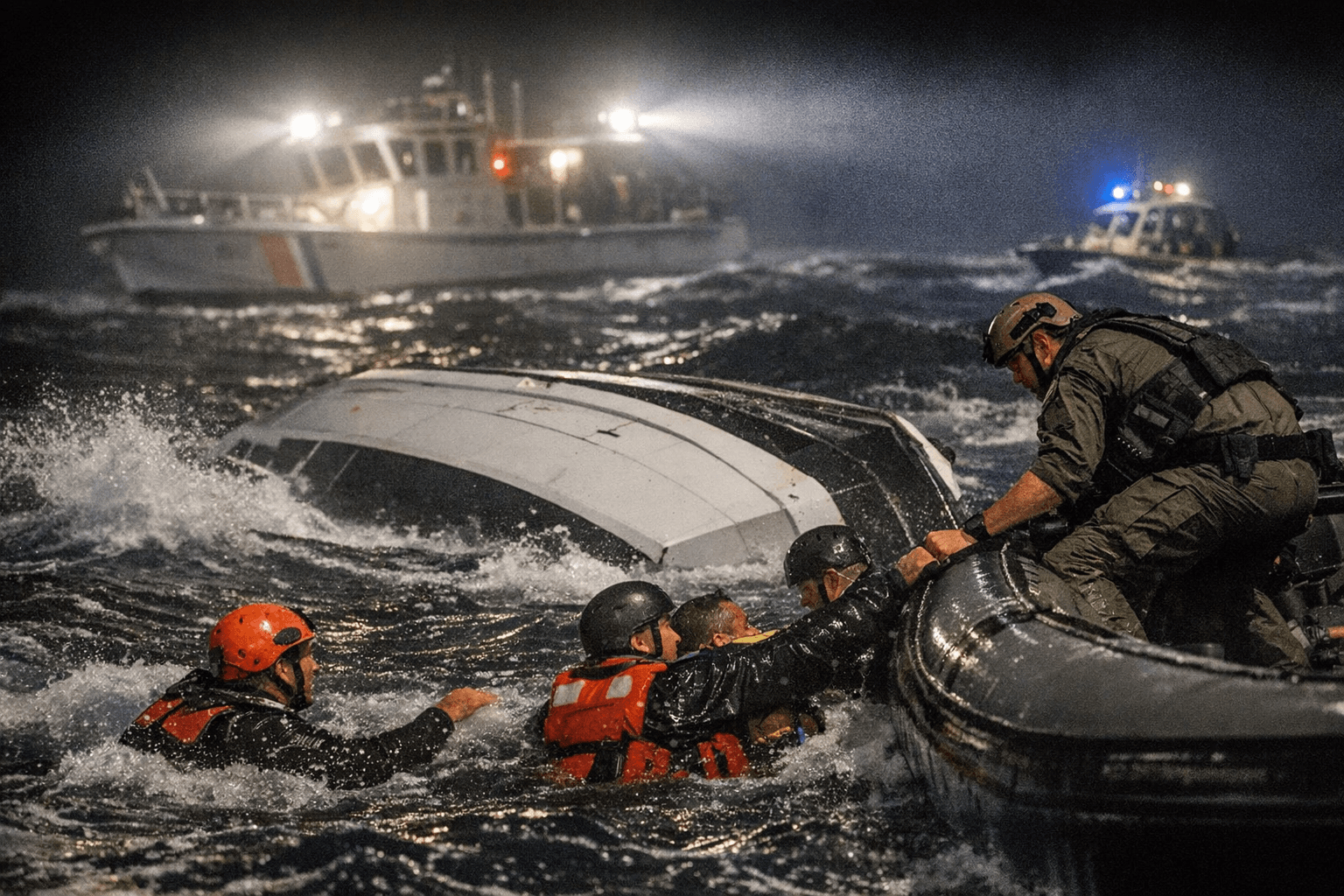
Hollywood's version of combat rescue compresses this process into minutes. Doctrine does not. The recovery chain that activated Friday involved multiple specialized assets working in coordination. Video circulating on social media appeared to show a low-flying U.S. Air Force HC-130 refueling a pair of HH-60G Pave Hawks over Iran. Iranian sources claimed one of the helicopters involved in the rescue effort was attacked by air defense near the border and fled the scene, an account that, if accurate, illustrates the degree to which even a successful CSAR package operates under sustained threat. An Israeli official said Israel cancelled planned strikes in Iran so as not to hamper the search and rescue efforts, a deconfliction measure that underscores how much diplomatic and military coordination runs beneath a rescue that looks, from a distance, like a helicopter landing in a field.
Phase three of SERE, resistance, addresses detention and interrogation pressure. Based on historical adversary methods, the program focuses on maintaining identity yet resisting exploitation, with students trained to adhere to the Code of Conduct. That phase becomes relevant only if the second crew member cannot be reached first. Two U.S. officials confirmed the aircraft was an F-15E Strike Eagle, an aircraft that can carry out air-to-air and air-to-ground missions. National security analyst Aaron MacLean told CBS News the aircraft "would have been prosecuting targets in Iran," meaning its crew would carry information about strike packages, targeting priorities, and mission parameters that adversaries would be motivated to extract.
Two of the sources said the rescued crew member was alive, in U.S. custody, and receiving medical treatment. What is not confirmed is the fate of the second. Whether he is evading in mountainous terrain, was captured before the rescue aircraft arrived, or is injured and sheltering in place, the protocols he trained for years ago were designed precisely for this ambiguity. The recovery chain was still running as of Friday afternoon.
Sources:
Know something we missed? Have a correction or additional information?
Submit a Tip