No-Sew tiller pilot cover keeps autopilots dry and serviceable
A low-cost no-sew sleeve made from recycled dodger vinyl protects tiller-pilot autopilots from water intrusion. It cuts a common failure mode and keeps units accessible for service.
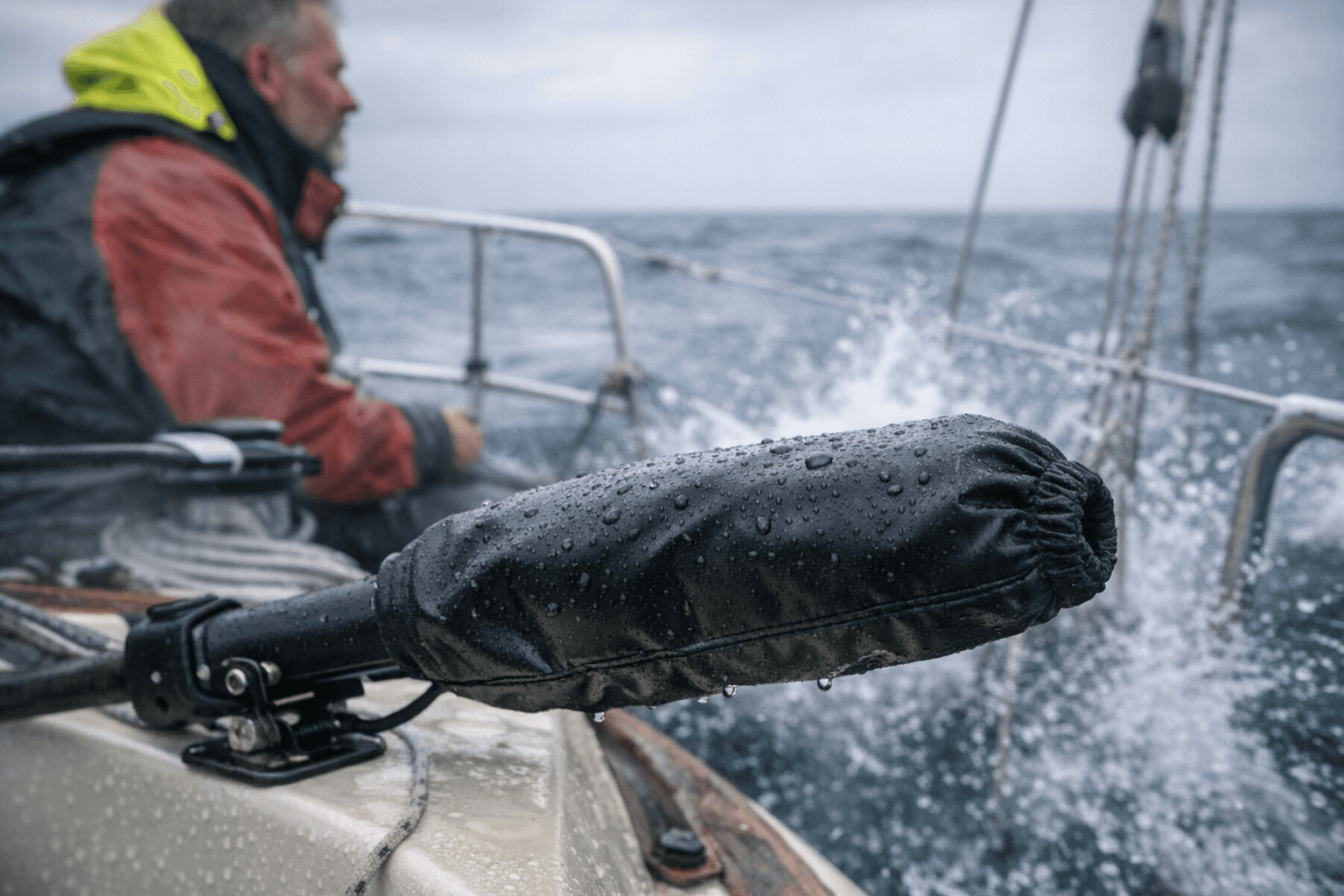
A simple, no-sew weatherproof sleeve can significantly reduce water-related failures in tiller-pilot autopilots by repurposing dodger window vinyl and basic fastening materials. Water entry during rapid temperature or pressure changes, or during rain, is a leading cause of premature electronic failure; this cover tackles that failure mode with minimal cost and no sewing skills required.
The concept is straightforward: cut a section of recycled dodger vinyl large enough to wrap the tiller-pilot head, form it into a sleeve, and secure it with hook-and-loop or quick-release straps. The vinyl provides a flexible, transparent barrier that sheds water while the fastenings allow the cover to be snugged to different housings and removed quickly for maintenance. Construction emphasizes a wrap-and-secure approach that preserves access to adjustment knobs, wiring, and hydraulic fittings so service does not require cutting or undoing a permanent installation.
Materials are deliberately basic and common aboard: a dodger window panel or spare vinyl sheet, stainless or nylon quick-release straps, wide adhesive-backed hook-and-loop tape if preferred for frequent cockpit access, and small grommets or trimmed corners to provide drainage. Sizing guidance focuses on generous overlap at the base to create a drainage path and sloping the sleeve so water runs away from the unit and fittings. Where possible, orient seams and closures so pooled water cannot work its way toward connectors.
Practical tips include trimming the vinyl to allow service access without complete removal, adding a loose flap or Velcro closure over the control face, and cutting a shallow drainage notch at the lowest point to avoid trapped moisture. Quick-release straps work well for offshore use where a positive, repeatable clamp is desirable; hook-and-loop is fast and forgiving for day-sail use but may wear faster in UV. Test the fit and drainage on deck before committing to a passage, and inspect the sleeve periodically for UV degradation or chafe points where straps contact sharp corners.
For owners looking to reduce repair bills and downtime, this is a practical preventive measure that reuses existing materials and requires only simple tools. Detailed step-by-step photos and exact measurements are available behind a subscriber gate for those who want a photo-illustrated build sheet; however, the core idea and fitting principles are simple enough to adapt to most tiller-pilot heads.
What this means for your boat is straightforward: cover your pilot, don’t let water take the helm. A modest investment of time and a scrap of vinyl can keep autopilots running longer, save a service call, and give you one less thing to worry about on passage.
Know something we missed? Have a correction or additional information?
Submit a Tip

