North Dakota court blocks Greenpeace Dutch lawsuit over pipeline protests
A North Dakota court moved to curb Greenpeace International’s Amsterdam case, escalating a transatlantic fight over whether U.S. verdicts can blunt overseas anti-SLAPP claims.
A North Dakota court moved to block part of Greenpeace International’s parallel case in Amsterdam, setting up a high-stakes test of whether companies can use U.S. courts to raise the cost of activism across borders.
The North Dakota Supreme Court ruled 4-1 that the district court should issue a narrowly tailored anti-suit injunction limiting at least part of Greenpeace International’s Dutch case against Energy Transfer. Justice Jerod Tufte wrote the majority opinion, which said the Amsterdam lawsuit conflicted with issues already decided by a North Dakota jury in Energy Transfer’s favor.
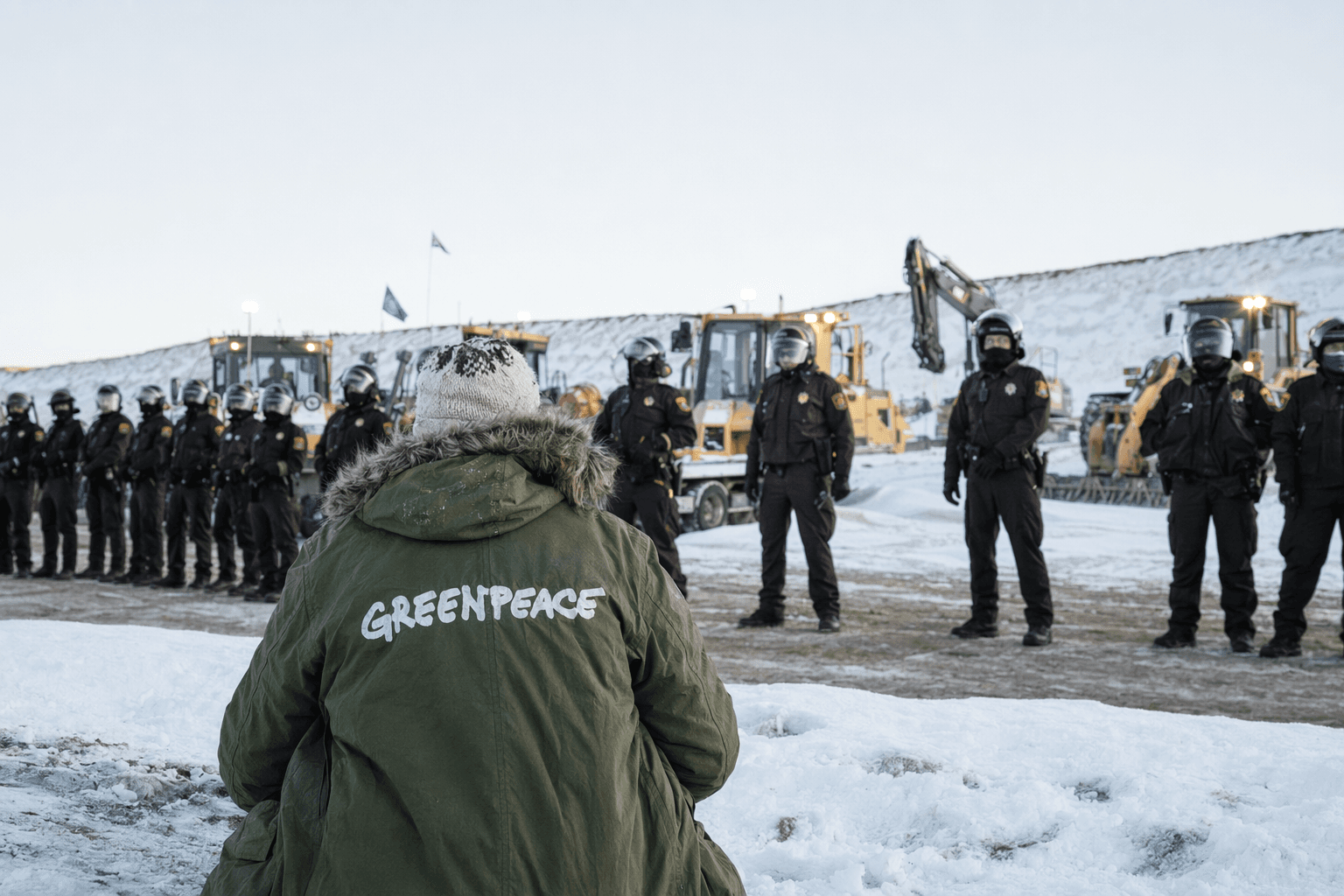
The dispute traces back to the 2016 and 2017 protests against the Dakota Access Pipeline. Energy Transfer, Dakota Access LLC and Energy Transfer Operating sued Greenpeace International, Greenpeace USA and Greenpeace Fund in Morton County, North Dakota, after a prior federal case was dismissed in 2019, according to Greenpeace’s account. A jury found the Greenpeace defendants liable in March 2025, and a judge later cut the original $666.9 million verdict to a final judgment of about $345 million on February 28, 2026.
Greenpeace International responded by filing a separate case in Amsterdam under European Union anti-SLAPP protections and Dutch civil law, arguing that Energy Transfer’s litigation campaign was abusive and intended to silence protest. The Amsterdam District Court held its first hearing in that case on April 16, 2026. Greenpeace said the North Dakota ruling does not foreclose all related litigation in the Netherlands and does not bar its arguments that Energy Transfer’s lawsuit was itself a SLAPP or that the company made defamatory out-of-court statements.
The North Dakota decision pushes the fight beyond a single pipeline dispute. It raises the question of whether a U.S. state court can limit claims pursued in a European court, and whether corporations can use sprawling litigation to burden protest movements even after an American jury has already ruled. Greenpeace International said it has 14 days to seek rehearing in North Dakota, keeping the clash alive as one of the clearest tests yet of cross-border anti-SLAPP law and the reach of corporate legal retaliation.
This article was produced by Prism’s automated news system from verified source data, official records, and press releases, then run through automated quality and moderation checks before publishing. The system is built and supervised by the people who set the standards it runs under. Read our full AI policy.
Did this article answer your question?