North Korea Fires Multiple Ballistic Missiles Toward East Sea on Consecutive Days
North Korea fired multiple short-range ballistic missiles from Wonsan on consecutive days as Pyongyang declared South Korea an irredeemable "enemy state" and shut down Seoul's diplomatic overtures.
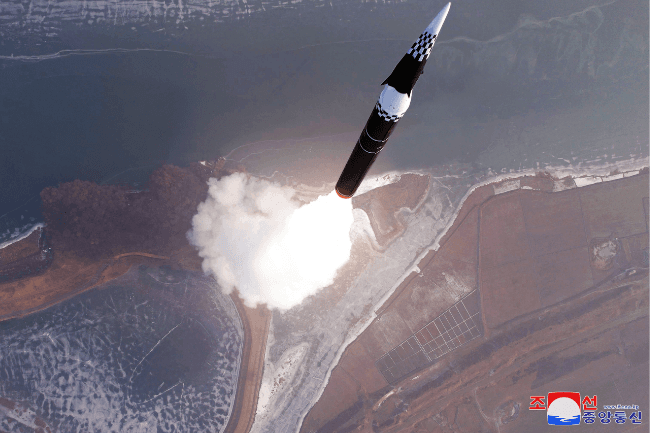
North Korea fired multiple short-range ballistic missiles from its eastern coastal city of Wonsan on Wednesday morning, the second launch event in as many days, as a senior Pyongyang official publicly derided Seoul's hopes for warmer ties and declared South Korea a permanent adversary beyond diplomatic redemption.
South Korea's Joint Chiefs of Staff said the missiles traveled about 150 miles, marking the fourth and fifth confirmed ballistic missile launches by Pyongyang this year. The missiles lifted off from the Wonsan area and flew about 240 kilometers in a direction toward the North's eastern waters. That range is not incidental: 240 kilometers from Wonsan puts every major South Korean population center within strike distance, and Camp Humphreys, the largest U.S. overseas military installation, sits roughly 60 kilometers south of Seoul. INDOPACOM said the launches posed no immediate threat to U.S. personnel or territory, but South Korean and U.S. authorities began detailed forensic analysis of trajectory and payload characteristics.
The day before, South Korea's military detected the launch of a suspected ballistic missile from near the Pyongyang area. According to Yonhap news agency, citing military officials, that projectile showed signs of an abnormality in the early stage of flight and disappeared, suggesting a possible engine or guidance failure. The incidents mark North Korea's fourth and fifth ballistic missile launches this year, following two launches in January and another in March.
The consecutive tests arrived alongside a combative statement from Jang Kum Chol, first vice-minister of Pyongyang's foreign ministry. "The identity of the ROK, the enemy state most hostile to the DPRK, can never change with any words or conduct," Jang was quoted as saying by state media KCNA late on Tuesday, using the acronyms for the formal names of South and North Korea. The remarks came days after South Korean President Lee Jae Myung expressed regret over drones that crossed into North Korean airspace, an overture that Kim Yo Jong had briefly called "wise behaviour." Jang's follow-up statement, and the missile salvos that flanked it, effectively closed that window before it opened.
Lim Eul-chul, an expert on North Korea at Kyungnam University, said "the consecutive firings and recent statements underscore the North's determination to ignore attempts by the South at improving inter-Korean ties."
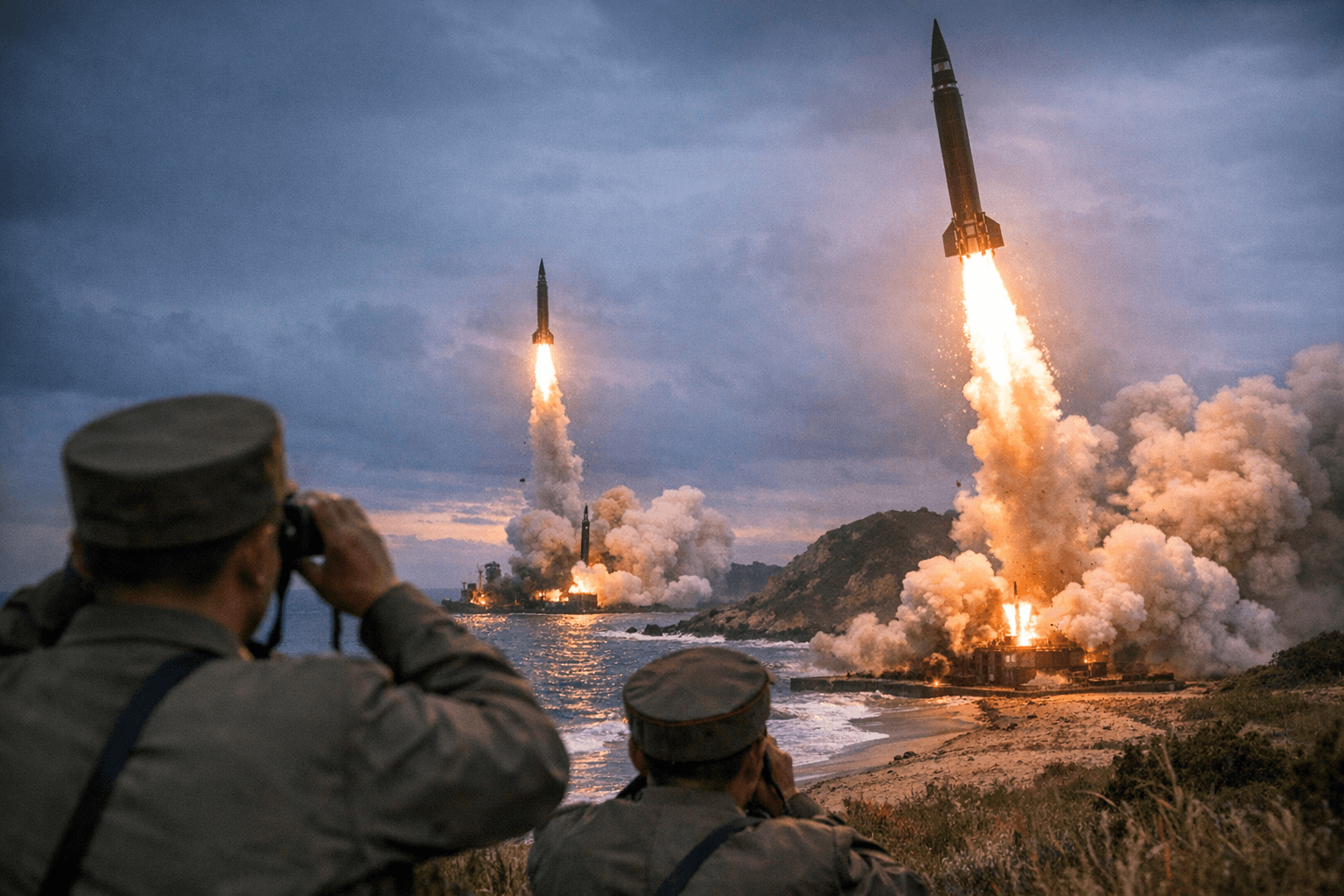
The technical dimension of the tests may matter as much as the political message. North Korea conducted a solid-fuel engine test in late March 2026, and analysts say the current series appears linked to ongoing propulsion development work. Solid-fuel missiles require far less preparation time before launch than liquid-fueled systems, which must be fueled on the pad and are therefore visible to surveillance assets during that window. A mature solid-fuel short-range inventory would compress decision timelines for South Korean and U.S. commanders considerably, and complicate the preemption calculus that underlies allied deterrence planning in the region.
South Korea's presidential Blue House convened an emergency National Security Council meeting, calling the launches a provocation that violated U.N. Security Council resolutions. Japan's Chief Cabinet Secretary Minoru Kihara said the tests threatened "peace and security in the region and the international community," confirming that no missiles entered Japan's exclusive economic zone. Seoul, Tokyo, and Washington said they were coordinating to monitor further developments.
What the two-day sequence signals most clearly is that Pyongyang is running a deliberate rehearsal, not simply staging a one-off provocation. Each launch tests range bands, mobility from different coastal and inland sites, and the credibility of a multi-salvo saturation scenario. For U.S. planners and allied governments already balancing crises elsewhere, North Korea's fourth and fifth missile launches of 2026 serve as a reminder that the Korean Peninsula does not pause during diplomatic calendar gaps.
This article was produced by Prism’s automated news system from verified source data, official records, and press releases, then run through automated quality and moderation checks before publishing. The system is built and supervised by the people who set the standards it runs under. Read our full AI policy.
Did this article answer your question?