US and Iran Agree to Two-Week Ceasefire Brokered by Pakistan
Pakistan brokered a ceasefire hours before Trump's deadline to destroy Iranian infrastructure; oil prices fell 15% and Islamabad talks are set for April 10.
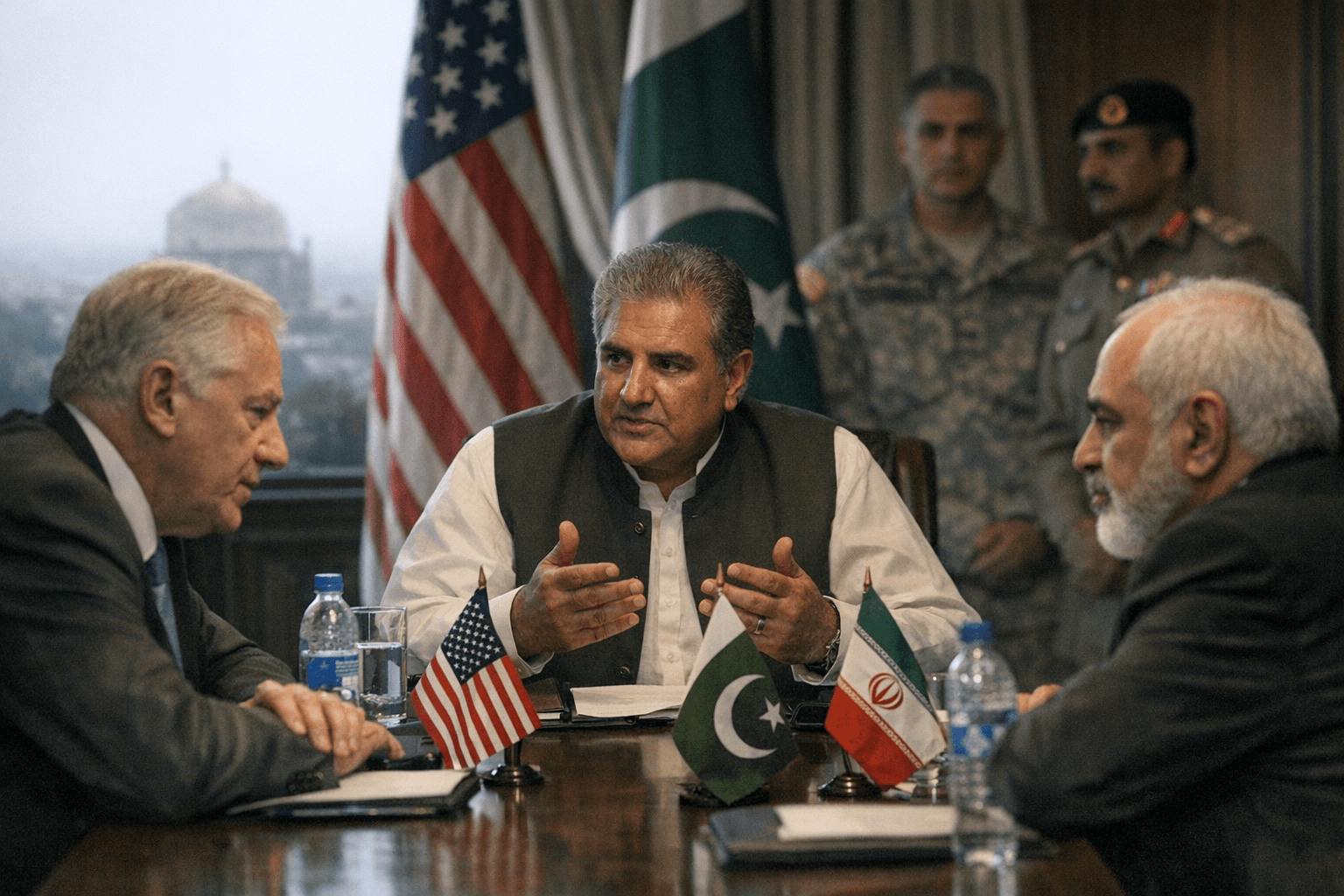
With less than two hours left on President Donald Trump's 8 p.m. ET deadline to destroy Iran's civilian infrastructure, Pakistan's diplomatic intervention on April 7 produced a fragile two-week ceasefire that halted 39 days of war and sent international oil prices down roughly 15%.
The deal's terms hinge on two reciprocal obligations. Iran must achieve the complete, immediate, and safe reopening of the Strait of Hormuz; the US and Israel must halt all strikes on Iranian territory. Trump announced on Truth Social that he would "suspend the bombing and attack of Iran for a period of two weeks" contingent on that Strait reopening. Iranian Foreign Minister Abbas Araghchi confirmed Iran's armed forces would facilitate safe passage for the duration, and Iran's Supreme National Security Council formally accepted the terms.
The truce survives only if both sides hold. Any interruption to Strait shipping, or any resumed US or Israeli strike on Iranian soil, voids the deal before April 21. Trump had warned hours earlier that "a whole civilization will die tonight" if Tehran failed to comply. Israeli Prime Minister Benjamin Netanyahu separately denied the ceasefire extended to Lebanon, confirming only Israel would comply in Iran, leaving Hezbollah's ongoing activity as an unresolved variable capable of destabilizing the agreement.
Pakistan holds the central monitoring role. Prime Minister Shehbaz Sharif and Field Marshal Asim Munir, whom Trump credited for persuading him to hold off on the deadline, have invited delegations from both Washington and Tehran to Islamabad on April 10 for longer-term negotiations. That session, three days into the two-week window, functions as the deal's first compliance checkpoint.
Both sides are framing the pause differently. White House Press Secretary Karoline Leavitt stated that "President Trump's powerful military got Iran to agree to reopening the Strait of Hormuz." Iran submitted a 10-point peace proposal that Trump called "a workable basis on which to negotiate," covering an end to regional conflicts, safe Strait passage, sanctions relief, and reconstruction. The US has a 15-point counterproposal; both documents are expected to frame the Islamabad talks. Iran did not include its missile program in the proposal, and while Tehran has said it is not seeking nuclear weapons, it signaled willingness to negotiate nuclear limits in exchange for sanctions relief.
The conflict this ceasefire temporarily pauses has extracted a severe toll. Operation Epic Fury, launched jointly by the US and Israel on February 28, killed Supreme Leader Ayatollah Ali Khamenei and approximately 50 senior Iranian officials on its first day. Mojtaba Khamenei was installed as his successor on March 8. By Day 40, more than 5,000 people had been killed across the region; HRANA documented at least 657 dead and 2,037 wounded as of March 23, with at least 15% of casualties under 18. The US confirmed 15 American fatalities at an estimated total war cost of $35 billion.
If violations emerge before Day 14, Pakistan's broker position makes Islamabad the immediate escalation channel. Middle East Institute analyst Alex Vatanka observed that the two sides are "talking in a way that you at least have the ability to agree on a basic framework," a measured assessment given what fourteen days must now accomplish.
This article was produced by Prism’s automated news system from verified source data, official records, and press releases, then run through automated quality and moderation checks before publishing. The system is built and supervised by the people who set the standards it runs under. Read our full AI policy.
Did this article answer your question?


