North Korea fires multiple short-range ballistic missiles toward sea again
North Korea fired two rounds from Wonsan in one day, a rare back-to-back sequence that South Korea read as a deliberate show of force after a failed launch on April 7.
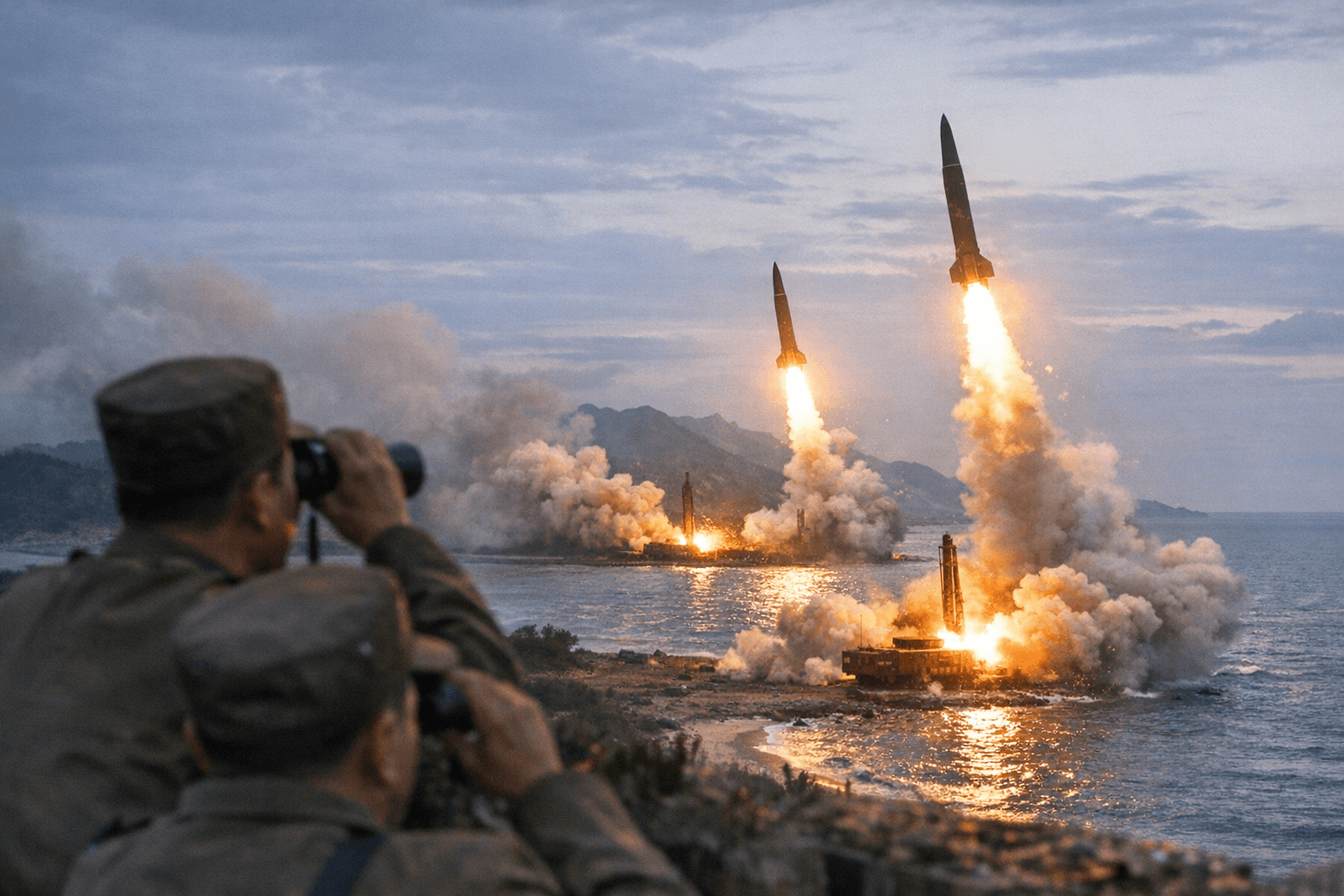
North Korea fired multiple short-range ballistic missiles from the Wonsan area toward the East Sea, with South Korean officials saying the weapons flew about 240 kilometers before splashing into the sea. Hours later, North Korea launched another ballistic missile from the same area at about 2:20 p.m., a rare same-day sequence that South Korea said pointed to a deliberate show of force.
The launches marked North Korea’s fifth confirmed ballistic missile launch of 2026, according to Yonhap, and came one day after a separate projectile fired from the Pyongyang area on April 7 apparently failed shortly after launch. That contrast matters: a failed test followed by two launches from Wonsan suggests Pyongyang is still working through the operational rhythm of its short-range systems while demonstrating that it can generate rapid, repeated firing activity from coastal launch sites.
The pattern also fits a familiar North Korean playbook. The last time it fired multiple ballistic missiles toward the East Sea was March 14, 2026, during annual South Korea-U.S. military drills. Pyongyang has repeatedly timed weapons tests to coincide with allied exercises and heightened inter-Korean tension, using launches to signal defiance and pressure its rivals politically even when the missiles are short-range and fall well short of U.S. territory.
The latest launches came as relations on the peninsula were already strained. President Lee Jae Myung had recently expressed regret over civilian drone flights into North Korea, and Jang Kum-chol, North Korea’s first vice foreign minister, dismissed Seoul’s positive reading of Kim Yo-jong’s conciliatory remarks as a “pipe dream,” saying South Korea remained the North’s “most hostile state.” Against that backdrop, the missile activity looked less like a one-off technical event than a calibrated political message.
South Korea’s National Security Office condemned the launches as violations of U.N. Security Council resolutions and called for an immediate halt. U.S. Forces Korea said it was consulting with allies and partners and that, based on current assessments, the events did not pose an immediate threat to U.S. personnel or territory, or to allies.
What officials will watch next is whether North Korea follows the Wonsan launches with more tests, especially around allied exercises or diplomatic friction, and whether Seoul, Tokyo and Washington keep their response firm but measured. The challenge now is not just intercepting missiles, but avoiding a cycle in which repeated short-range launches become treated as routine.
This article was produced by Prism’s automated news system from verified source data, official records, and press releases, then run through automated quality and moderation checks before publishing. The system is built and supervised by the people who set the standards it runs under. Read our full AI policy.
Did this article answer your question?