North Korea fires multiple short-range ballistic missiles into Yellow Sea
North Korea's latest missile volley followed April tests of cluster-bomb warheads, signaling a calibrated show of force toward Seoul, Washington and Beijing.
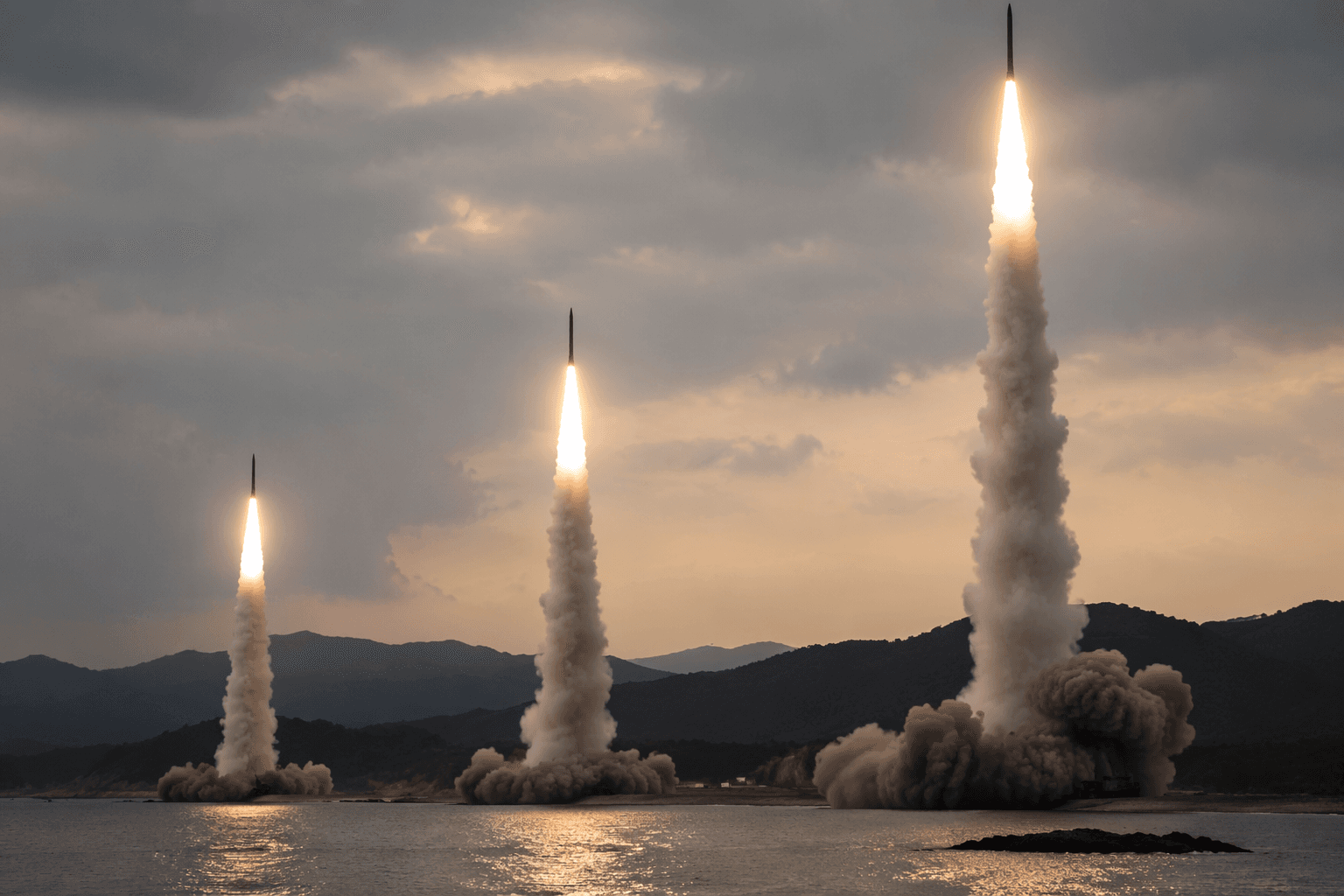
North Korea has kept its 2026 weapons cycle moving in a tight sequence: multiple short-range ballistic missiles on May 26, several more on April 19, and earlier April tests of a new cluster-bomb warhead and an electromagnetic weapon. The pattern suggests Pyongyang is not just firing missiles for spectacle, but building a running political message aimed at South Korea, the United States and regional allies that its strike forces remain active, adaptable and ready.
South Korea’s Joint Chiefs of Staff said the latest missiles were launched around 1 p.m. local time, or 0400 GMT, from Chongju in North Korea’s North Pyongan Province, about 110 kilometers northwest of Pyongyang. The projectiles headed toward waters off North Korea’s west coast and into the Yellow Sea. South Korea said its military boosted surveillance after the launch and was closely exchanging information with the United States and Japan while military analysts examined the missiles.
The timing matters as much as the trajectory. This was North Korea’s first known missile launch since April 19, when it fired several short-range ballistic missiles that state media said were equipped with cluster bombs. In early April, North Korean state media also said the country had tested a new cluster-bomb warhead on a ballistic missile and an electromagnetic weapon. Taken together, the tests show a deliberate effort to advertise battlefield versatility, from saturating targets with cluster munitions to demonstrating systems designed to disrupt electronic defenses.

The launch also landed amid speculation that Chinese President Xi Jinping may visit North Korea soon, adding a diplomatic layer to the military display. Kim Jong Un has continued to expand North Korea’s nuclear and missile arsenal since nuclear diplomacy with Donald Trump collapsed in 2019, and the latest firing fits that long-running strategy of pressure, deterrence and leverage. Pyongyang is reminding its neighbors that missile development remains central to its security posture, even as it keeps channels open for larger geopolitical maneuvering.
For Seoul and Washington, the immediate security picture did not change in a dramatic way. The missiles did not signal a new class of long-range capability or a sudden shift in the balance on the peninsula. But they did reinforce a more familiar warning: North Korea is sustaining a cadence of tests that normalizes launch activity, sharpens its operational messaging and keeps allied defenses under continuous strain.
Know something we missed? Have a correction or additional information?
Submit a Tip