Colombians vote under drone attacks as violence tests Petro’s peace plan
Drone attacks near Jamundí are making a simple trip to vote a gamble as 386 municipalities are now flagged as violence risks.
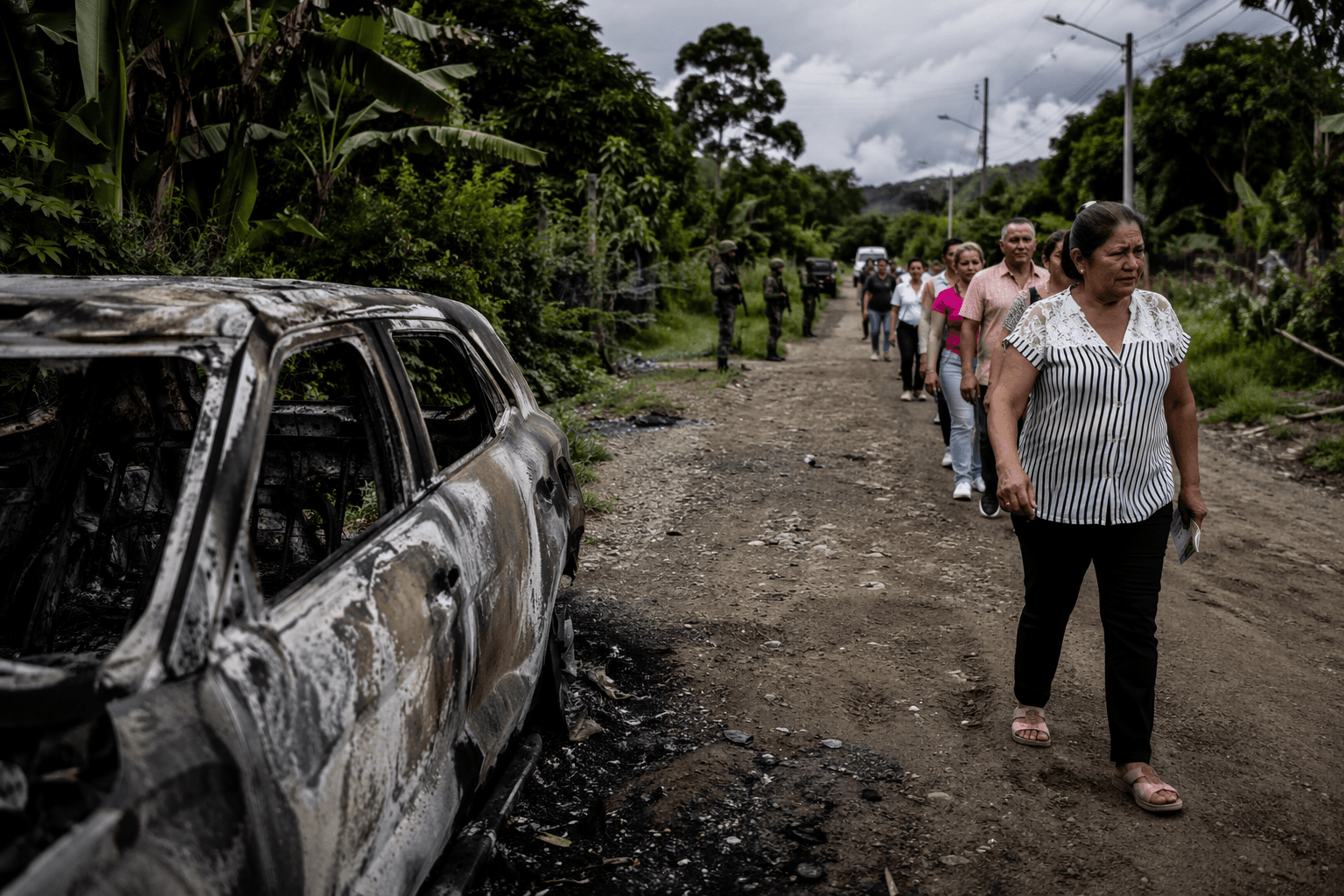
Drone attacks near Jamundí have turned a trip to the polls into a calculation about survival. In Potrerito, Gladys Marín lives less than 100 meters from a police station that has repeatedly been hit by drone-dropped explosives, a stark sign of how Colombia’s electoral politics are being shaped far from Bogotá.
The voting itself is set for May 31, with a runoff on June 21 if no candidate wins a majority. The president and vice president are elected on the same ticket, and the official registry says voters can check polling places through its portal. But for many Colombians, the bigger question is whether they will feel safe enough to go at all.
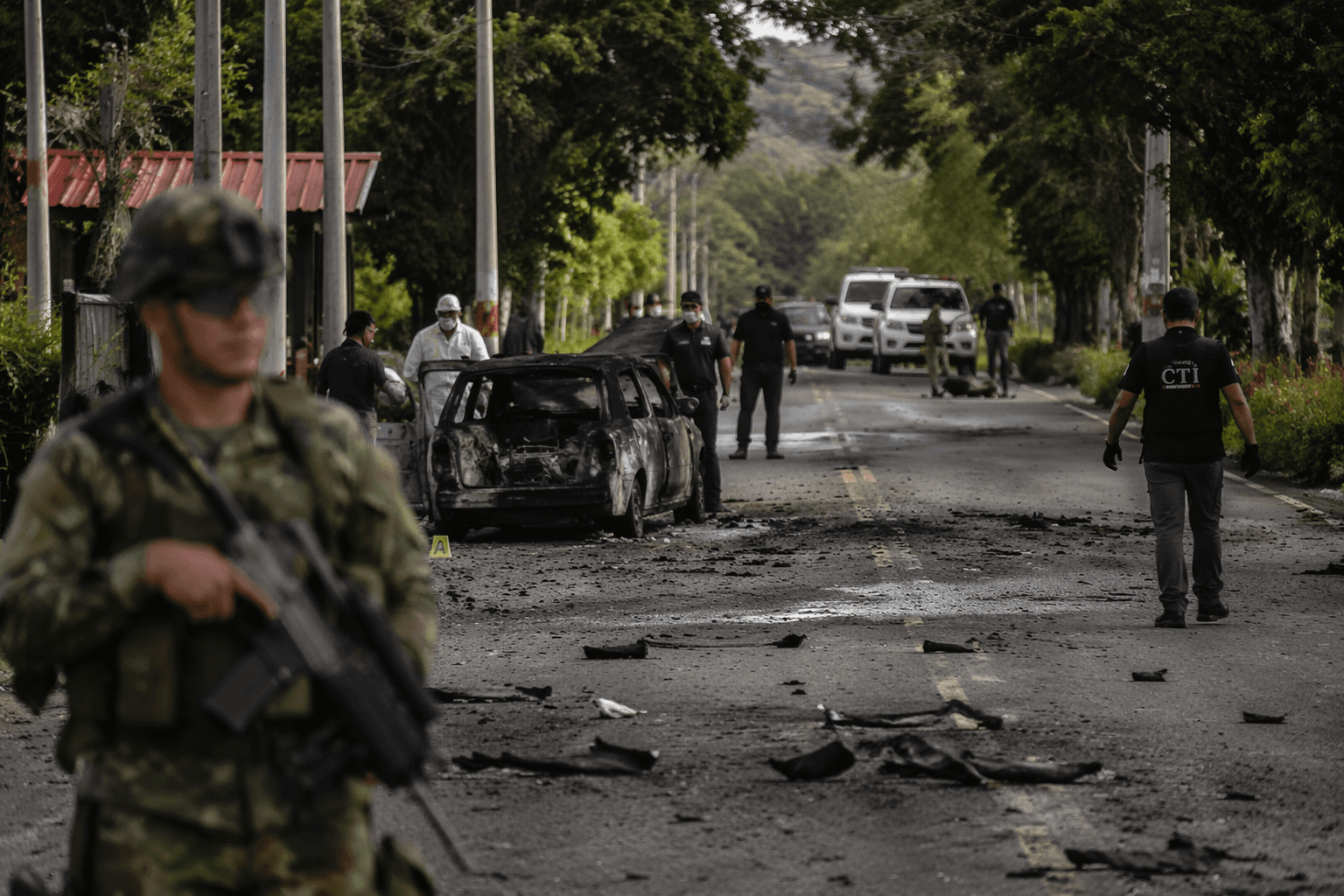
The Misión de Observación Electoral has identified 386 municipalities at risk from violence, equal to 34.4% of the country and spread across 31 departments. Its May 19 update showed a 3% increase from the February 2026 map, and it said 57% of municipalities with rural polling places have at least one illegal armed group present. That makes the election vulnerable not just in traditional flashpoints, but in towns and countryside communities where armed groups can block roads, damage banks, intimidate residents and attack police from a distance.
The scale of the security problem remains vast. One think-tank estimate puts about 27,000 people under arms nationwide. Around Jamundí, barricades, damaged homes and broken infrastructure have become part of the landscape in places where voters are supposed to make their way to the ballot box. The effect is chilling: when armed groups can turn the trip to a polling station into a risk, they can shape turnout without ever appearing on the ballot.
The campaign has become a referendum on Gustavo Petro’s total peace strategy, the administration’s effort to negotiate with the country’s remaining armed groups. Petro, who took office in August 2022, is Colombia’s first left-wing and former guerrilla president, and his security record has become one of the race’s defining fault lines. Many Colombians say violence has worsened under his watch, not improved.
That fear has been reinforced by a broader surge in political violence. Human Rights Watch said the June 7, 2025, shooting of presidential hopeful Miguel Uribe Turbay in Bogotá was a blow to democracy. It also reported that since 2016, homicides have risen 20.9%, kidnappings 34.8%, mass forced displacement has reportedly quadrupled and confinements have increased more than tenfold. The Misión de Observación Electoral warned in September 2025 that Colombia was facing its most violent electoral year since 2018, after recording 208 acts of violence against social, political and communal leaders between January 1 and July 8, 2025, with political leaders accounting for 50.96% of the aggression.
Colombia is heading toward a vote in which the state must prove it can protect not only candidates and officials, but ordinary citizens deciding whether democracy is worth the walk to the polling station.
Know something we missed? Have a correction or additional information?
Submit a Tip