Quad ministers agree to build Fiji port, boost minerals security
The Quad chose Fiji for its first joint infrastructure project, pairing a port plan with minerals and energy-security deals to prove it can still deliver.

The Quad’s foreign ministers used their meeting in New Delhi to put hard assets behind a grouping long criticized as diplomatic theater, agreeing to jointly build a port in Fiji while signing new deals on critical minerals and energy security. Australia’s Penny Wong, India’s S. Jaishankar, Japan’s Toshimitsu Motegi and U.S. Secretary of State Marco Rubio also launched a maritime surveillance initiative, a package meant to show that the four-country partnership can still produce concrete outcomes.
The gathering was the third Quad ministerial since September 2024, and it came as the members faced pressure to preserve momentum amid shifting geopolitics and strains between Washington and New Delhi, including disputes over tariffs and other issues during Donald Trump’s second term. The Fiji port plan was presented as the Quad’s first joint infrastructure project and was folded into the broader Quad Ports of the Future Partnership, underscoring a new effort to connect security policy with physical infrastructure across the Indo-Pacific.
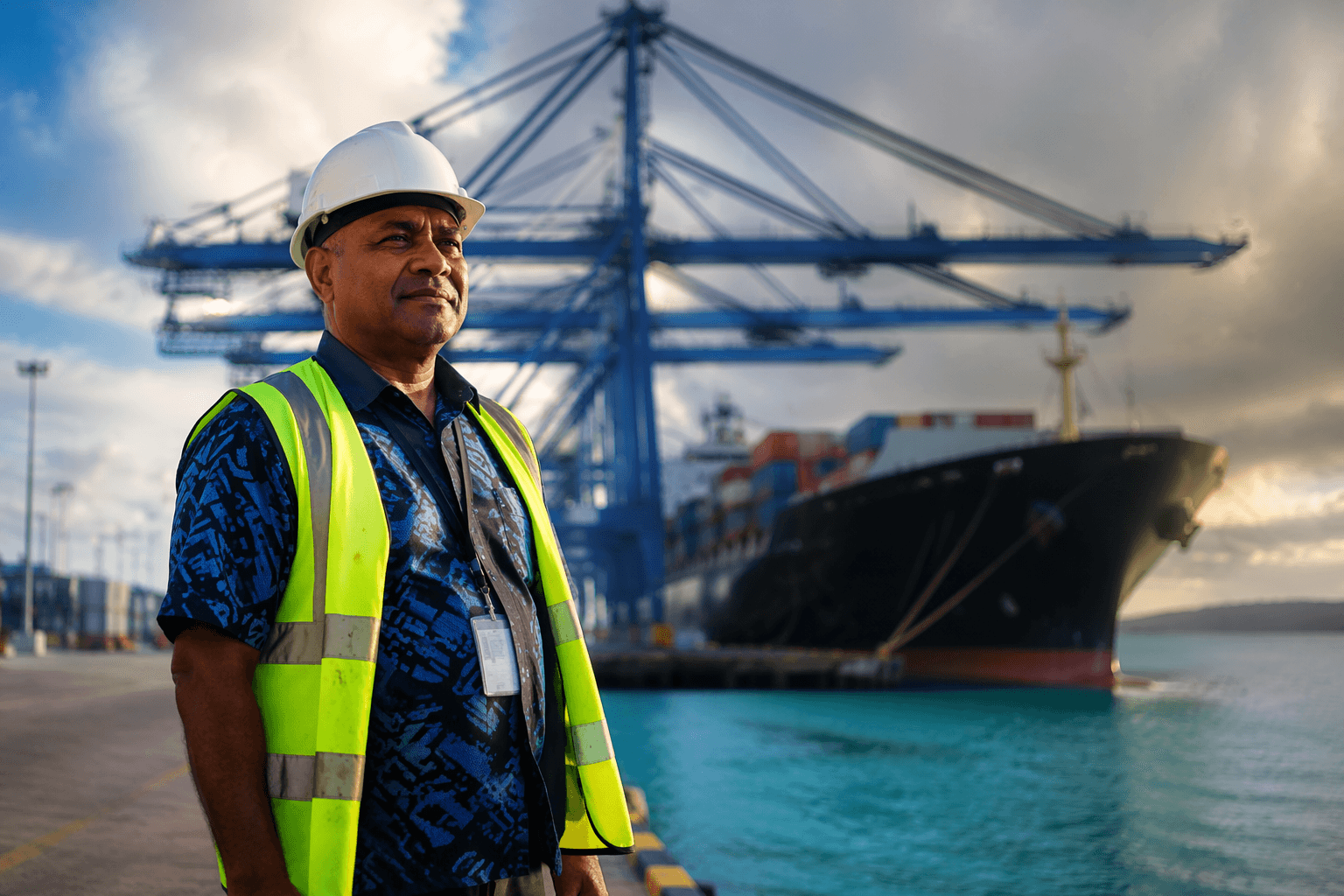
Fiji carries obvious strategic weight in that contest. The Pacific island nation has long been a focal point for regional influence and was among the first Pacific Island countries to sign a memorandum of understanding with China on the Belt and Road Initiative. The port plan arrives just weeks after Australia and Fiji ratified the Pacific Resilience Facility Treaty on May 12, 2026, adding another layer to the region’s competition over financing, resilience and access.
Rubio cast the project as a practical answer to chronic infrastructure gaps in the Pacific Islands, where port capacity has been viewed as both insufficient and strategically important. The port project is intended to demonstrate that the Quad can deliver “high-quality, resilient infrastructure” while strengthening its standing with Pacific partners who are weighing offers from multiple powers.
The minerals agenda carried a similar strategic edge. The ministers announced a critical minerals framework designed to coordinate investment and policy tools across mining, processing and recycling, alongside new energy-security cooperation for the Indo-Pacific. That push matters because China’s controls on mineral shipments have raised alarm in countries that depend on materials used in aerospace, defense and semiconductors.
The Quad traces its origins to cooperation after the 2004 Indian Ocean earthquake and tsunami, which killed more than 225,000 people across 14 countries. Its members describe the partnership as committed to a free, open, stable and prosperous Indo-Pacific, and the Fiji port plan suggests they are now trying to prove that those words can be matched by ports, minerals supply chains and maritime surveillance.
Know something we missed? Have a correction or additional information?
Submit a Tip