North Korea tests AI-guided missiles and rockets under Kim Jong Un
North Korea said it fired AI-guided cruise missiles, ballistic missiles and rockets under Kim Jong Un, signaling a push for sharper battlefield strike tools.
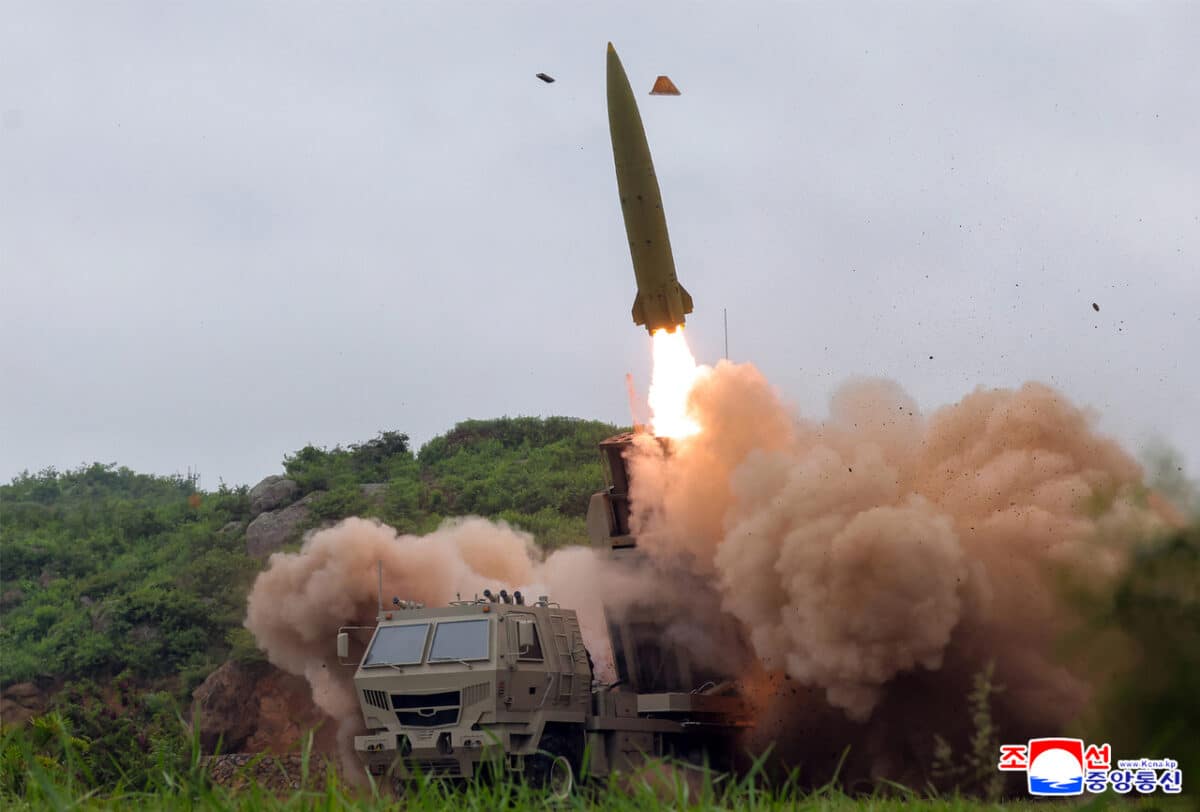
North Korea has put a new label on an old threat: battlefield weapons that are meant to hit faster, farther and with more precision. Under Kim Jong Un’s supervision, state media said the military tested tactical ballistic missiles, artillery rockets and AI-guided tactical cruise missiles, a mix that points less to spectacle than to a steady effort to improve how North Korea would fight in the opening hours of a war.
South Korea’s military detected multiple projectiles the day before the North’s announcement, including close-range ballistic missiles and artillery rockets launched from the Jongju area of North Pyongan Province toward the Yellow Sea. South Korean officials said at least one missile flew about 80 kilometers, or 50 miles. North Korea said the tests took place on Monday, May 26, and assessed a special-mission warhead on tactical ballistic missiles, the reliability of a 240-millimeter controlled artillery rocket with expanded range, and the AI-guided hit accuracy of a tactical cruise missile.

The most consequential detail is not the headline language from Pyongyang, but what it suggests about military intent. North Korea said one cruise-missile system is intended for long-range artillery units near the southern border, and reporting placed its range at about 100 kilometers, or 62 miles. That would keep Seoul, parts of Gyeonggi Province and Incheon inside a danger zone that is already crowded with North Korean short-range missiles, rocket launchers and artillery positions. If the AI-guided claim reflects even incremental gains in navigation or target recognition, it could make those systems harder to intercept and more useful against fixed military sites, airfields and logistics hubs.
Kim described the tests as a “clear signal” of military advancement, according to state media, and North Korean coverage said building the most modern and powerful artillery force remained a top policy priority. Analysts quoted in coverage said this may be the first public acknowledgment by North Korea of AI inside its missile systems. Even if the term is more propaganda than proof of true autonomous targeting, the broader pattern is clear: Pyongyang is still refining conventional strike tools while continuing to expand its long-range ballistic missile and nuclear arsenal.
The launches also fit a recent surge in weapons activity. The Associated Press reported that North Korea fired two presumed short-range ballistic missiles into the sea on Tuesday amid criticism of U.S.-South Korean drills. Together, the tests show a regime still testing the limits of deterrence, and still trying to narrow the gap between demonstrations of power and usable military capability.
This article was produced by Prism’s automated news system from verified source data, official records, and press releases, then run through automated quality and moderation checks before publishing. The system is built and supervised by the people who set the standards it runs under. Read our full AI policy.
Did this article answer your question?


