North Korea Tests Upgraded Solid-Fuel Rocket Engine Targeting U.S. Mainland
North Korea claims its new solid-fuel engine hit 2,500 kilonewtons of thrust, enough to target the U.S. mainland. A Seoul analyst calls the figures possible "bluffing."

Kim Jong Un watched as North Korea's latest solid-fuel rocket engine fired to a claimed thrust of 2,500 kilonewtons, a roughly 27 percent increase over figures from a similar test last September and, according to Pyongyang, proof that the regime is closing the distance toward missiles capable of reaching the American mainland.
The Korean Central News Agency announced the test, releasing photographs crediting Kim's presence and describing the composite carbon-fiber engine as having "great significance in putting the country's strategic military muscle on the highest level." The exact location and timing were not disclosed, and independent verification was not possible.
That caveat carries weight. Lee Choon Geun, an honorary research fellow at South Korea's Science and Technology Policy Institute, said North Korea's public description could amount to "bluffing" because the regime omitted essential performance parameters, including combustion duration, staging readiness, and full-system testing data required to certify an engine for an operational intercontinental ballistic missile. South Korean and U.S. analysts typically wait for telemetry data, satellite imagery, and intelligence assessments before drawing technical conclusions from KCNA announcements.
What the test does confirm, regardless of whether the thrust figures hold up to scrutiny, is strategic intent. Solid-fuel motors require no fueling process before launch, reduce preparation time, and are easier to conceal from surveillance satellites, complicating both early warning systems and any pre-emptive countermeasures. That mobility is precisely the operational advantage Pyongyang is projecting.
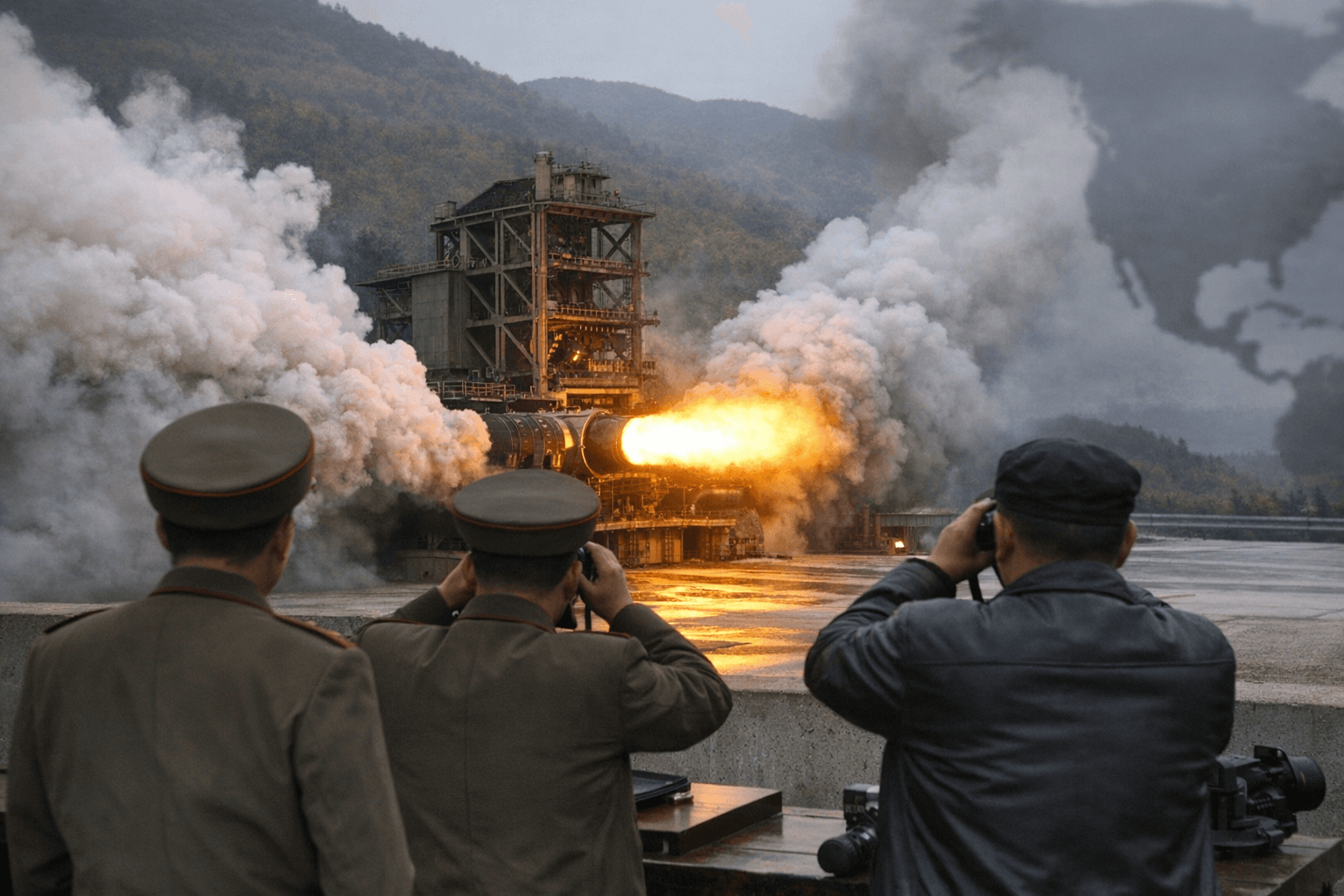
The announcement fits a now-familiar pattern in North Korea's stated five-year arms modernization drive, which frames tests of this kind as progress toward what the regime calls "strategic strike means," a category encompassing nuclear-capable missiles and their delivery systems. Last September's solid-fuel test, which produced the 1,970-kilonewton baseline that the new engine reportedly surpassed, was itself presented as a milestone in that program.
For the United States and its allies, the test tightens the timeline on several fronts whether or not its technical claims survive independent analysis. Missile defense posture in the Pacific will face reassessment, diplomatic coordination with Seoul and Tokyo will accelerate, and intelligence resources will be trained on tracking the program's next move. The harder Pyongyang's engine figures are to disprove, the more urgently the deterrence calculus shifts.
This article was produced by Prism’s automated news system from verified source data, official records, and press releases, then run through automated quality and moderation checks before publishing. The system is built and supervised by the people who set the standards it runs under. Read our full AI policy.
Did this article answer your question?