North Korean women’s football team draws cheers in South Korea
Rain-soaked cheers for North Korea’s Naegohyang Women’s FC in Suwon turned a semifinal into a rare moment of divided memory.
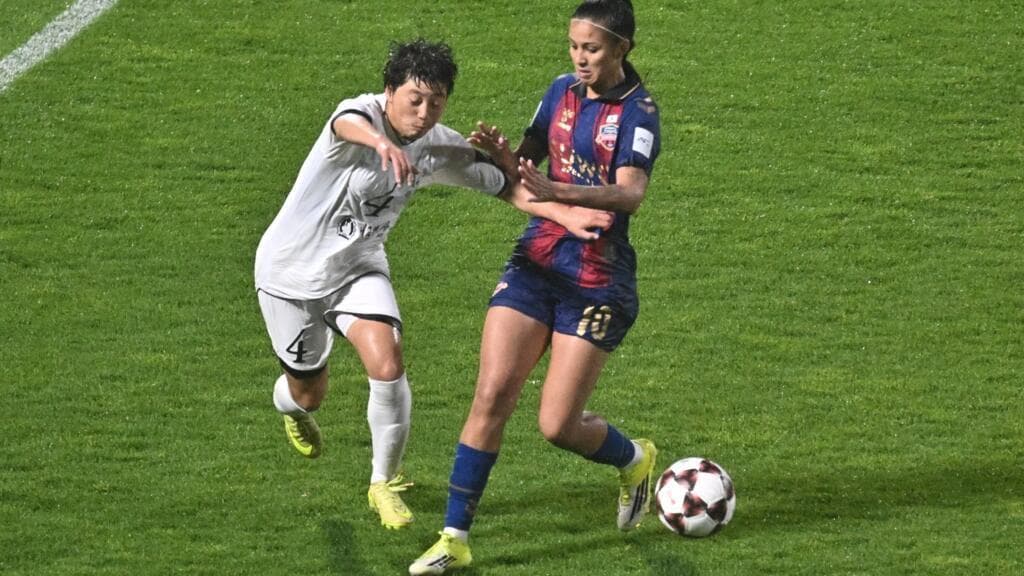
A North Korean women’s football club drew some of the loudest cheers in South Korea in years, turning a semifinal into a charged reminder of how powerfully sport can cut through frozen diplomacy. For older South Koreans in particular, Naegohyang Women’s FC’s visit stirred memories of a peninsula still divided by war, family separation and unfinished history.
The club arrived at Incheon International Airport on May 17 with a 39-person delegation, including 27 players and 12 staff members, after flying from Beijing. It was the first visit by North Korean athletes to South Korea in eight years. The group wore matching black suits and badges showing Kim Il Sung and Kim Jong Un, remained silent as they passed through the airport and then headed to Suwon, about 30 kilometers south of Seoul, for the Asian Football Confederation Women’s Champions League semifinals.
The stakes went beyond a single match. North and South Korea remain technically at war because the 1950-53 Korean War ended in an armistice, not a peace treaty. Sports briefly eased that tension during the 2018 Winter Olympics in Pyeongchang, when the two Koreas marched together and fielded a unified women’s ice hockey team. But relations deteriorated sharply after nuclear talks between Washington and Pyongyang collapsed in 2019, North Korea resumed weapons testing and most sporting exchanges disappeared. North Korea last sent athletes to South Korea in December 2018 for a table tennis event.
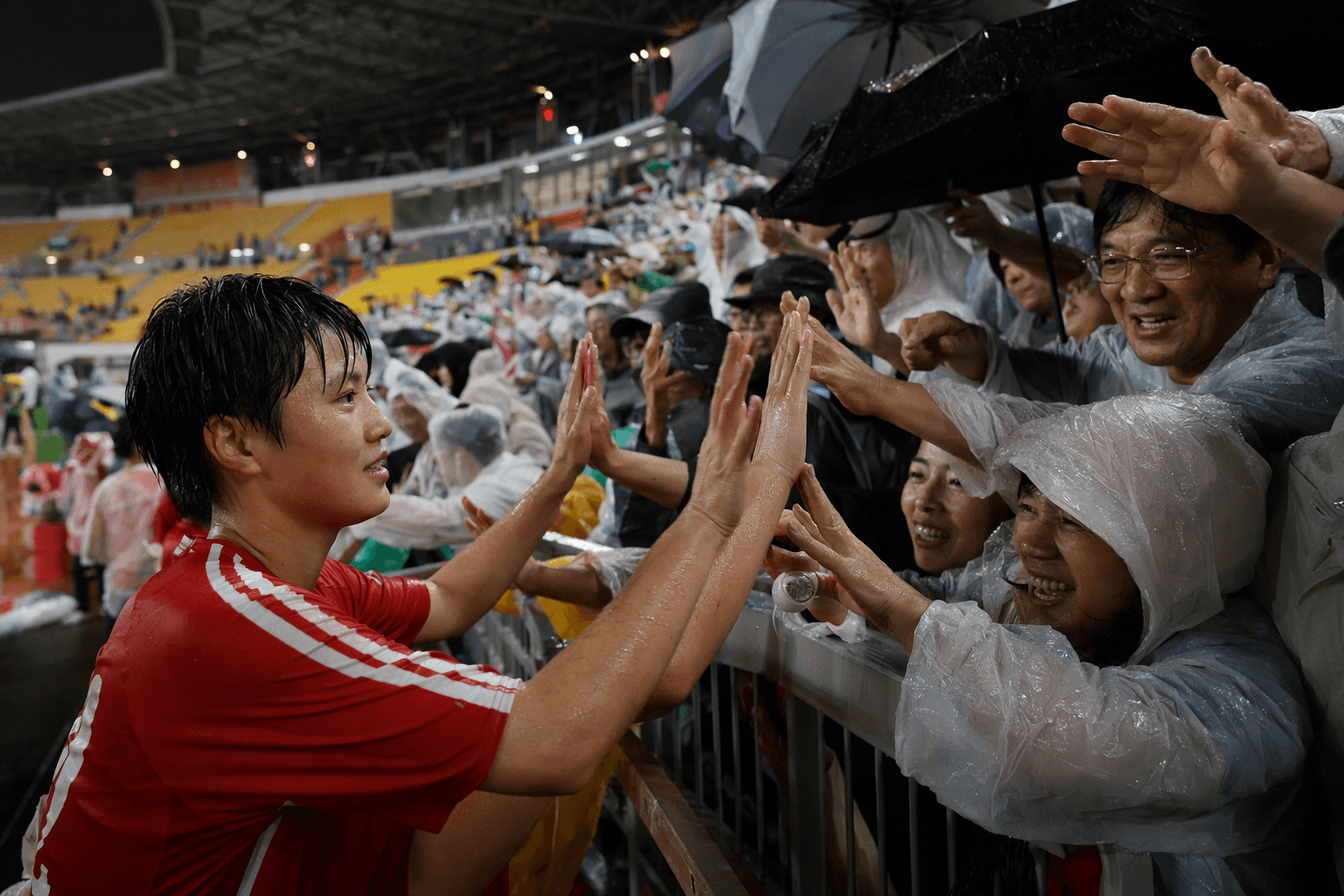
On May 20, in steady rain at Suwon Sports Complex, which holds just under 12,000 spectators, hundreds of South Koreans cheered the North Korean visitors as Naegohyang beat host Suwon FC Women 2-1. The atmosphere was notably warm for an event shadowed by political division, with chanting for the North Korean side growing especially loud as the match wore on. The result sent Naegohyang into another game in South Korea, a final against Tokyo Verdy Beleza, which had beaten Melbourne City 3-1 in the other semifinal.
South Korea’s government under President Lee Jae Myung said it would financially support civic groups planning a 3,000-member cheering section, though it was not clear how many actually turned up. Even so, the scene in Suwon suggested that sports can still reopen a space that formal diplomacy cannot: a rare public encounter in which rivalry, memory and the possibility of reconciliation briefly occupied the same field.
Know something we missed? Have a correction or additional information?
Submit a Tip