Northern New Mexico Health Leaders Meet in Los Alamos: Workforce, Aging, Access
Dr. Garimella told a Feb. 24 forum at SALA Event Center that a 2.8 percent Medicare reimbursement cut and provider closures are forcing Los Alamos patients to go "off the hill" for care.

Dr. Garimella told a panel of regional health-care leaders convened Feb. 24 at the SALA Event Center that cuts to government reimbursements and local service closures are already harming patients in Los Alamos. "Los Alamos has the same issues in terms of Medicaid and that the 2.8 percent reduction in Medicare reimbursement last year is very hard to sustain," she said at the forum titled "Health Care in Northern New Mexico: Changing Landscape."
The community forum at SALA Event Center, 2551 Central Ave., was sponsored by the Los Alamos Community Foundation, the League of Women Voters of Los Alamos and Anchorum Health Foundation and organized as a panel discussion to explore workforce, access and aging-population challenges in Northern New Mexico. Los Alamos Medical Center promoted the event and asked attendees to RSVP via SurveyMonkey; LAMC noted refreshments and prizes would be offered and called the venue "a vibrant community event center."
Onstage, Dr. Garimella framed the problem in demographic and financial terms. "Los Alamos has an aging population and most of the people are on Medicare and we do want to keep our doors open. We do want to be able to take care of out patients but the reimbursement rates are going down and the cost if business is going up and it becomes hard," she said, tying the 2.8 percent Medicare cut to an increased strain on local providers serving Medicare-heavy caseloads.
Workforce retention emerged as a pressing operational issue. "Because of all these problems it's hard to retain people. I worry about my patients," Dr. Garimella said, describing the human consequences of staffing shortfalls. She noted concrete service gaps created when a local Visiting Nurses provider closed: "For example, when Visiting Nurses closed down, we don't have people who can do in-home physical therapy and my patients who need hospice care. We have my patients who need equipment and there's no place in Los Alamos to meet these needs - even diabetic shoes - people have to go off the hill to get things."
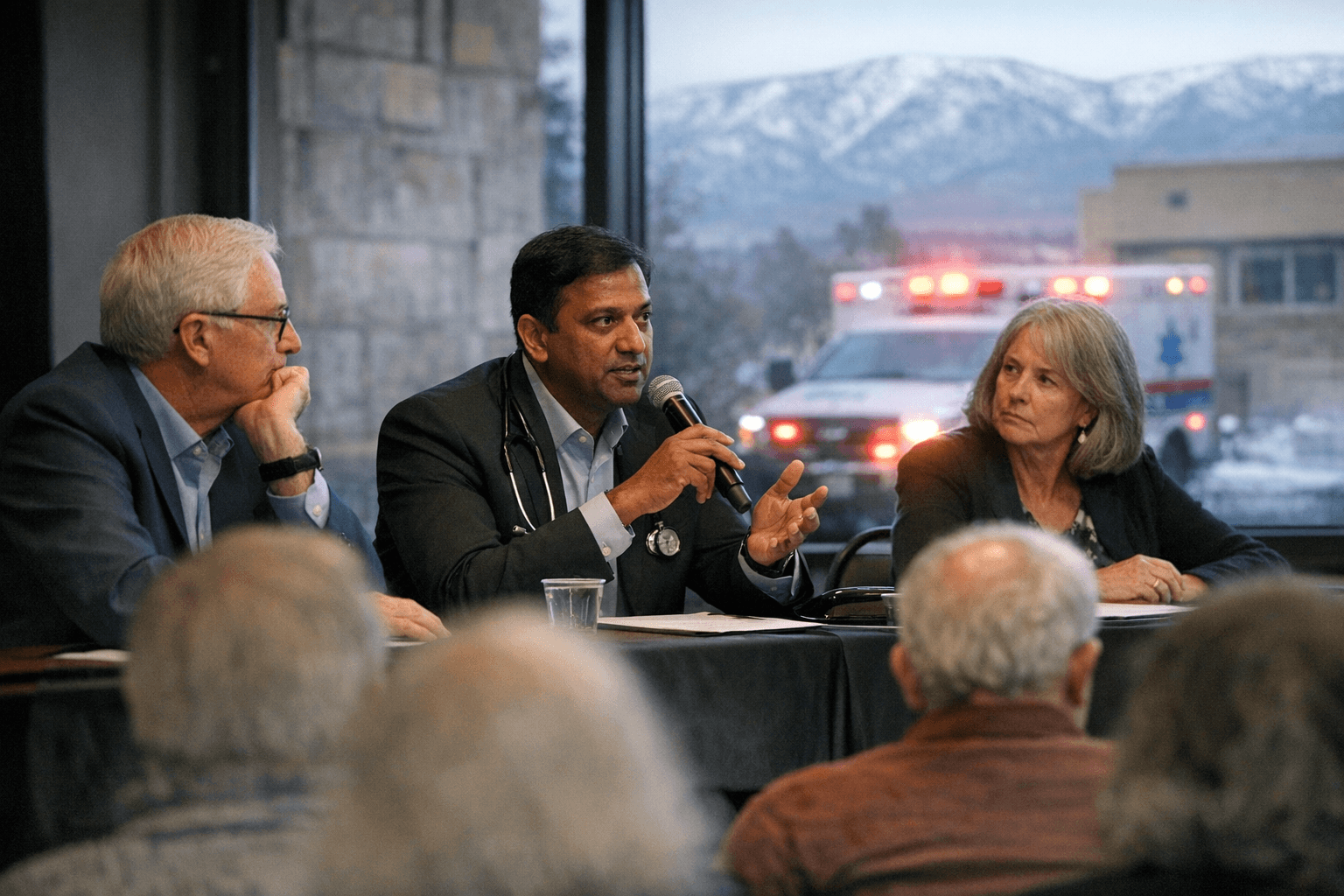
Recruitment headaches extended beyond salaries to housing and commute logistics, Dr. Garimella said. "Our clinic for example has been trying to recruit physicians for at least a couple of years, and unfortunately we have people who want to come but then they look at the housing processes in Los Alamos and then they decide that they cannot come and so we have that problem. It's difficult to recruit staff because staff can't live in Los Alamos and most of the people live off the hill so day to day operations become hard sometimes if there's a snowstorm or other things like that," she said.
Los Alamos Medical Center highlighted related community outreach at SALA earlier in February, promoting a free seminar series that included a Feb. 12 presentation, "Active Lifestyles And ACLs," by Dr. Tania Pence, DO. Dr. Pence, who is accepting new patients ages 2 and up at Los Alamos Orthopedics and Sports Medicine on the second floor of LAMC, schedules appointments at 505.661.9118 and lists specialties including ACL reconstruction, arthroscopy, rotator cuff repair and joint replacement work.
The Feb. 24 forum tied clinical realities to broader civic activity: local organizations such as the Rotary Club of Los Alamos continue to mobilize volunteers and fundraising for food security and other social supports, including a Meals of Hope packing event held Nov. 22 at Crossroads Bible Church with a stated $8,000 goal to pack 25,000 meals for Northern New Mexico families. Forum speakers made clear that preserving access to basic medical equipment and in-home supports, addressing housing barriers for clinicians and stabilizing reimbursement rates will be essential to keep care local as the region’s population ages.
Sources:
Know something we missed? Have a correction or additional information?
Submit a Tip