NTSB pulls docket offline after AI recreates cockpit voice recordings
AI turned public spectrograms into cockpit audio approximations, forcing the NTSB to pull its docket offline and confront a new leak in aviation privacy.
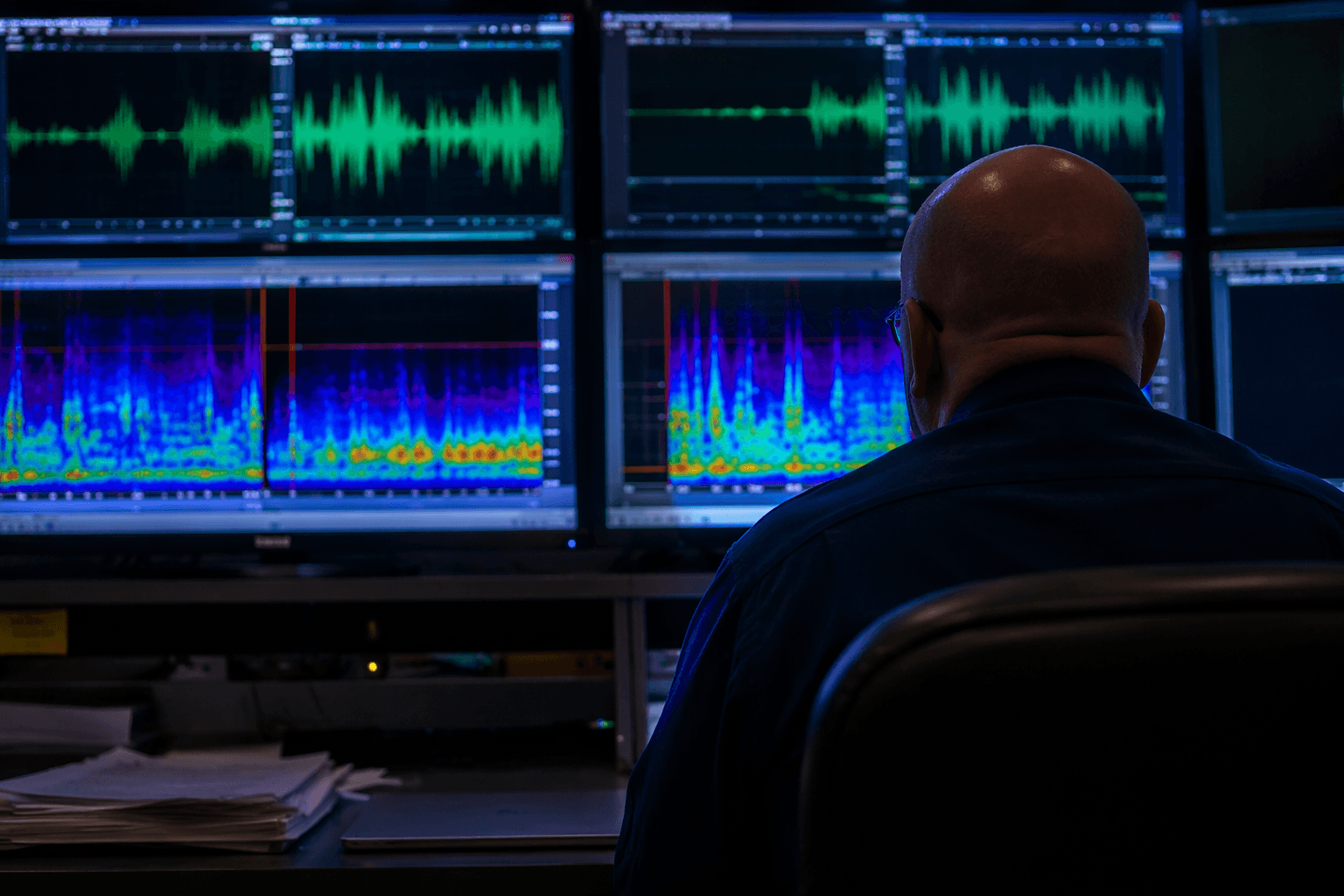
Generative AI turned public visual evidence into a proxy for protected cockpit audio, pushing the National Transportation Safety Board to take its docket system offline while it assessed how much of its case file could be exposed. The agency said it does not release cockpit voice recordings because federal law bars public disclosure of those highly sensitive communications, and the episode laid bare a new challenge for accident investigators: material that is meant to be public can now be recombined into something that sounds far more private.
The immediate trigger was the UPS Flight 2976 investigation. Spectrogram images, the visual representations of sound data released from the case file, were used with AI tools to reconstruct approximations of the missing audio. That raised alarms inside an investigative system built on a careful split between public transparency and protected evidence. The NTSB said its docket system was temporarily unavailable while it examined the scope of the issue and evaluated solutions.

UPS Flight 2976, a Boeing MD-11F cargo airplane, was destroyed shortly after takeoff from Louisville Muhammad Ali International Airport in Louisville, Kentucky, on Nov. 4, 2025, at about 5:14 p.m. EST. All three crewmembers were killed, along with 11 people on the ground, and 23 others on the ground were injured. The NTSB began on-scene work at the airport the next day and invited the Federal Aviation Administration, United Parcel Service, Boeing, the Independent Pilots Association, GE Aerospace and Teamsters Airline Division to take part in the investigation.
The case also underscored why the agency keeps cockpit voice material under tight control. In a March 24, 2026 report for the crash, NTSB investigators warned that CVR summaries and transcripts are not precise and can be misleading if taken out of context. The agency’s own rules say transcripts of pertinent portions of cockpit voice recordings are released only under narrow conditions, such as at a public hearing or when a majority of factual reports are made public.
The broader policy problem is that the NTSB has long relied on selective disclosure to preserve both public accountability and witness privacy, but modern image-recognition and computational tools can defeat that safeguard by turning permitted visual data back into prohibited audio. The agency has also been pressing for longer voice-recording retention, urging the FAA in February 2024 to require 25 hours of cockpit voice recorder capacity on existing aircraft, up from the former two-hour standard. The FAA finalized a 25-hour CVR rule for newly manufactured aircraft in 2026.
Public access to the docket was later restored, but the NTSB kept some investigations closed pending review, including the UPS Flight 2976 case. The episode left the agency with a harder question than a simple technology fix: how to shield sensitive evidence without blunting the public’s ability to scrutinize aviation safety failures.
This article was produced by Prism’s automated news system from verified source data, official records, and press releases, then run through automated quality and moderation checks before publishing. The system is built and supervised by the people who set the standards it runs under. Read our full AI policy.
Did this article answer your question?