NVIDIA pledges $4 billion to photonics firms to secure AI optical capacity
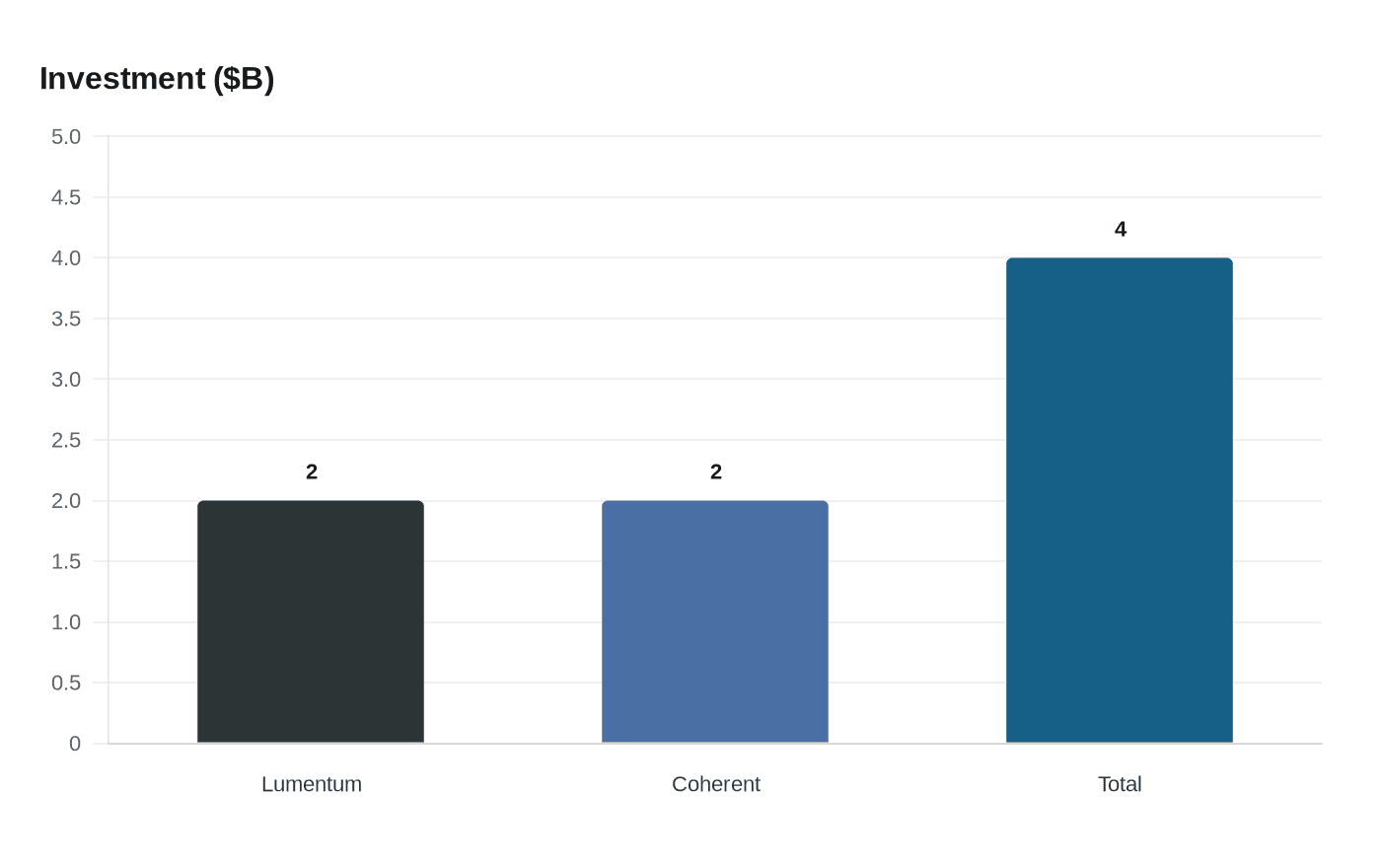
NVIDIA committed $2 billion each to Lumentum and Coherent, locking multiyear purchase commitments and capacity rights to supply photonics for AI data centers.
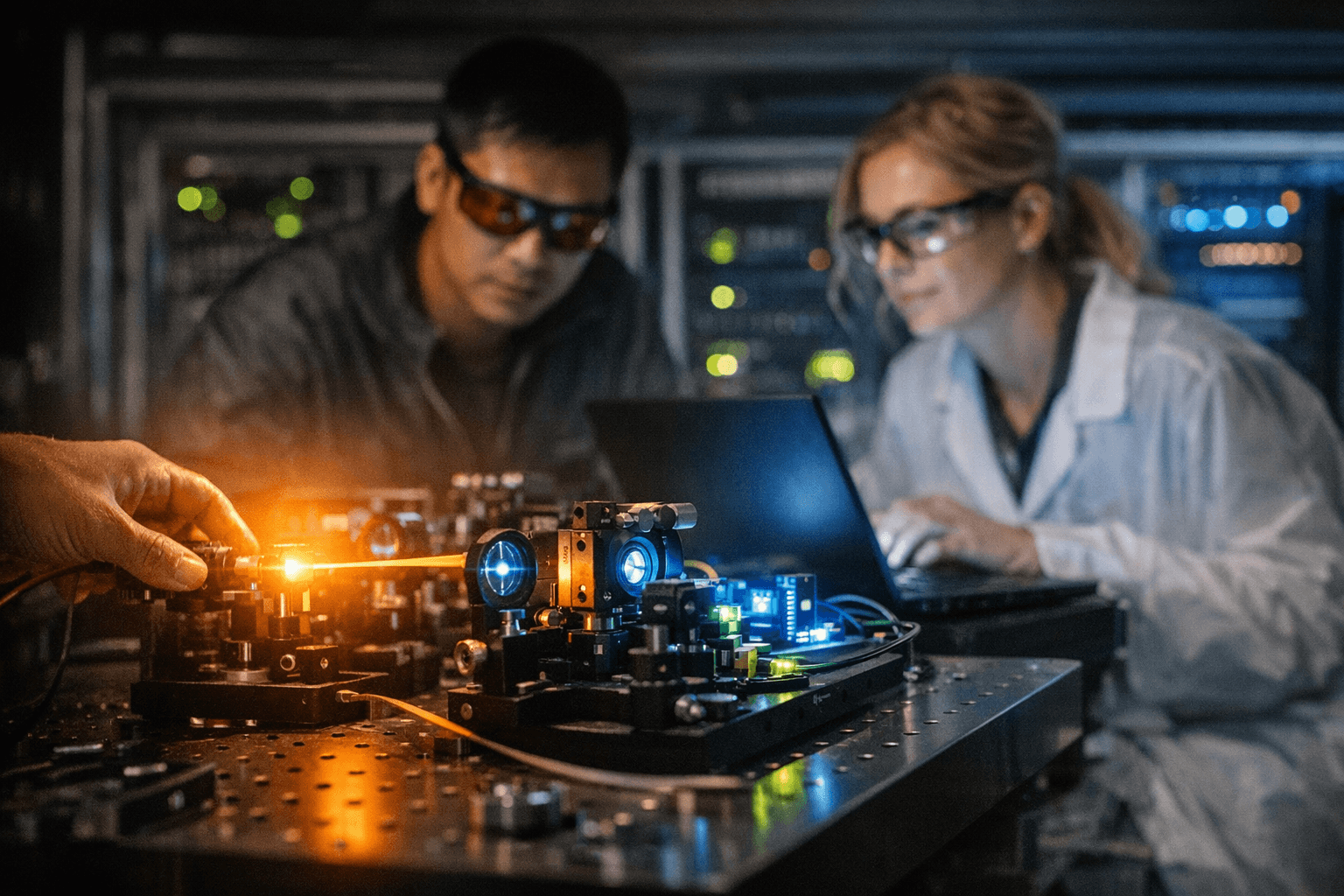
NVIDIA pledged about $4.0 billion in multiyear strategic partnerships with two U.S. photonics firms, allocating $2.0 billion to Lumentum and $2.0 billion to Coherent to secure advanced lasers, optical networking products and silicon photonics capacity for its AI data centers. The deal pairs direct investments with multi‑billion‑dollar purchase commitments and what the company described as future access or secured production capacity for critical optical components.
NVIDIA framed the agreements as nonexclusive strategic partnerships intended to accelerate research and support U.S. manufacturing. “The nonexclusive agreement includes a NVIDIA multibillion‑dollar purchase commitment and future access and capacity rights for advanced laser and optical networking products,” the company said in its announcement. Jensen Huang, NVIDIA’s founder and CEO, said the pact with Lumentum will advance “the world's most sophisticated silicon photonics to build the next generation of gigawatt‑scale AI factories.”
Photonics technology uses light instead of electricity to move data, and industry participants say it is central to scaling energy‑intensive AI workloads. NVIDIA highlighted that “Optical interconnect technology and package integration are critical for the continued scaling of AI factories. [They improve] the energy efficiency and resiliency of large‑scale AI networks,” framing the investments as both a performance and power‑efficiency play for hyperscale deployments.
Coherent will work with NVIDIA on next‑generation silicon photonics designs, and NVIDIA said it will support Coherent’s research and U.S. manufacturing expansion. Jim Anderson, Coherent’s chief executive, described the deal as an extension of the companies’ long relationship: “This strategic relationship underscores Coherent's role as a key enabler of next‑generation AI data center infrastructure. We are proud to expand our 20‑year relationship with Nvidia … to help them build the AI data centers of the future.”
Markets reacted quickly to the announcement, with shares of Lumentum rising roughly 8 percent and Coherent jumping about 13 percent on the news, reflecting investor expectations that the partnerships will materially increase near‑term revenue visibility for both suppliers. NVIDIA’s own stock movement was muted in early trading, suggesting investors see the commitments as a strategic upstream hedge rather than a direct immediate revenue driver for the chipmaker.
Economically, the package signals a shift in how large cloud and chip companies manage scarce inputs for AI scale‑up: rather than relying solely on open markets, lead customers are placing large guarantees and capital behind suppliers to secure priority access. That model reduces supply risk for NVIDIA but raises questions about capacity concentration and competitive responses from rival chipmakers and optics vendors. The announcement comes amid a bout of aggressive procurement across the industry, including recently publicized multi‑billion customer arrangements for AI compute capacity.
Key contractual specifics were not disclosed. NVIDIA did not publish equity stake sizes, delivery timetables, or exact volumes tied to the purchase commitments, and the firms did not provide detailed job or site disclosures for the planned U.S. manufacturing expansion. Those omissions leave open questions about the pace of production ramp, the geographic distribution of new capacity, and any government incentives involved.
For now, the transaction cements NVIDIA’s strategy of vertically securing components that can bottleneck AI deployments and signals continued upward pressure on capital spending across AI hardware supply chains as compute demand grows. Analysts and policymakers will likely scrutinize the next filings and company disclosures for details on capacity timelines, contractual exclusivity limits, and the potential labor and investment footprint in U.S. manufacturing.
Know something we missed? Have a correction or additional information?
Submit a Tip

