Nvidia's Jensen Huang says society must adapt to AI's rise
Jensen Huang said AI will force schools, workplaces and everyday disclosure rules to change as Nvidia backs a $2 billion push tied to Coherent.

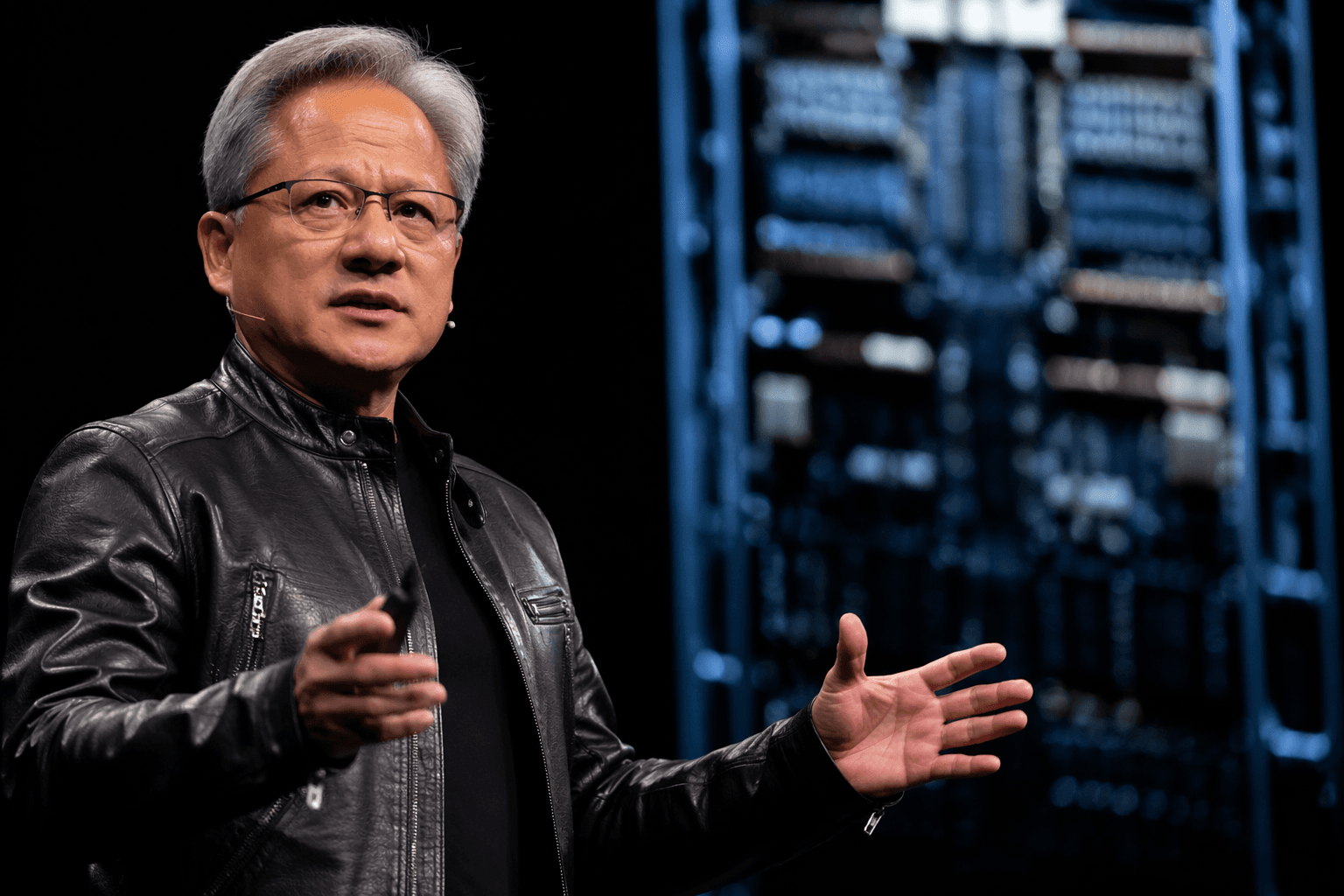
Jensen Huang said society has no choice but to change as artificial intelligence becomes more powerful, pushing the debate beyond chips and code into schools, workplaces and the rules people use to separate human work from machine-made output. Speaking in Sherman, Texas, before a groundbreaking at Coherent’s manufacturing facility, the Nvidia chief executive cast AI as a force that should expand capability, not simply replace labor.
Huang’s argument lands at a moment when the stakes are no longer theoretical. Nvidia was unveiling a major AI infrastructure upgrade as part of a $2 billion partnership with Coherent, a deal aimed at the hardware underpinning the next wave of AI systems. Coherent said the Sherman expansion is expected to create more than 1,000 jobs, including more than 550 direct advanced-manufacturing, engineering and technical roles, while doubling manufacturing production space and quadrupling wafer production capacity.
The Sherman site makes 6-inch indium phosphide semiconductor components used for optical networking in AI datacenters, a reminder that the AI boom is rippling into industrial Texas, not just software hubs on the coasts. Coherent said the project builds on about $20 million in earlier support from the Texas Semiconductor Innovation Fund and the Sherman Economic Development Corporation, and it is linked to a letter of intent for up to $50 million in CHIPS Act funding from the U.S. Department of Commerce.
Huang’s message suggests that “new social norms” would have to mean more than generic caution. In schools, it would mean deciding when AI is a study aid and when it is a shortcut that undermines learning. In workplaces, it would mean clearer expectations around which tasks get delegated to software, which skills remain distinctly human and how much disclosure is needed when AI helps produce code, text or analysis. In copyright and media, it would mean tougher conventions around attribution, provenance and the disclosure of synthetic content.
The timing is striking because public unease is already running high. A Reuters/Ipsos poll released June 10 found 53% of U.S. adults worried AI could put them or someone in their household out of work, while 37% said they were not worried at all and 10% were unsure or did not answer. The survey also found Democrats more worried than Republicans, 61% to 47%, underscoring how quickly AI has become a labor issue as much as a technological one.
For Nvidia, the appeal of AI remains tied to scale, speed and industrial reach. For the country, Huang’s remarks point to a harder adjustment: not just building better machines, but rewriting the habits, expectations and disclosures that govern daily life around them.
This article was produced by Prism’s automated news system from verified source data, official records, and press releases, then run through automated quality and moderation checks before publishing. The system is built and supervised by the people who set the standards it runs under. Read our full AI policy.
Did this article answer your question?


