NYT Strands puzzle #868 answers point to big talk theme
Puzzle #868 is all about size, with SUPERSIZEIT as the spangram and a lineup of giant-scale words that turned "Big talk" into a daily ritual.
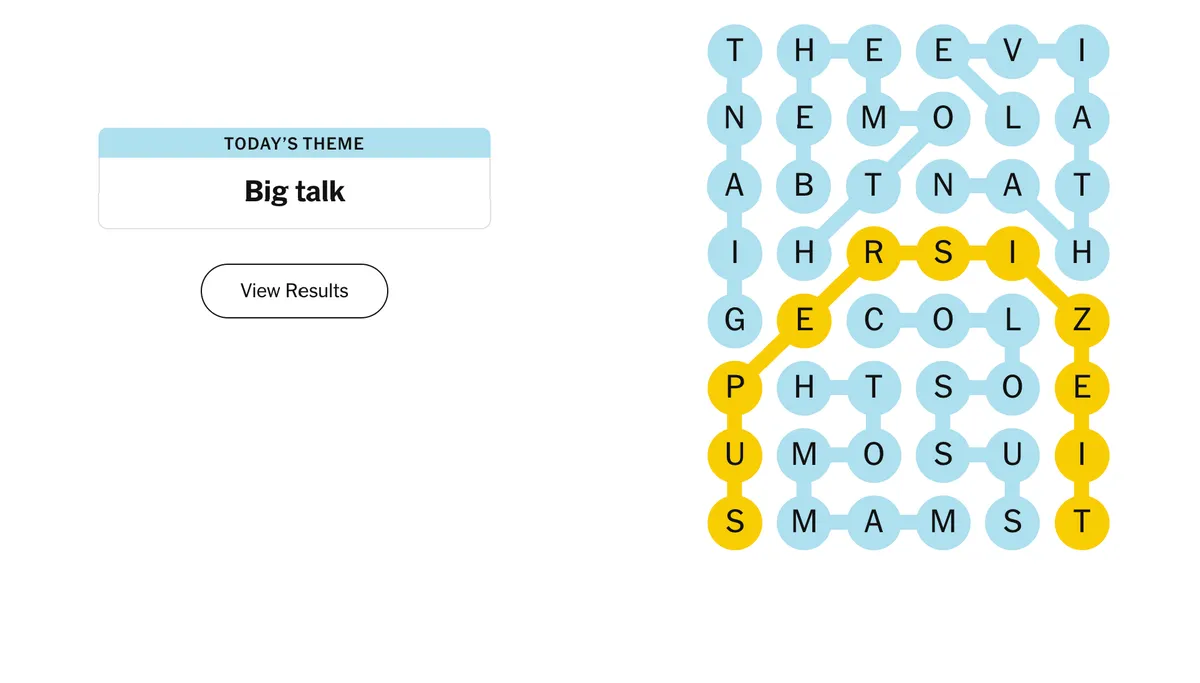
Puzzle #868 leans all the way into size, with answers that stack from GIANT to LEVIATHAN. The New York Times’ official page calls it “Strands Sidekick No. 868,” tags it for Sunday, July 19, 2026, and credits Celine Ka Wing Lau.
The theme is big talk, literally
The theme for this grid is “Big talk,” and the clue language makes the joke clear before the board is solved. Mashable summed it up with the line, “Today’s NYT Strands hints are easy if you like things large,” which fits a puzzle built around oversized words and oversized ideas.
The answer set is organized around extreme scale rather than a hidden category with subtle wordplay. Parade’s indexed result lists the five theme words as GIANT, BEHEMOTH, LEVIATHAN, COLOSSUS, and MAMMOTH, with the spangram SUPERSIZEIT. One guide describes the board as a 5-theme-word grid with an 11-letter spangram, and another labels the difficulty Medium.
The answers and the spangram
For players who want the clean readout, the completed grid breaks down this way:
- GIANT
- BEHEMOTH
- LEVIATHAN
- COLOSSUS
- MAMMOTH
- SUPERSIZEIT, the spangram
WordHint says the spangram has eleven letters and runs left to right. It also frames the clue as a phrase often heard at a fast-food counter when asking for the largest portion, which points straight to the familiar ordering line behind SUPERSIZE IT. That makes the whole board feel less like an abstract vocabulary test and more like a size joke stretched across the grid.
The word choices matter because they all operate on the same scale. GIANT is everyday exaggeration, BEHEMOTH and LEVIATHAN carry a heavier, more dramatic register, COLOSSUS gives the board a classical flavor, and MAMMOTH keeps it tied to something huge and unmistakable. Together, they make the theme read as a controlled burst of inflation, one of the reasons the puzzle lands so cleanly once the spangram is found.
Why this daily puzzle keeps circulating
The July 19 puzzle also shows how Strands now lives inside a larger routine of daily puzzle coverage. The official New York Times page was published on July 18, 2026, a day ahead of the puzzle date, while third-party guides from Mashable, Forbes, Parade, Lifehacker, CNET, TechRadar, Yahoo Tech, Sportskeeda, WordHint, Strands Today, TheWordFinder, and Xfire all moved in with hints, answers, or clue breakdowns.
That ecosystem turns one grid into a repeat habit. New York Times Games keeps the official page in the morning rotation, while the surrounding coverage supplies the same audience with increasingly specific help, from broad theme nudges to the exact spangram. Lifehacker even promoted the puzzle on X with the theme “Big talk,” showing how quickly a daily game becomes a shareable cue across platforms.
The pattern matters because it is bigger than one answer set. Strands works like a loyalty engine: the Times keeps the puzzle anchored to a daily appointment, and the wider media stack keeps the conversation alive long enough for players to return again the next day. In that sense, a grid full of giant words is also a neat snapshot of the new attention economy, where a few letters in a 6-by-something board can pull in readers, repeats, and a steady stream of morning clicks.
What stands out in this grid
This is one of those Strands puzzles where the theme does most of the work once you see it. The clue about wanting the largest portion, the eleven-letter spangram, and the answer set full of size words all point in the same direction without much ambiguity.
For anyone tracking the puzzle itself, #868 is memorable for how cleanly it delivers on its premise. The board does not just hint at “big talk,” it speaks in superlatives from start to finish, with SUPERSIZEIT tying the whole thing together.
This article was produced by Prism’s automated news system from verified source data, official records, and press releases, then run through automated quality and moderation checks before publishing. The system is built and supervised by the people who set the standards it runs under. Read our full AI policy.
Did this article answer your question?