Obi, Kwankwaso exit coalition, weakening Nigeria opposition challenge to Tinubu
Obi and Kwankwaso walked away after an April 25 unity pledge, exposing how quickly Nigeria’s opposition coalition fractured before voters even got a choice.
Peter Obi and Rabiu Kwankwaso have walked out of the coalition that was supposed to give Nigeria’s opposition its best chance in years to unseat Bola Tinubu, turning a promised unity ticket into another reminder of how hard it is to build a single anti-incumbent machine.
The alliance, built under the African Democratic Congress with Atiku Abubakar and other political heavyweights, had been touted as a rare attempt to bring together the country’s biggest opposition figures behind one candidate. That plan was announced only days ago, after the bloc agreed on April 25 to rally behind a single presidential contender. Obi’s exit now leaves that pledge badly damaged, and Kwankwaso’s departure strips the coalition of another major vote-getter from the 2023 race.
Obi said he was leaving because of “endless court cases, internal battles, suspicion, and division.” He also stressed that David Mark, Atiku Abubakar and other leaders had not personally wronged him. The language pointed less to a personal quarrel than to a familiar pattern in Nigerian opposition politics, where leadership contests, legal fights and distrust often sink alliances before they can mature into a disciplined campaign.
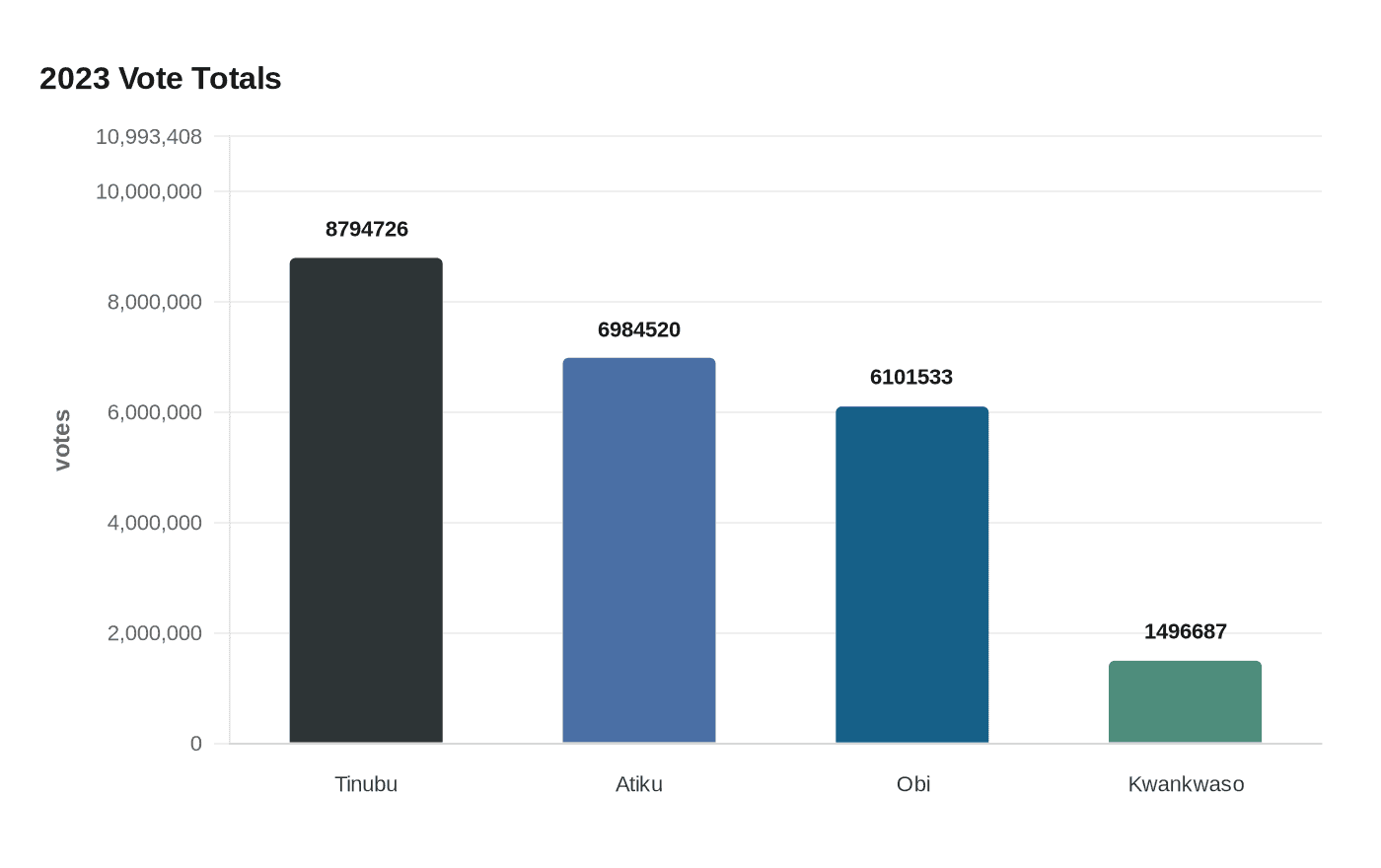
That weakness matters because the numbers showed real potential. In the 2023 presidential election, Tinubu won with 8,794,726 votes. Atiku followed with 6,984,520, Obi with 6,101,533 and Kwankwaso with 1,496,687. Together, the three opposition figures drew far more support than Tinubu, which is why any coalition among them carried so much weight. Obi’s appeal among younger and urban voters also made him a central piece of the anti-Tinubu argument.
Instead, the coalition has been pulled into the same kind of disputes that have long weakened opposition efforts across Nigeria. The African Democratic Congress itself has been caught up in leadership battles, while another new platform, the Nigeria Democratic Congress, received registration from the Independent National Electoral Commission in February 2026 and later its certificate of registration. That leaves the opposition with a new label but not yet a stable machine.
The clock is also moving. INEC has set February 20, 2027 for the presidential and National Assembly elections, leaving a narrow window for any regrouping. Nigeria’s economy remains under pressure, with the World Bank saying poverty reached 63% in 2025 and that high inflation and fuel costs were squeezing incomes. Those conditions should have helped the opposition. Instead, Obi and Kwankwaso’s departure has made it easier for Tinubu’s camp to argue that the opposition cannot hold together long enough to govern.
This article was produced by Prism’s automated news system from verified source data, official records, and press releases, then run through automated quality and moderation checks before publishing. The system is built and supervised by the people who set the standards it runs under. Read our full AI policy.
Did this article answer your question?


