Ocean Infinity search ends without MH370 discovery; families demand continuation
Ocean Infinity concluded a deep-sea survey without locating MH370; families say briefings stopped and press Malaysia to keep searching for closure.

Ocean Infinity concluded its latest seabed survey on January 23, 2026, without producing any confirmed discovery of Malaysia Airlines Flight MH370, Malaysian investigators said, and relatives of the 239 people lost on the flight are demanding the hunt continue amid complaints of a lack of communication. "The search activities undertaken have not yielded any findings that confirm the location of the aircraft wreckage," the Air Accident Investigation Bureau said, summarizing the outcome of two phases of underwater operations that examined parts of a newly authorized search zone in the southern Indian Ocean.
Malaysia had authorized a new 15,000 square kilometre search area, but the Ocean Infinity operation surveyed roughly 7,571 square kilometres in two reported phases that Business‑standard and other outlets say added up to 28 search days. The work occurred in a short phase in late March 2025 and a longer campaign from December 31, 2025, to January 23, 2026, according to the bureau and reporting on the operation. Weather periodically disrupted operations and the search area sits at average seabed depths of about 4 kilometres, conditions officials described as technically difficult.
The company that led the effort, Ocean Infinity, has been variously described in reporting as Texas‑based, U.S.-British or UK/US-based, and uses marine robotics and autonomous underwater vehicles to scan seabed areas not previously examined. Malaysia contracted the firm under a no-find, no-fee arrangement reported by Business‑standard and CBS, in which Ocean Infinity will be paid USD 70 million only if wreckage is discovered.
Relatives, especially those of Chinese passengers, sent a joint open letter on the 12th anniversary of the disappearance that thanked Prime Minister Anwar Ibrahim for initiating the renewed hunt but criticized the flow of information. "We understand the difficulties of the search," the families wrote, and added, "However, since 15 January this year, families have received no further search briefings whatsoever." They also said, "Over the past two months, we have repeatedly contacted Malaysia's Ministry of Transport through both Malaysia Airlines and the Chinese government, yet have received no response."
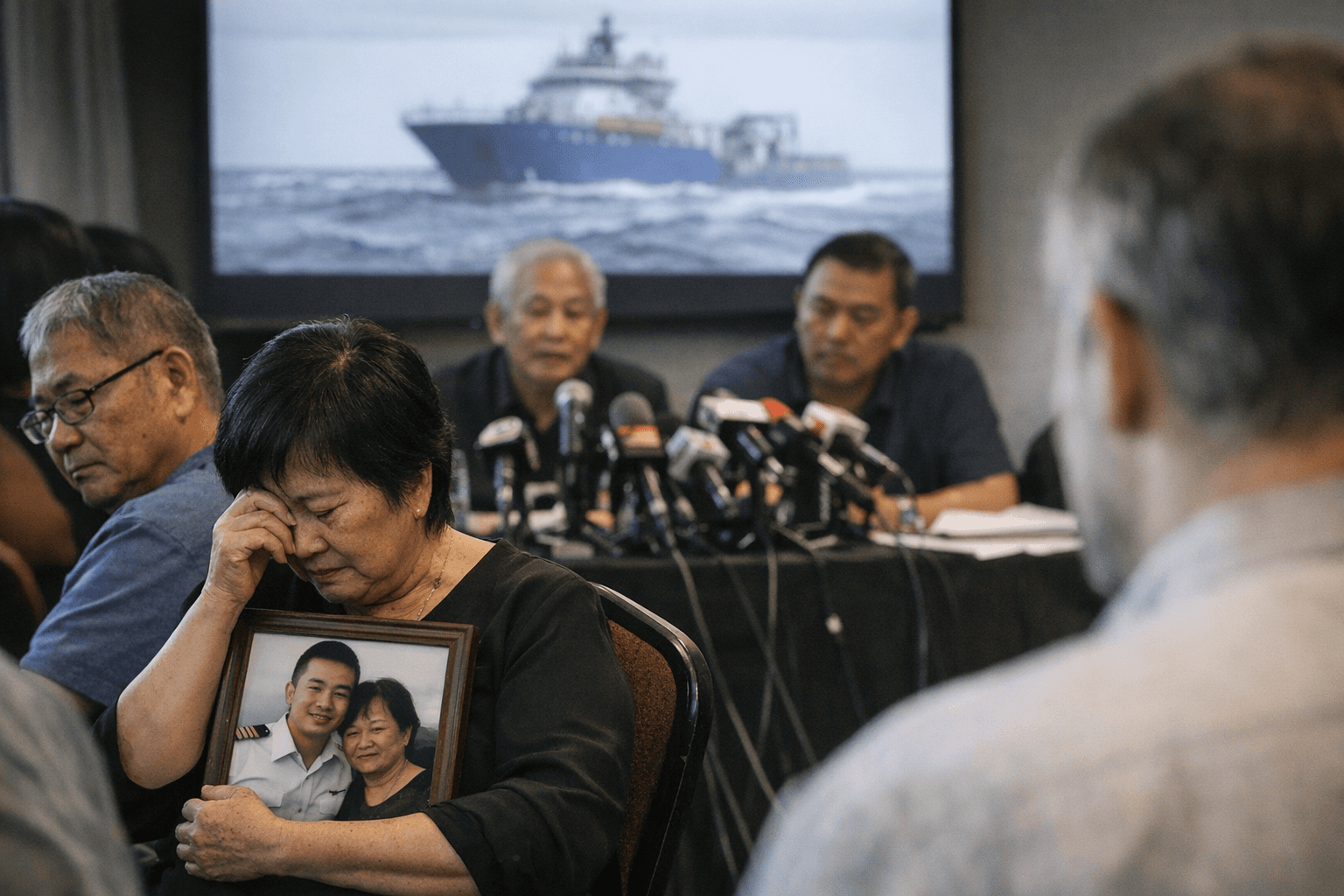
The outcome underscores persistent limits to even modern underwater search technologies when faced with vast target zones and extreme depths. The official multinational search that was suspended in January 2017 remains the largest in aviation history, and a private Ocean Infinity search in 2018 also failed to locate the main wreckage despite targeted drift‑modeling and oceanographic analysis. A handful of debris pieces, including a flaperon found on Réunion Island in July 2015 and fragments later washed up on East African shores, provided the only physical clues.
The renewed effort highlights a shift in how states pursue high‑cost, high‑uncertainty searches: governments are increasingly turning to private firms under contingent‑pay contracts to contain upfront costs while leveraging advances in marine robotics. That structure creates tradeoffs. A contingent contract limits immediate fiscal exposure but can compress operational transparency and the cadence of official briefings, aggravating relatives who seek accountability and closure.
For families, the immediate imperative is procedural: regular briefings, access to survey maps and clarity about next steps. For policymakers, the decision now pits political will and public responsibility against cost and technical probability. The ocean area remains vast; locating MH370 will require sustained searches, clearer governmental communication and a willingness to fund open-ended maritime operations until definitive evidence is obtained.
This article was produced by Prism’s automated news system from verified source data, official records, and press releases, then run through automated quality and moderation checks before publishing. The system is built and supervised by the people who set the standards it runs under. Read our full AI policy.
Did this article answer your question?


