Odesa Zoo Leads Rescue After Sunflower Oil Slick Coats Black Sea Birds
Volunteers and zoo staff in Odesa raced to clean and rehabilitate seabirds after strikes at Pivdennyi port ruptured storage tanks, releasing large quantities of sunflower oil into the Gulf of Odesa. The spill has slicked shorelines, killed dozens of birds, and prompted criminal probes and an intensive but complex cleanup under continued security risks.

On December 20, local officials say strikes damaged sunflower oil storage tanks at Pivdennyi port, setting off a spill that by December 24 had spread across the port estuary and into the Gulf of Odesa, coating beaches and marine life. The Odesa Regional Prosecutor’s Office said that on December 20, “during a massive enemy attack on the Odesa district with attack drones,” enterprise reservoirs were damaged and ignited, and that 13 containers holding sunflower oil were affected. The breaches allowed oil to flow into the water and to reach shorelines including Otrada, Lanzheron and Delfin.
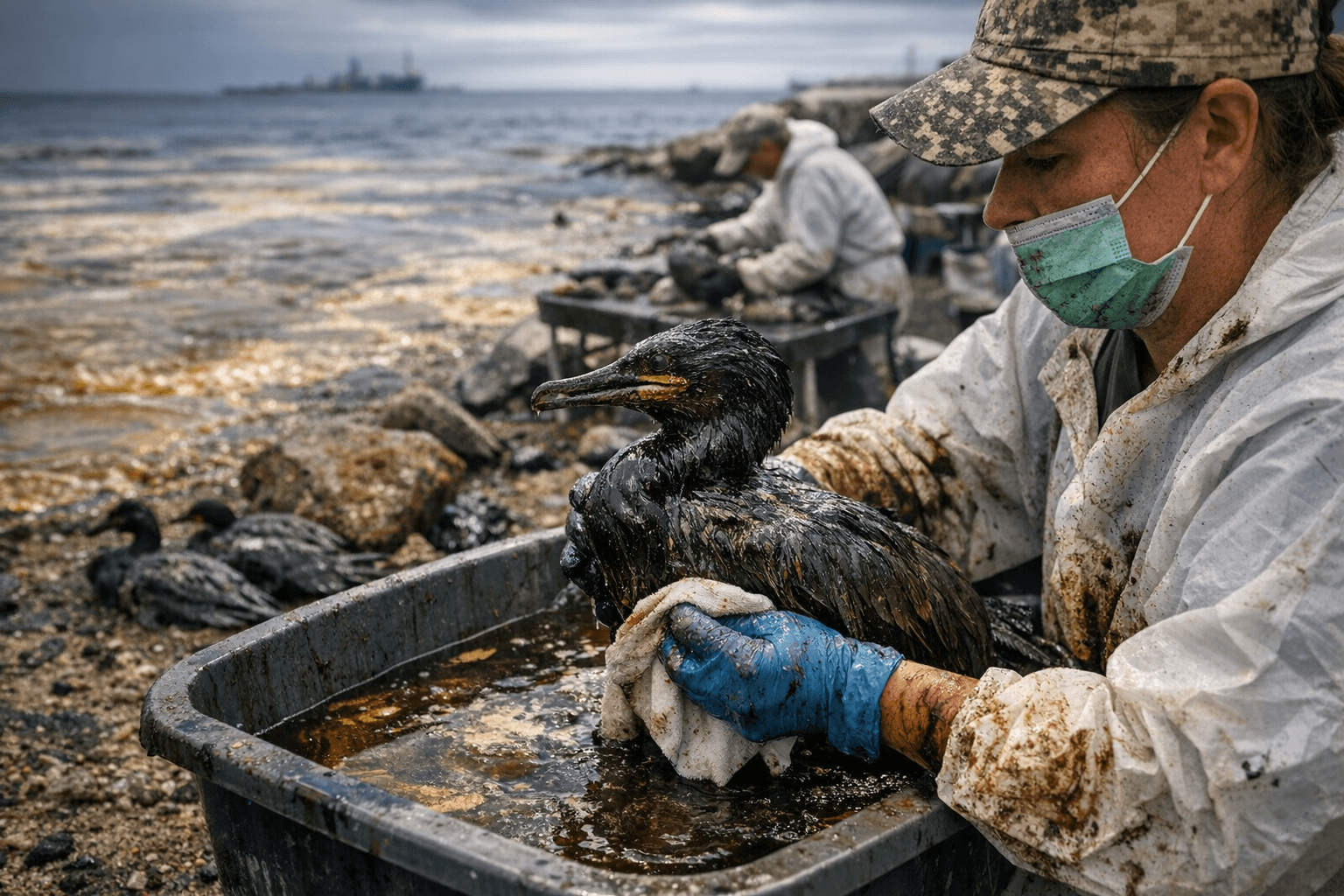
The substance involved, regional authorities emphasized, was sunflower oil, an organic vegetable product rather than petroleum. Officials warned, however, that the oil remained acutely harmful to seabirds and other wildlife. Dozens of birds were found dead or incapacitated on the slicked beaches. Odesa Zoo director Ihor Biliakov identified the great crested grebe and the horned grebe as among the worst affected species. Photographs and multiple local accounts showed survivors and fatalities covered in oil.
Rescue teams led by the Odesa Zoo opened emergency rehabilitation points and worked alongside volunteers and environmental services to retrieve and treat birds from contaminated sands and water. Caretakers and volunteers painstakingly cleaned surviving birds, scrubbing them “from bill to toe” to remove slicked oil that otherwise prevents preening, robs birds of waterproofing and insulation, and leads to hypothermia and loss of mobility.
Containment efforts were deployed around the port and along affected coastlines. Port authorities installed two layers of floating booms across the channel and assigned specialized vessels to recover oil from the surface. Pumps were positioned along the shore to collect and contain the spill. Authorities temporarily closed the port area to maritime traffic, saying the waters would remain closed “until the vegetable oil spill is fully cleaned up.” Officials warned that the Gulf of Odesa’s geography tends to trap surface pollutants along narrow shoreline bands, concentrating contamination and complicating removal.
Security conditions complicated the response. Local sources said cleanup was delayed at times because shelling continued, slowing access for teams and volunteers and raising safety concerns for responders. Investigators from environmental agencies and the prosecutor’s office have been taking water and soil samples to quantify ecological damage and to guide the next stages of remediation.
The prosecutor’s office has opened criminal proceedings into environmental pollution caused by the attack. Military administration officials reiterated that all necessary measures are being taken to eliminate the consequences and to assess damages. Russian authorities did not comment on the specific spill.
The incident underscores the wider environmental toll of attacks on port infrastructure in the region, and it presents a distinct set of challenges because an organic pollutant can behave very differently from petroleum. For now Odesa’s rescuers face a race against time and weather, working to rehabilitate wildlife, contain the slick, and document damage while operating under the shadow of ongoing hostilities.
This article was produced by Prism’s automated news system from verified source data, official records, and press releases, then run through automated quality and moderation checks before publishing. The system is built and supervised by the people who set the standards it runs under. Read our full AI policy.
Did this article answer your question?