OECD warns Middle East war could slow global growth, spike prices
Oil and commodity shocks from the Middle East war could slow global growth to 2.8% in 2026, with the OECD warning the damage would linger into 2027.
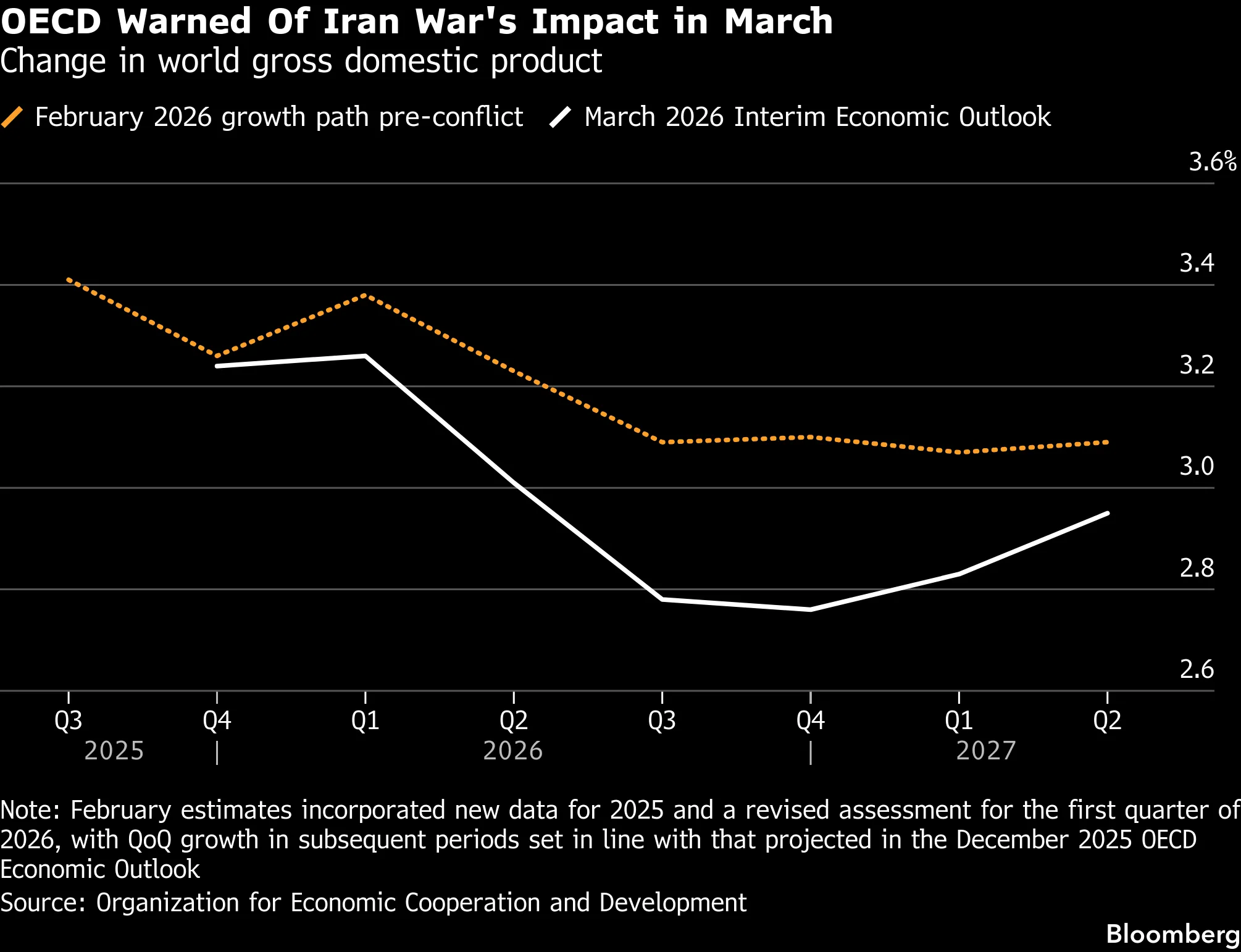
The Middle East war is threatening to do more than lift fuel prices. The OECD warned that even if oil markets cool, the economic damage will linger, because trade, inflation, business confidence and household budgets absorb the hit long before relief arrives.
Stefano Scarpetta, the OECD’s chief economist, said global growth was expected to slow from 3.4% in 2025 to 2.8% in 2026, before recovering to 3.1% in 2027 if the energy-price shock eases by mid-2026. In a more prolonged disruption, the OECD said growth could fall to 2.1% in 2026 and 1.8% in 2027, while inflation would rise by 0.4 percentage points in 2026 and 1.3 percentage points in 2027.
The World Bank put a sharper price tag on the shock. It projected energy prices would jump 24% in 2026 and commodity prices 16%, with Brent crude averaging $86 a barrel, up from $69 in 2025. It said disruption in the Strait of Hormuz, which carries about 35% of global seaborne crude oil trade, had already cut global oil supply by about 10 million barrels per day.
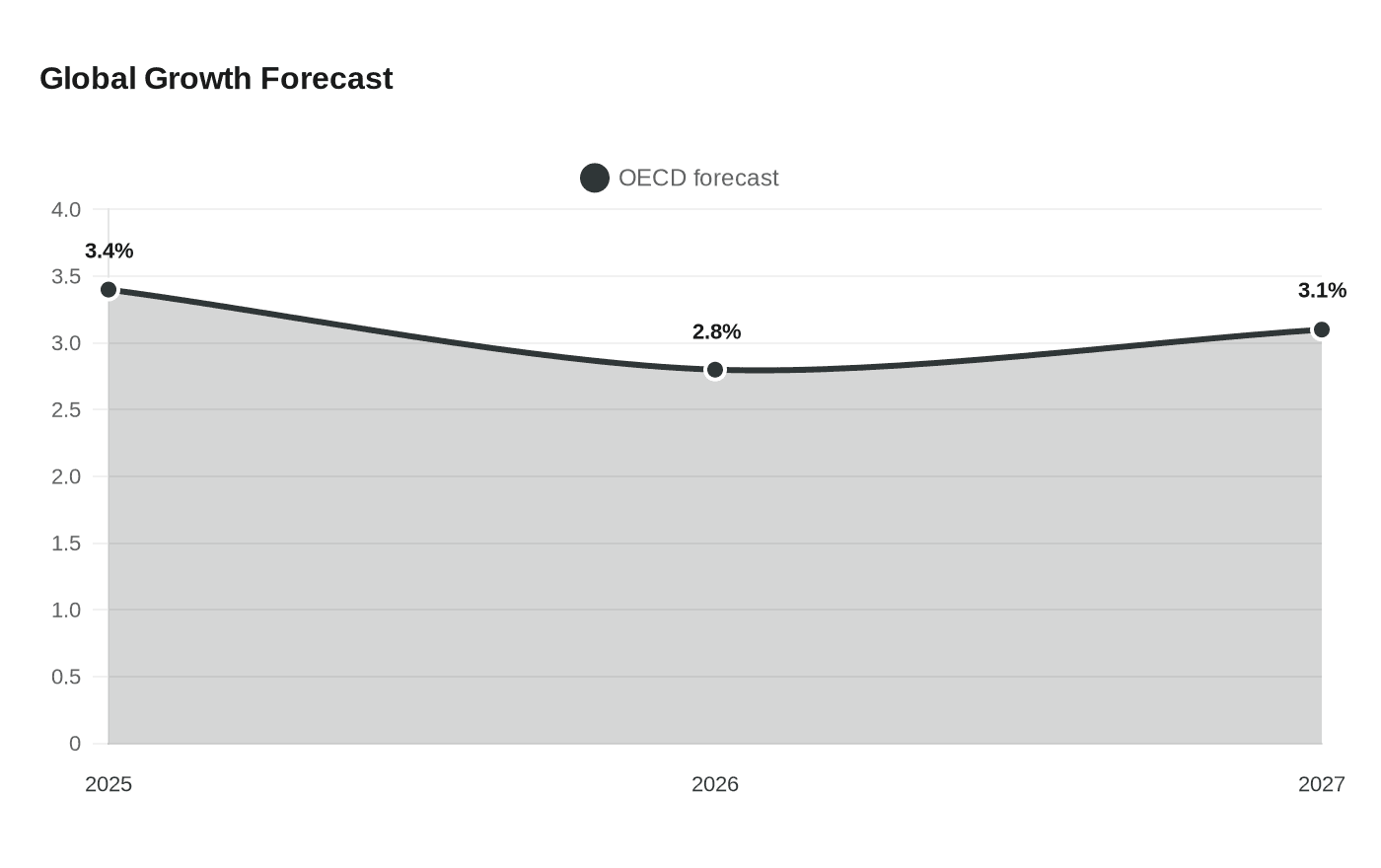
That is why energy relief will not quickly translate into economic relief. Even if crude prices peak and then ease, the spillovers are already working through the system. Higher transport and input costs feed into food and manufactured goods, companies delay hiring and investment, and households that have already paid more for fuel and groceries do not get back the money they spent. The OECD’s own forecast shows the lag clearly: growth stays weaker into 2027 even in the better-case scenario.
The burden will fall hardest on developing economies with limited energy reserves, high energy and food spending, weak fiscal capacity, low savings buffers and fragile currencies, the OECD said. The World Bank warned the shock could push up to 45 million more people into acute food insecurity this year if the conflict is prolonged.
Governments were urged to keep any energy-price support targeted, temporary and designed to preserve incentives to save energy, with clear expiry mechanisms. The policy warning reflects a simple reality: a commodity spike can be temporary, but the damage it leaves behind to inflation, confidence and growth can last much longer.
This article was produced by Prism’s automated news system from verified source data, official records, and press releases, then run through automated quality and moderation checks before publishing. The system is built and supervised by the people who set the standards it runs under. Read our full AI policy.
Know something we missed? Have a correction or additional information?
Submit a Tip