Officials ease tank blast fears as Orange County evacuations continue
A pressure crack cooled the tank enough to remove the BLEVE threat, but tens of thousands still had evacuation orders as crews watched for fire, leak or blast.

The threat of a catastrophic vapor blast was eased in Garden Grove, but that did not mean the emergency was over. Officials said the worst-case BLEVE risk had been eliminated at the 7,000-gallon methyl methacrylate tank, yet they continued to warn that a smaller fire, explosion or leak could still develop as crews cooled the tank and watched it around the clock.
The tank sits at the GKN Aerospace facility in northern Orange County, about 35 miles southeast of Los Angeles and roughly 4 miles from Disneyland in Anaheim. It began heating up and bulging last week, prompting evacuation orders for tens of thousands of residents and sending fire crews into a round-the-clock response around the chemical storage site. Orange County Fire Authority incident commander Craig Covey said the tank’s temperature had been in the 90 to 100 degree Fahrenheit range before the latest drop.
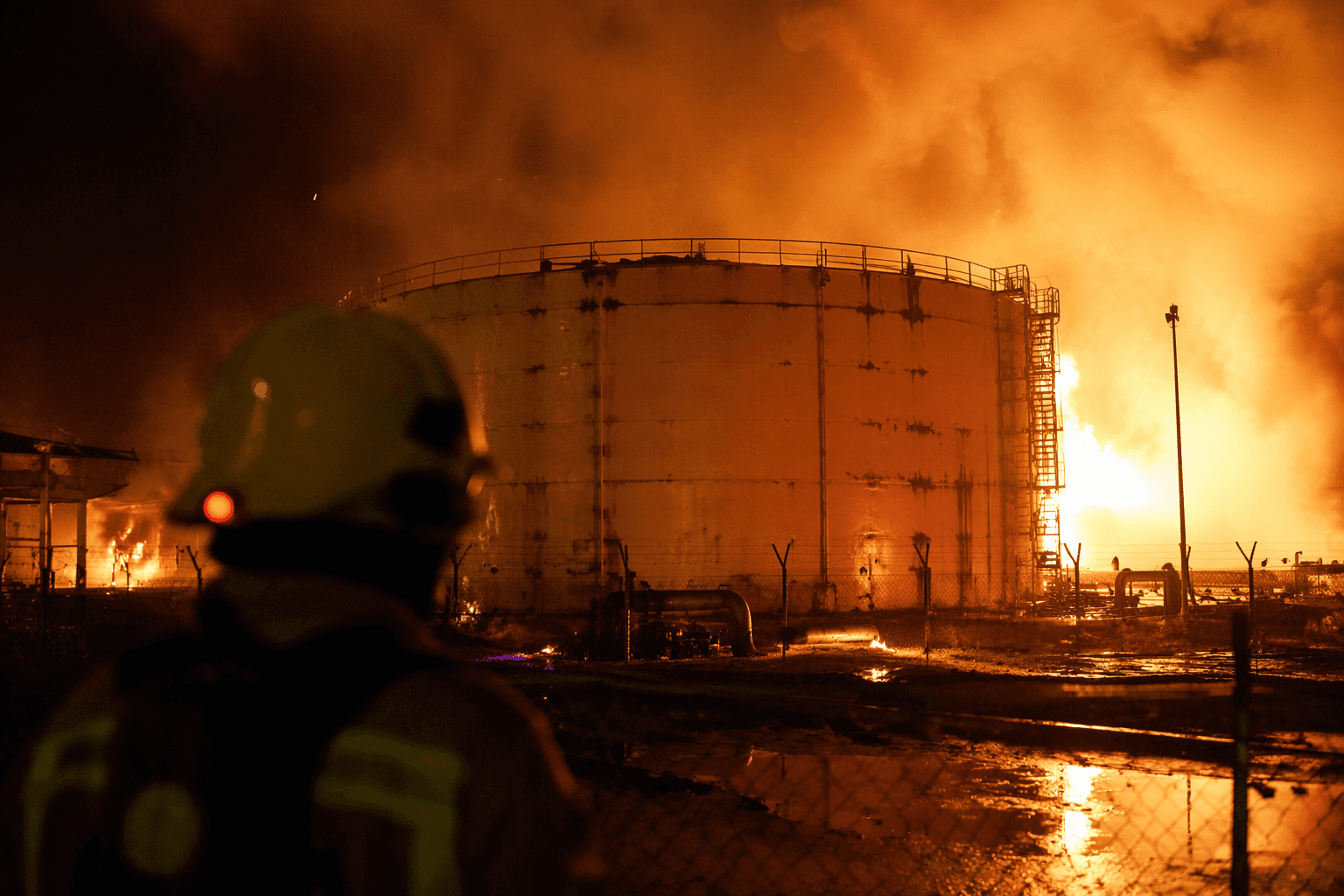
Officials said a crack discovered in the tank appeared to relieve pressure and bring the internal temperature down from about 100 degrees to 93 degrees. That change lowered the danger of a boiling liquid expanding vapor explosion, the kind of runaway event that had fueled the most serious fears. Even so, the site remained unstable enough that crews kept cooling operations in place and continued monitoring the tank closely.
Gov. Gavin Newsom declared a state of emergency in Orange County on Saturday, May 24, 2026, and directed state agencies to support the response. The evacuation orders were still in effect on Monday, May 25, 2026, underscoring that the crisis had shifted, not ended. If conditions worsen again, officials would face renewed danger from fire, explosion or another release of material.
Methyl methacrylate is used to make resins and plastics, including Plexiglass, which raised the stakes once the tank started heating and bulging. One commander described the incident as possibly one of the worst chemical emergencies in California history, a label that reflected both the size of the tank and the number of people still kept away from their homes while authorities tried to keep a local industrial problem from becoming a wider disaster.
Know something we missed? Have a correction or additional information?
Submit a Tip