Trump honors fallen troops at Arlington for Memorial Day remarks
Trump turned Arlington’s Memorial Day observance into a wartime message, honoring 13 troops killed in Iran while framing sacrifice around presidential leadership.
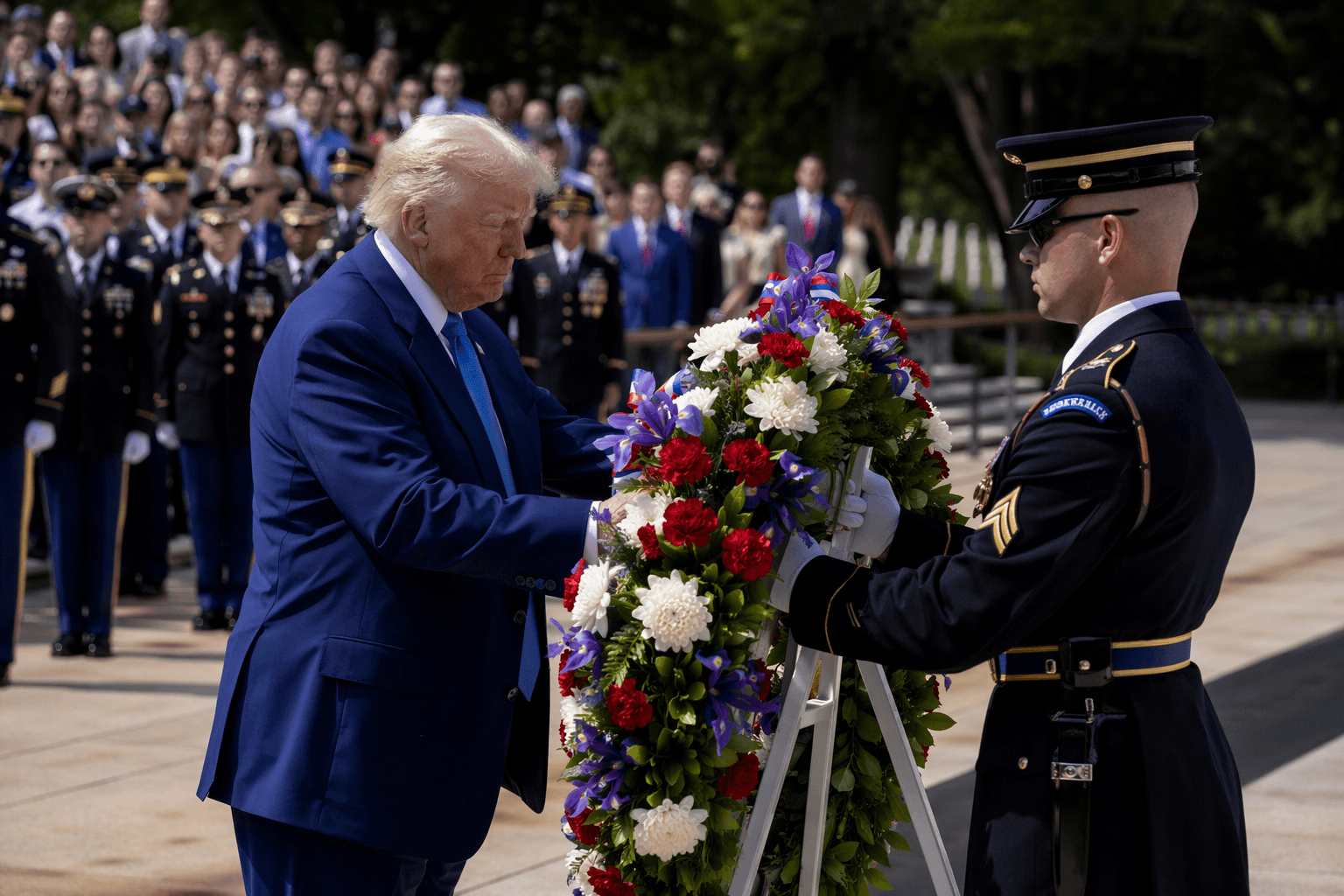
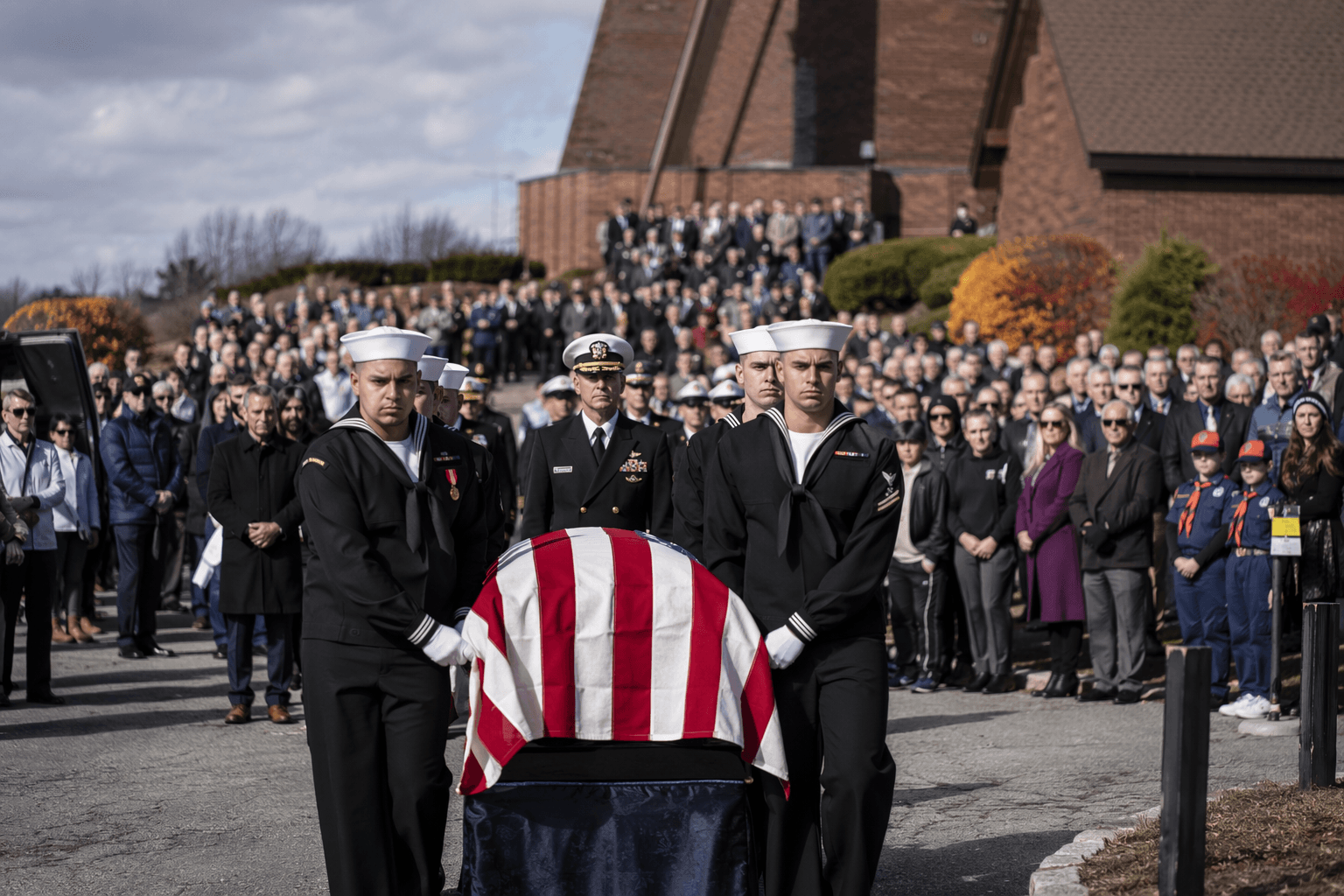
Donald Trump used Arlington National Cemetery’s Memorial Day observance to place the Iran conflict inside one of the military’s most solemn rituals, honoring 13 soldiers killed in the war as he marked the 158th National Memorial Day Observance.
The program at Memorial Amphitheater included a wreath-laying at the Tomb of the Unknown Soldier, with pre-event programming beginning at 10:45 a.m. and the formal observance starting at about noon. Arlington said the event was free and open to the public, with seating available on a first-come, first-served basis and a livestream available on DVIDS. The setting gave Trump a nationally visible platform on a day built around mourning the war dead, not political argument.
That tension defined the day. Memorial Day began as Decoration Day on May 30, 1868, after the Civil War, which killed more than 600,000 Union and Confederate service members. What started as a postwar act of remembrance has become a civic ritual that now sits at the intersection of grief, military pageantry and presidential messaging. At Arlington, that balance was especially pronounced as Trump’s remarks came against the backdrop of the U.S. war in Iran and heightened gas prices that shaped how many Americans approached the holiday weekend.
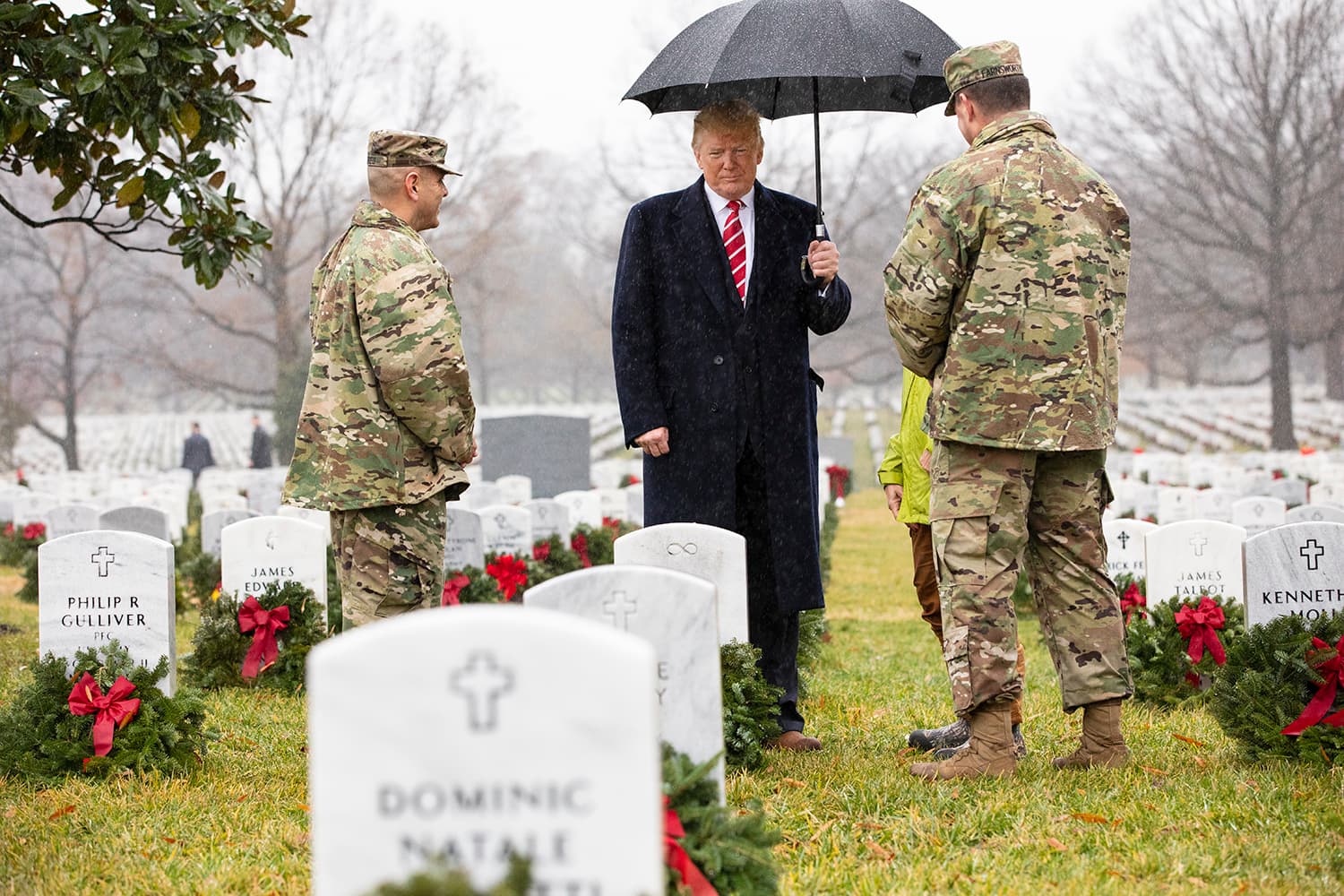
The ceremony also rested on an immense institutional effort. The 3rd U.S. Infantry Regiment, known as The Old Guard, placed flags at more than 250,000 headstones and columbarium niche rows across Arlington for Memorial Day weekend. Military.com reported that nearly 1,500 Old Guard soldiers took part in Flags In on May 21, planting about 260,000 flags in under four hours. The scale underscored how Arlington’s commemorations are not only symbolic but operational, sustained by a military unit that has carried out the tradition every year since becoming the Army’s official ceremonial unit in 1948.
Trump’s appearance at Arlington followed a familiar presidential pattern, but this year’s setting carried sharper political stakes. By honoring the dead from the Iran war during Memorial Day remarks, he tied sacrifice to national purpose and, by extension, to his administration’s wartime leadership. The result was a ceremony that honored the fallen while also helping shape the public narrative around a conflict still unfolding.
Know something we missed? Have a correction or additional information?
Submit a Tip