OHA funds full scholarships for Native Hawaiian culinary professionals
OHA is covering tuition and the $1,500 registration fee for eligible Native Hawaiian culinary professionals to attend a five-day Kūlana ʻĀina cohort. Registration is open through Jan. 26 and space is limited.
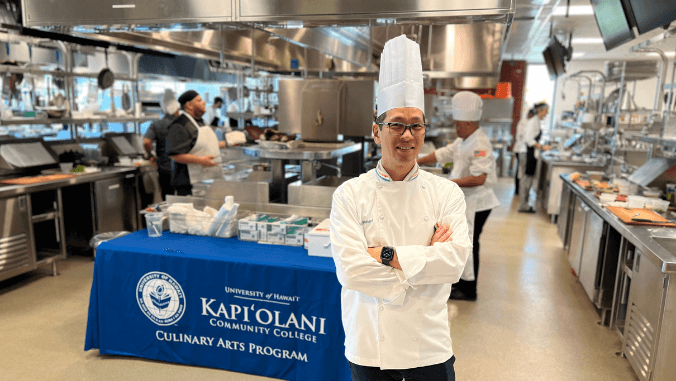
The Office of Hawaiian Affairs has awarded full-tuition scholarships that will cover the $1,500 registration fee for eligible Native Hawaiian culinary professionals to attend Kūlana ʻĀina, a five-day Culinary Essentials for Industry Professionals cohort scheduled Feb. 2–6. The intensive training is produced by the Culinary Institute of the Pacific and the Culinary Institute of America at Kapiʻolani Community College.
The program links culinary workforce development with food-systems education - mahiʻai - and business and market-access training. Organizers designed the cohort to bolster Native Hawaiian participation in Hawaiʻi’s food economy by pairing cultural practice with concrete economic opportunity. Applicants must be Hawaiʻi residents, at least 18 years old, and verified of Native Hawaiian ancestry. Registration is open through Jan. 26 and space is limited.
For Kaua‘i’s hospitality workers, farmers and food entrepreneurs, the scholarships lower one major barrier to professional development. Training that blends kitchen technique with supply-chain knowledge, farm partnerships and market-readiness can help local chefs and producers scale products, diversify revenue and meet growing demand for locally sourced, culturally rooted cuisine. That matters for public health as well: stronger local food economies can improve access to fresh, culturally appropriate foods and support nutrition-focused efforts to reduce diet-related disease.
At the same time, practical challenges remain for Kaua‘i participants. Even with tuition covered, travel, lodging and time away from small operations can be prohibitive for manyʻohana and solo-proprietors. Those barriers point to broader policy and equity questions about who benefits from professional pipelines into Hawaiʻi’s multi-billion-dollar food and hospitality sectors. Expanding training access without accompanying supports risks privileging those already able to absorb ancillary costs.

The scholarships reflect a policy approach that centers cultural revitalization alongside workforce entry. By integrating mahiʻai and market access into culinary training, the cohort aims to strengthen community-based food systems and help Native Hawaiian practitioners claim a larger share of local supply chains. For policymakers and funders, the program highlights the value of pairing skill-building with investments that reduce non-tuition barriers.
Kaua‘i residents who meet the eligibility requirements should consider applying before Jan. 26. For the broader community, the initiative underscores both promise and limits: targeted scholarships can open doors, but fuller participation in Hawaiʻi’s food economy will require coordinated supports for travel, childcare, and small-business scaling so that cultural knowledge and economic opportunity travel together.
Sources:
Know something we missed? Have a correction or additional information?
Submit a Tip