Ohio House Passes Drag Show Restrictions, but Bill Not Yet Law
Ohio's House passed HB249 63-32, but viral claims that a drag show ban is already law skip two critical steps: a Senate vote and Gov. DeWine's signature.
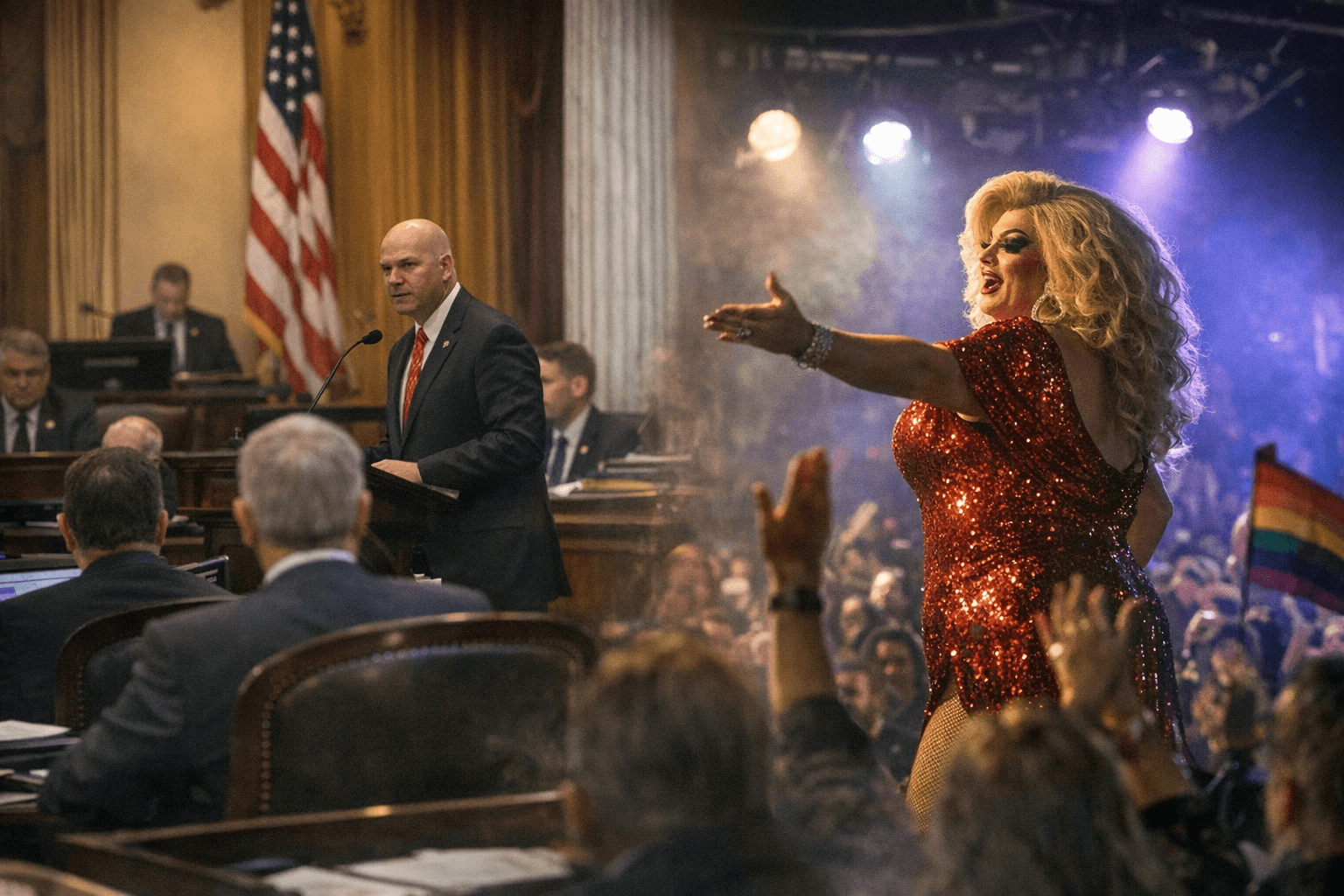
The Ohio House passed a bill on March 25 that would categorize public drag performances alongside exotic dancing and strip shows, but social-media posts declaring Ohio had already "criminalized" such performances were wrong on a legally decisive point: the measure has cleared only one of three required hurdles.
HB249, styled by its sponsors as the "Indecent Exposure Modernization Act," passed the House by a 63-32 vote, largely along party lines. Republican Rep. Jamie Callender of Concord broke with his caucus to vote against the bill. The legislation, introduced by Republican Reps. Josh Williams of Sylvania Township and Angie King, would expand Ohio's definition of an "adult cabaret performance" to include performers who "exhibit a gender identity that is different from the performer's or entertainer's biological sex," placing them in the same legal category as topless dancers, strippers, and go-go dancers. Under the bill's language, such performances would be barred from public spaces where minors could be present unless confined to designated adult venues.
None of that is law. As of April 9, HB249 had not been scheduled for a Senate committee hearing, had not received a full Senate vote, and had not been sent to Gov. Mike DeWine for his signature or veto. Fact-checkers at Snopes, examining the wave of viral posts that described an active Ohio ban, rated the underlying claim a "Mixture," confirming the House action was real while flatly rejecting assertions the bill had already taken effect.
The mechanics of how "passed the House" morphed into "is now law" online follow a familiar pattern in statehouse coverage: a floor vote generates headlines, those headlines circulate without the qualifying phrase "advances to the Senate," and within days the legislation exists, in the public imagination, as settled policy.
The path from here to a DeWine signature involves several steps that could take weeks or months. The bill must be referred to a Senate committee, receive hearings, clear the committee, pass a floor vote in the chamber, and then survive any conference-committee reconciliation if the Senate amends the text. The 136th General Assembly's session runs through December 2026, giving the Senate ample calendar room to act, amend, or simply let the bill stall. Republicans hold supermajorities in both chambers, which carries an important implication: if DeWine were to veto the bill, the legislature holds the votes to override him without a single Democratic vote. DeWine has had two previous vetoes overridden, both in January 2024, on legislation banning gender-affirming care.
The constitutional terrain is not uncharted. Tennessee became the first state to enact a drag-performance restriction in 2023, and its law faced immediate federal court challenge. The Sixth Circuit Court of Appeals, which also covers Ohio, has already wrestled with where such statutes sit relative to First Amendment protections. Any version of HB249 that reaches DeWine's desk and gets signed would face a near-certain legal challenge in federal court, with the Sixth Circuit as the likely appellate venue.
For anyone tracking the bill's progress, the Ohio Legislature's official docket lists HB249's status in real time, and the Senate's committee assignment will signal how seriously Republican leadership intends to push the measure before the session closes.
This article was produced by Prism’s automated news system from verified source data, official records, and press releases, then run through automated quality and moderation checks before publishing. The system is built and supervised by the people who set the standards it runs under. Read our full AI policy.
Did this article answer your question?

