Oil Executives Warn Iran War Could Cause Lasting Supply Disruption
Brent crude hit $119 in early March, one dollar from the level Vitol Americas CEO Ben Marshall said would cause severe demand destruction.
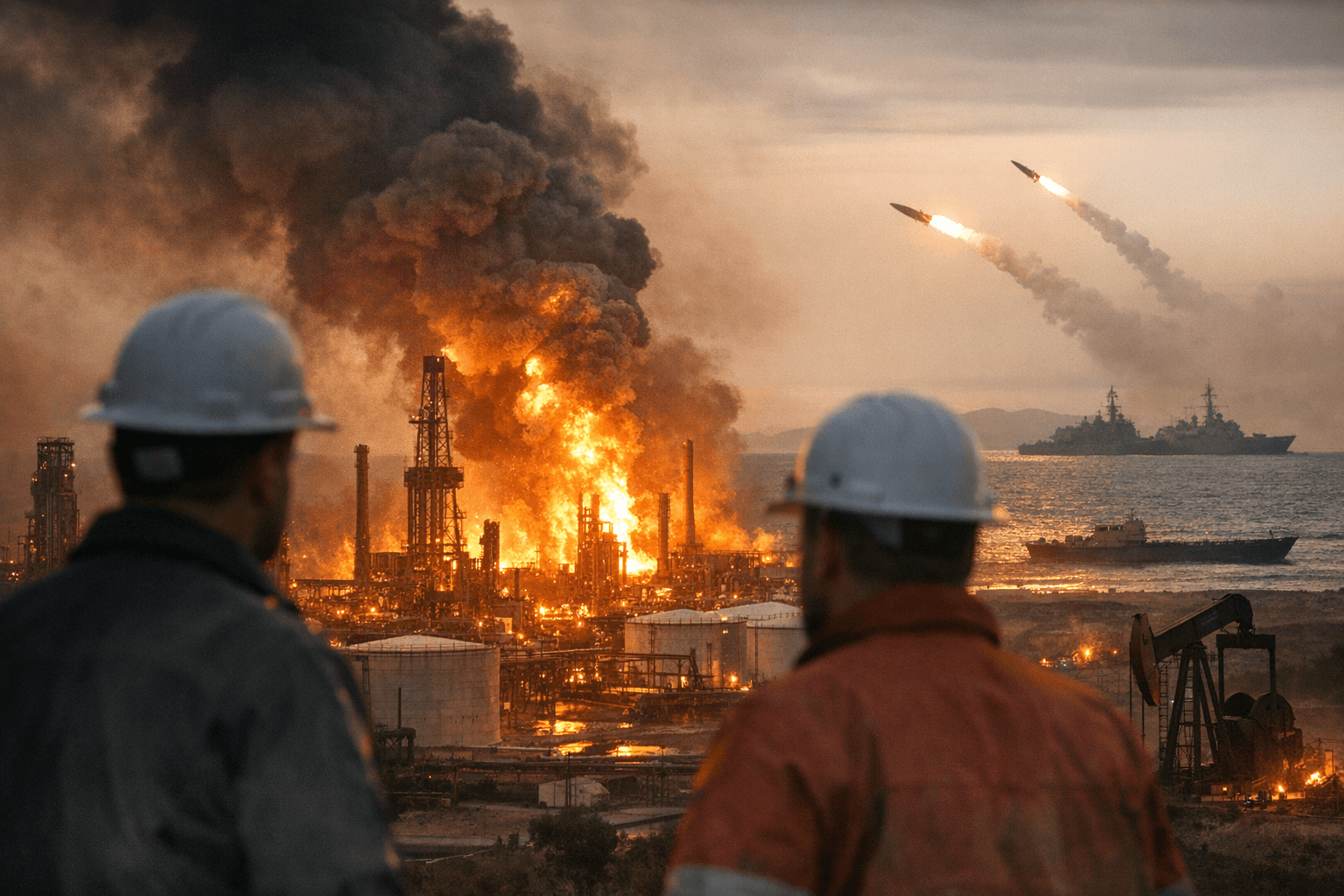
Brent crude briefly surged to $119 a barrel in early March, just one dollar beneath the threshold that Ben Marshall, president and CEO of Vitol Americas, said would trigger severe demand destruction across the global economy. At what has been called the "Davos of energy," a gathering of the world's top oil executives and energy ministers in Houston on Monday, that one dollar of distance felt less like a margin of safety than a countdown.
The mood at the conference carried an uneasy mix of celebration and anxiety. Producers insulated by higher prices found cause for optimism; executives focused on physical supply confronted a fundamentally altered global energy map with no clear near-term exit.
The immediate cause is structural, not speculative. The U.S.-Israel war with Iran has effectively shut the Strait of Hormuz, the narrow waterway through which one-fifth of the world's oil and natural gas supply normally flows. QatarEnergy's massive liquefied natural gas plant has been struck and will take years to repair. For American households, the disruption traces a direct line from that chokepoint to gasoline prices at the pump, jet fuel surcharges on airfares, and the diesel that moves goods from warehouse to supermarket shelf.
Chevron CEO Mike Wirth told the Houston conference that the market has yet to reckon fully with the damage. "It will take time to come out of this," Wirth said, adding that tightness in the energy market due to the Strait's closure had not been fully priced into forward oil prices. That divergence between futures markets and the physical supply picture was a recurring concern among executives throughout the day.
Governments responded with an unprecedented release of strategic reserves. International Energy Agency member countries released a record 400 million barrels, the largest coordinated drawdown in the IEA's history. The United States contributed 172 million barrels, the single largest national commitment. Japan, which relies heavily on imports, supplied about 80 million barrels, the second-largest contribution.
The intervention failed to move markets meaningfully. Takehiko Matsuo, Japan's Vice Minister for International Affairs, said the IEA release "was not enough to calm markets." Brent's spike to $119 confirmed as much. At $120, Marshall warned, the damage shifts from supply-side strain to broad economic contraction as industries cut activity in response to unaffordable energy costs.
Economists have already begun building the disruption into longer-range forecasts. BNP Paribas raised its 2026 core inflation outlook to 3.2% from a previous 2.9%, a revision that reflects how sustained energy-cost pressure works through supply chains into the price of nearly every consumer good.
The starkest tension in Houston was not between oil exporters and importers, but between the industry and Washington. While Wirth and Marshall described a crisis with years of consequences, U.S. Energy Secretary Chris Wright downplayed the severity of the situation at the same gathering. That gap between executive alarm and official reassurance left the critical question of further policy response, including whether to authorize additional strategic reserve releases, unresolved.
With the Strait of Hormuz closed and QatarEnergy's plant facing a repair timeline measured in years, the supply constraints now shaping global energy markets may be far more durable than futures prices currently reflect.
Know something we missed? Have a correction or additional information?
Submit a Tip