Oil falls on ceasefire hopes, but cracks in Iran deal linger
Oil was still on course for a weekly drop as traders bet a fragile U.S.-Iran accord could reopen Hormuz, but the market still doubts supply will normalize quickly.
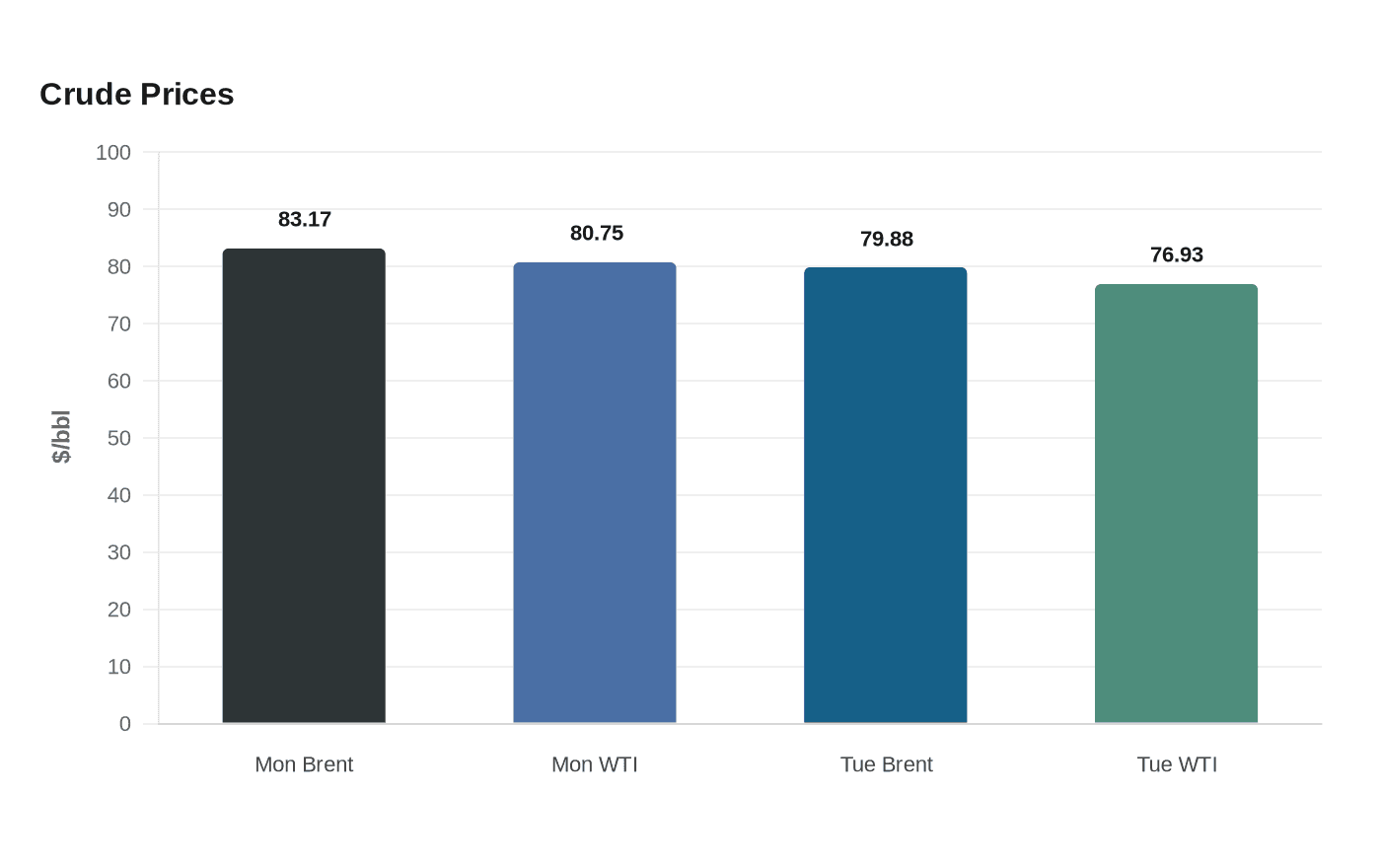
Oil remained headed for a second straight weekly decline even as traders grew wary that the U.S.-Iran deal could fray before barrels return to the market. Brent settled at $83.17 a barrel on Monday, down $4.16, or 4.76%, while West Texas Intermediate closed at $80.75, down $4.13, or 4.87%, after a preliminary memorandum of understanding promised to end the Iran war and reopen the Strait of Hormuz.
That selloff did not fully stick. By Tuesday, Brent was trading around $79.88 intraday and WTI near $76.93 as investors reassessed whether a political breakthrough could translate into a quick restoration of supply. The memorandum was said to have been signed by Donald Trump, JD Vance and Mohammad Bagher Qalibaf, with a formal signing ceremony scheduled for Friday in Geneva. Draft terms reportedly call for the strait to reopen within 30 days under Iranian arrangements, but the permanent ceasefire has not been settled and thornier issues, including Iran’s nuclear program, remain unresolved.
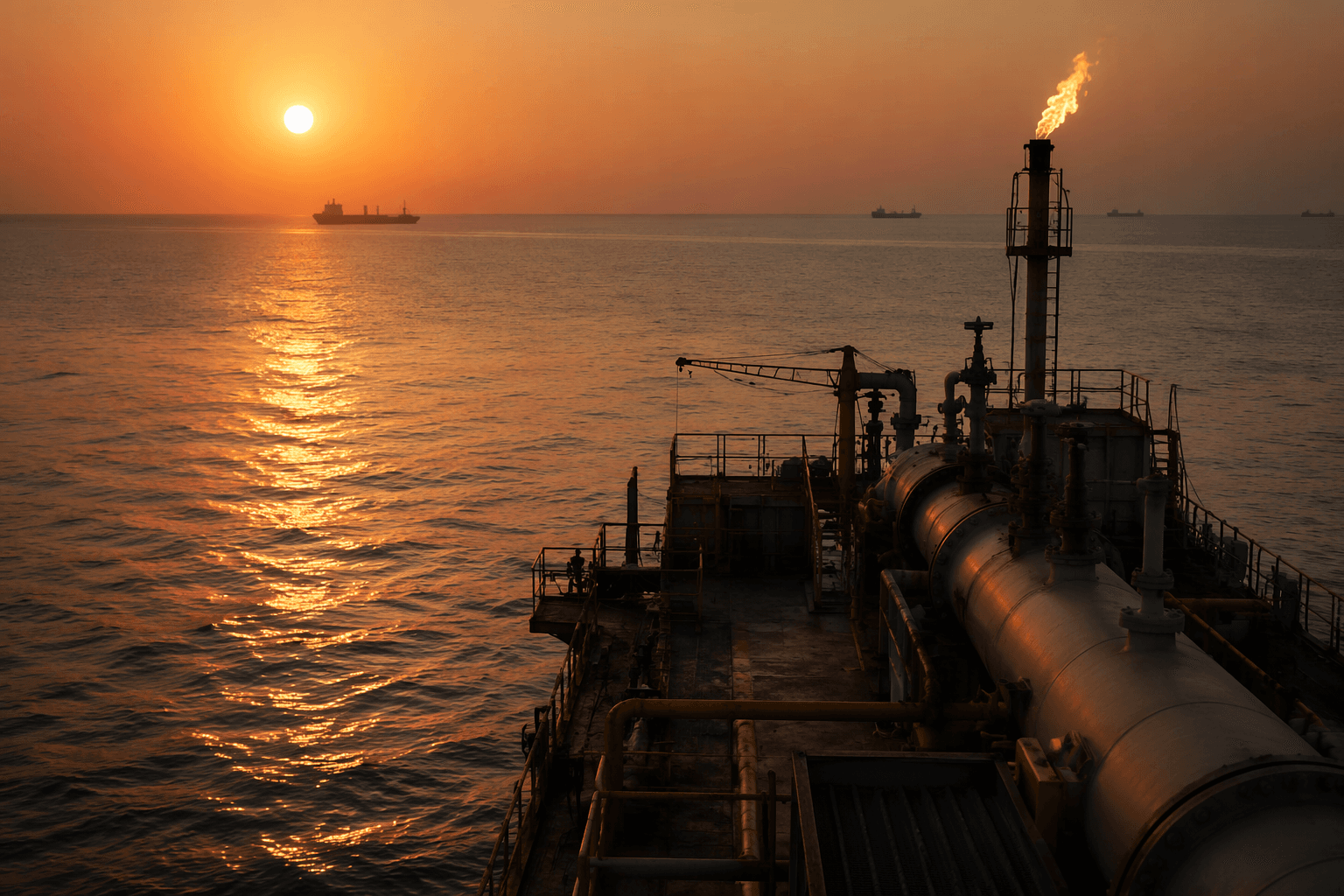
The hesitation is rooted in the scale of the disruption. The Strait of Hormuz normally carries about one-fifth of the world’s oil and liquefied natural gas trade, and more than 14 million barrels a day of oil output had been shut in, roughly 14% of global demand. Before the war, about 20% of global oil supplies moved through the passage. Traders now see the risk premium shrinking, but not disappearing. Claudio Galimberti of Rystad Energy said a return to normalized conditions immediately after a Switzerland signing would be optimistic because sentiment is not the same as supply. Neil Crosby of Sparta Commodities said some vessel owners would still hesitate to ballast toward the Arab Gulf until insurers are back on board, while KCM Trade’s Tim Waterer warned that “the devil may be in the details.”
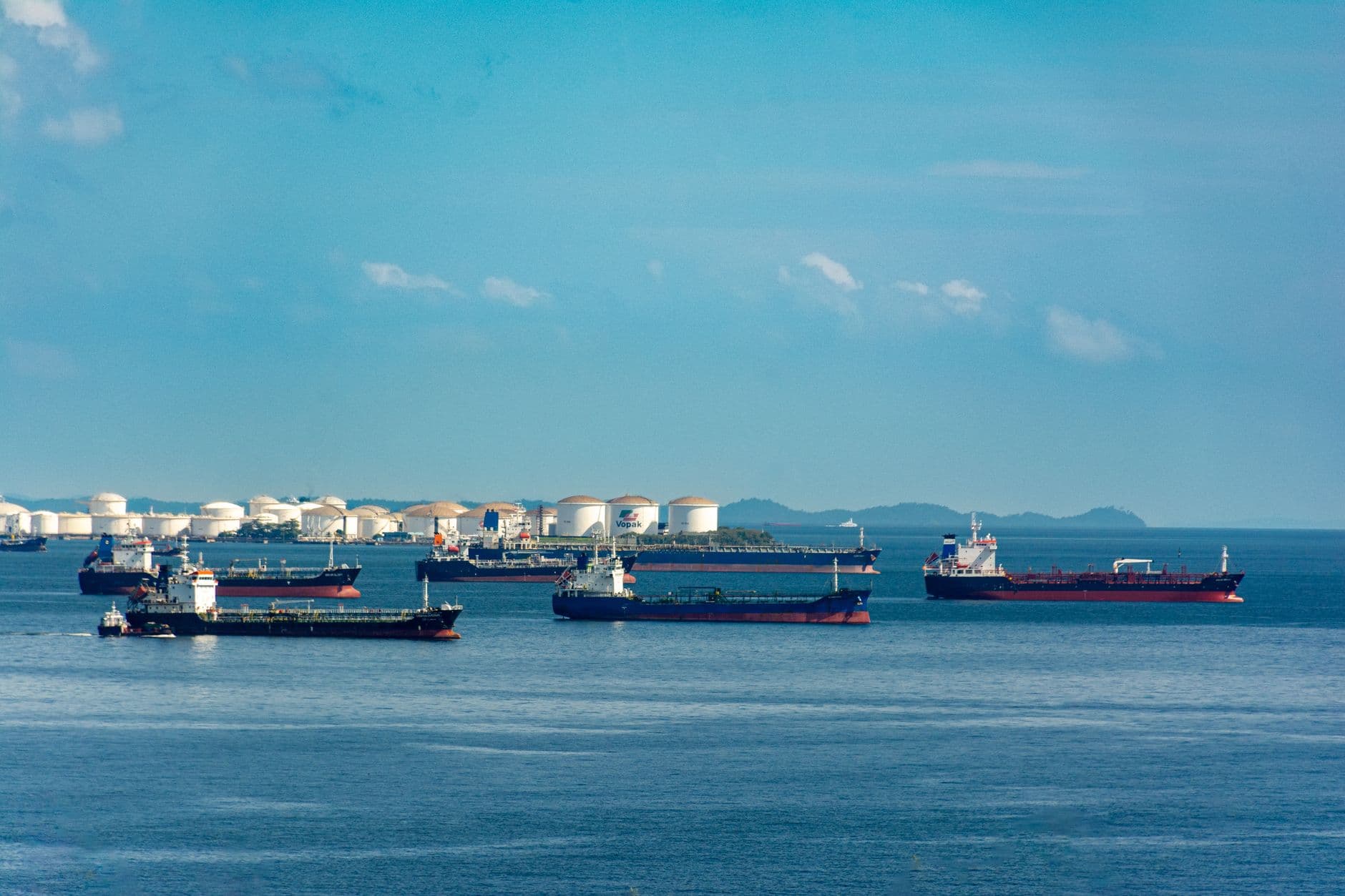
Those details matter because a diplomatic pause is not the same as a full reopening of the shipping lane. Clearing mines, restoring marine insurance and repairing damaged infrastructure could take weeks or months, and hundreds of ships remain trapped on either side of the Persian Gulf. That is why oil rebounded after its initial plunge and why a fresh rise in fuel costs would likely show up first in shipping and freight, then at the pump.
Iran also signaled that it wants to regain some market share fast, cutting its official selling price for light crude to Asian buyers by $7.15 a barrel above the Oman/Dubai average for July, down from a $13 premium the prior month. Citi lowered its Brent forecast to $75 for the third quarter of 2026 and $70 for the fourth. U.S. gasoline averaged $4.06 a gallon nationwide on Monday, down from $4.48 in early May but still well above the $2.98 level seen on February 28, before the conflict began. Patrick De Haan of GasBuddy said drivers may not see prices return to pre-war levels until 2027, even if the ceasefire holds.
This article was produced by Prism’s automated news system from verified source data, official records, and press releases, then run through automated quality and moderation checks before publishing. The system is built and supervised by the people who set the standards it runs under. Read our full AI policy.
Did this article answer your question?

