Oil forecasts fall as Strait of Hormuz reopening eases supply fears
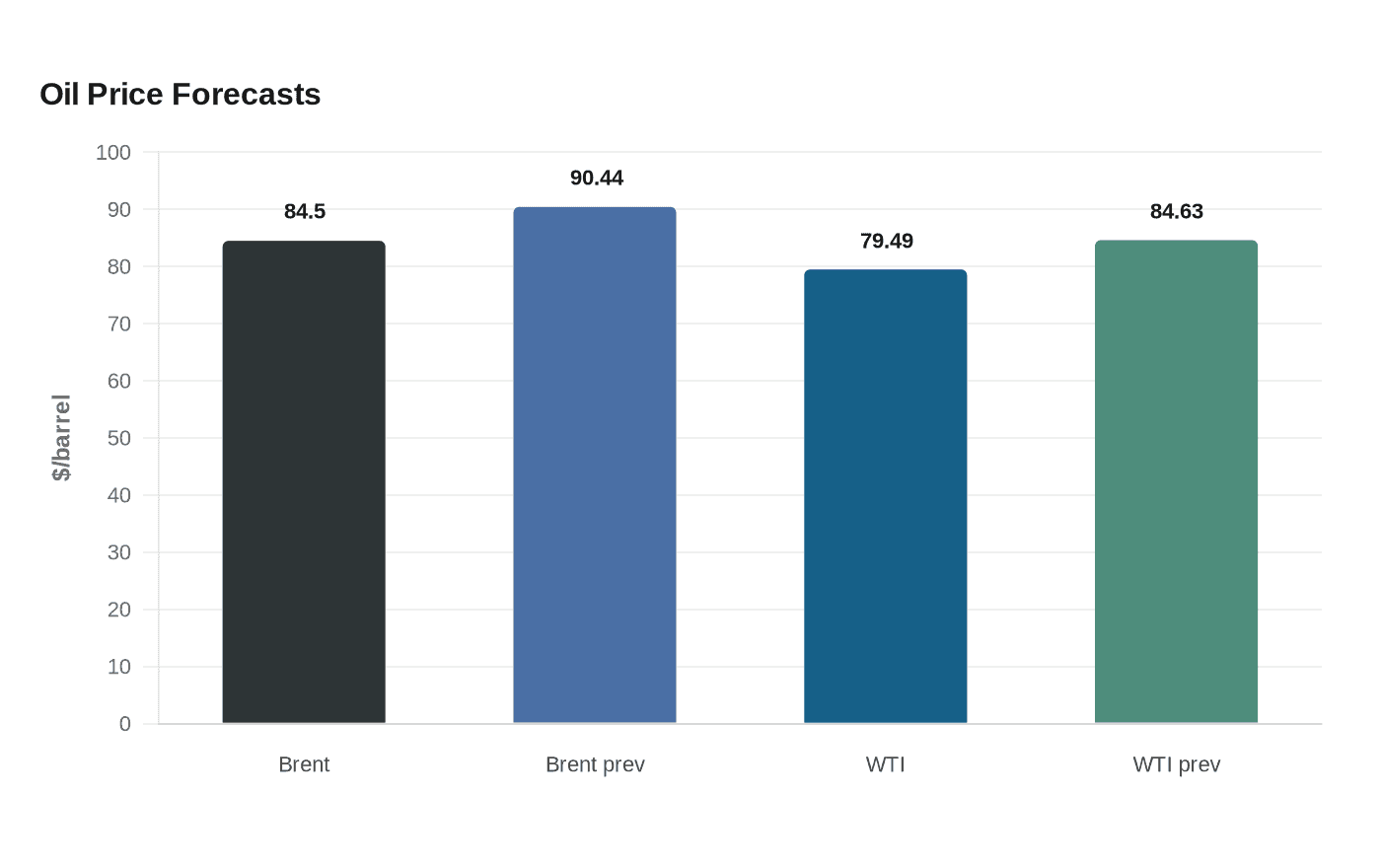
Brent forecasts fell to $84.50 after Hormuz reopened, trimming the oil shock that had threatened inflation, fuel bills and shipping costs.

Oil forecasters cut their 2026 price calls after the reopening of the Strait of Hormuz eased fears of a prolonged supply shock, a shift that could lighten pressure on gasoline, freight rates and inflation readings in the months ahead. The pullback also signaled that central banks may face less energy-driven inflation risk if traffic through the chokepoint keeps normalizing.
In a monthly poll of 31 economists and analysts, Brent crude was projected to average $84.50 a barrel this year, down from $90.44 in the previous survey. U.S. crude was seen averaging $79.49, down from $84.63. Those were the first cuts since the Iran war began and ended five straight monthly increases in the forecast. The change came after Brent surged above $126 a barrel and West Texas Intermediate approached $120 before shipping flows resumed and the immediate geopolitical premium began to fade.

Analysts said most of that war risk had already been stripped out of prices, but they also warned that some support could return quickly if tensions flared again. Several respondents expected OPEC+ to keep raising output, though cautiously, as the producer group tries to recover market share without triggering a price collapse. The International Energy Agency has also pointed to a looser market in 2027, with supply set to grow faster than demand, a backdrop that would reinforce the downward pull on prices if global consumption softens.

For consumers, the stakes are straightforward: lower crude forecasts feed through into gasoline prices, diesel costs and shipping charges, which in turn shape everything from grocery bills to airline fares. For policymakers, the shift reduces one of the biggest near-term inflation threats, but it does not remove it. The latest poll showed how quickly markets had priced in danger when the Strait of Hormuz looked vulnerable, and how fast those expectations eased once the corridor reopened. If the waterway stays open and OPEC+ continues adding barrels, oil could drift lower through the second half of 2026 and into 2027. If the conflict widens again, the market can just as quickly reverse.
This article was produced by Prism’s automated news system from verified source data, official records, and press releases, then run through automated quality and moderation checks before publishing. The system is built and supervised by the people who set the standards it runs under. Read our full AI policy.
Did this article answer your question?