Oil Surges Past $110 as Trump Iran War Speech Disappoints Markets
Oil jumped $10 to $110 a barrel after Trump's Iran speech offered no plan to reopen the Strait of Hormuz, sending U.S. gas past $4 a gallon for the first time since 2022.
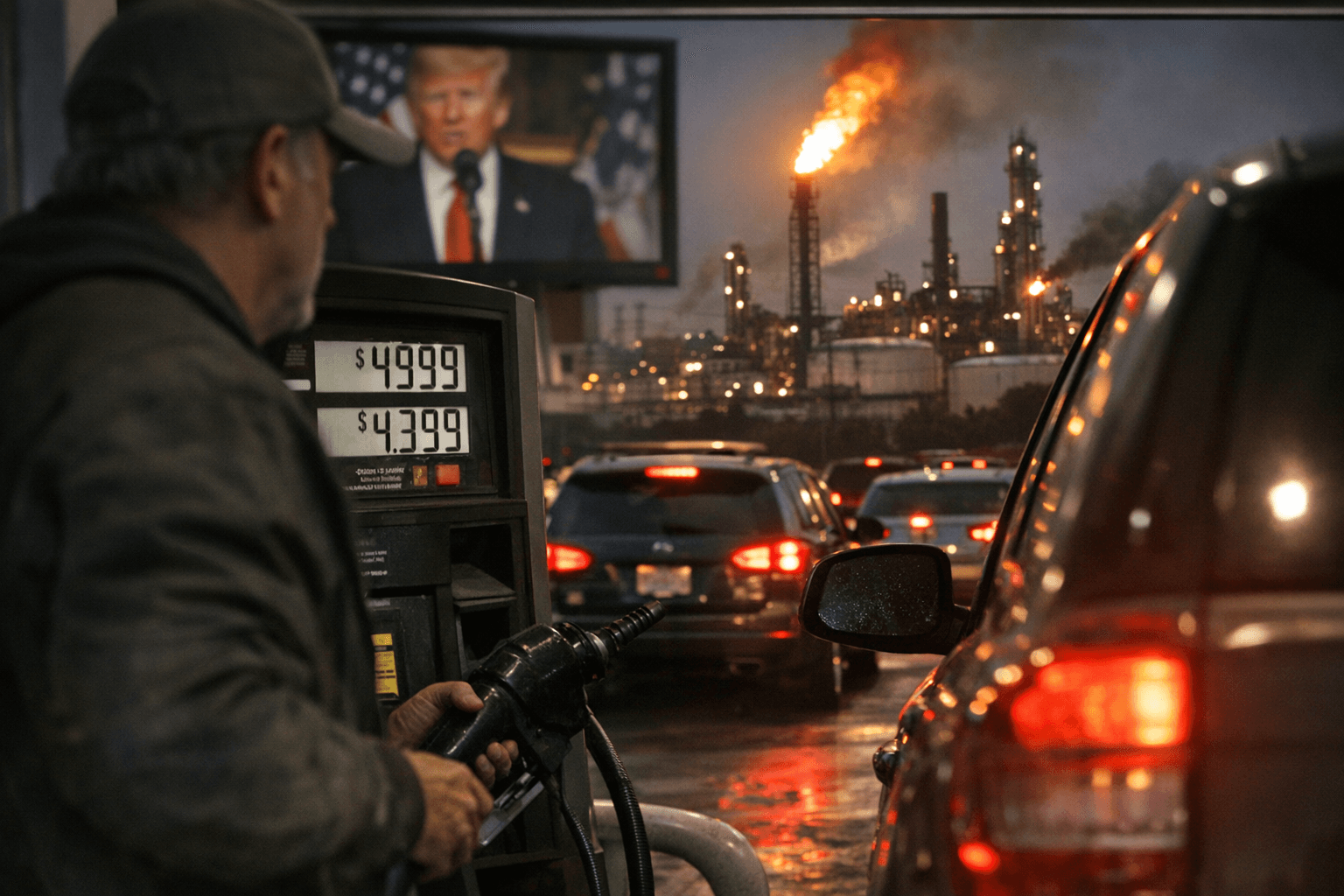
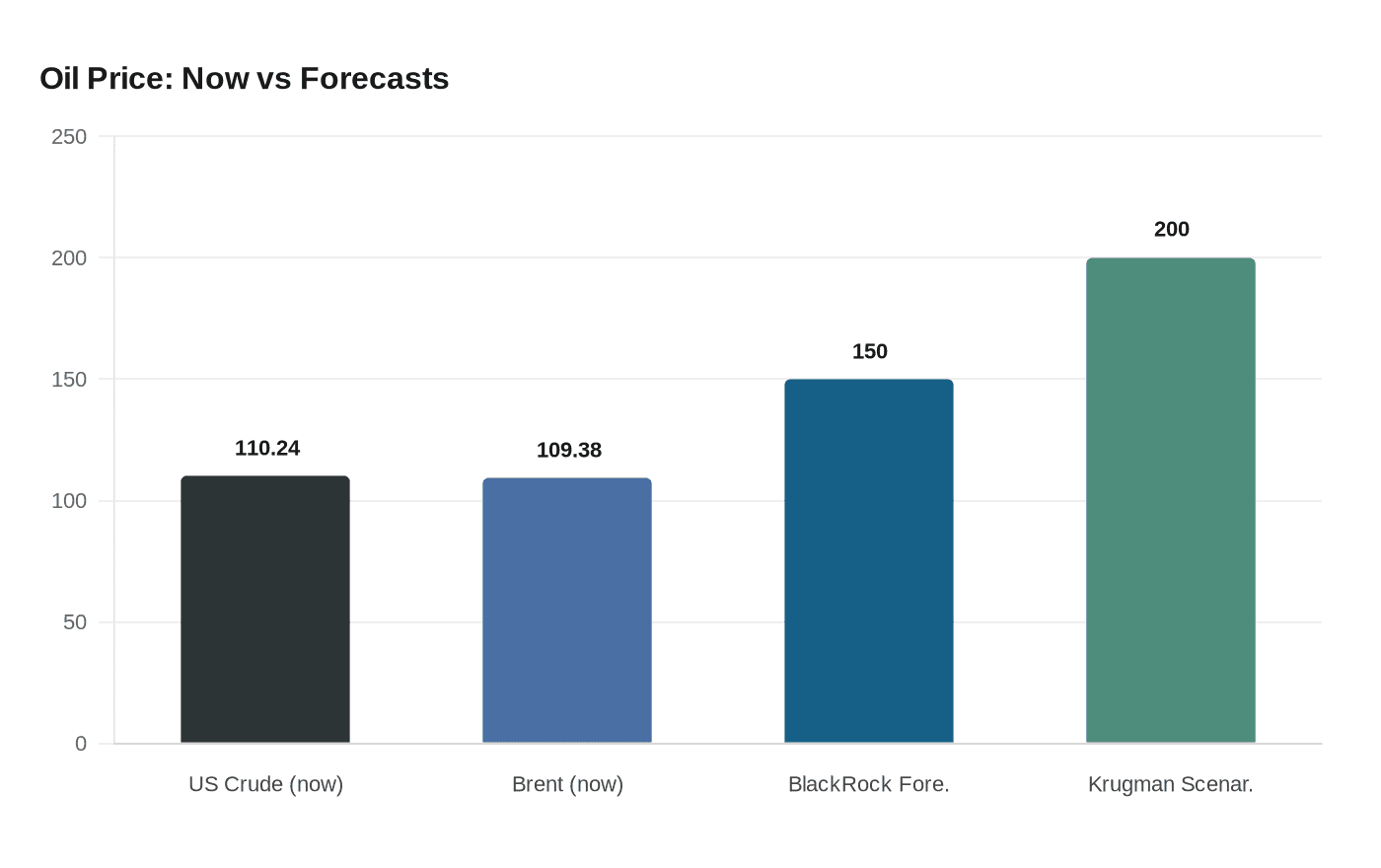
U.S. crude surged $10.11 to $110.24 a barrel after President Trump's prime-time White House address on the Iran war Wednesday night offered no plan to reopen the Strait of Hormuz, triggering simultaneous equity selloffs and a rally in energy futures that reflected raw investor alarm over the duration and cost of the conflict.
Takashi Hiroki, chief strategist at Monex in Tokyo, distilled the market verdict bluntly: "The market has shown disappointment because the speech President Trump made was far less than what the market expected." Brent crude, the international benchmark, jumped more than 8% to $109.38 a barrel. The S&P 500 sank 97 points, the Dow Jones Industrial Average dropped 630 points, and the Nasdaq fell 2.1%.
Trump's April 1 address described what he called "overwhelming victories" since U.S. and Israeli forces launched initial strikes on Iran on February 28, claiming Iran's navy and air force are "in ruins" and its missile capability "dramatically curtailed." Iran's military dismissed that assessment as "incomplete" and promised "more destructive" attacks across the region. Trump forecast two to three more weeks of fighting but presented no strategy for unsealing the waterway. Asked about the strait in a Washington Post interview, he said: "Well, I think it'll automatically open, but my attitude is, I've obliterated the country." In his address, he directed affected nations to "get your own oil," declaring: "The United States imports almost no oil through the Hormuz Strait and won't be taking any in the future. We don't need it."
The impact at the pump was already measurable. Average U.S. gasoline prices crossed $4 a gallon for the first time since 2022. GasBuddy's Patrick De Haan forecast retail prices could reach $4.25 to $4.45 per gallon within two weeks, with diesel potentially climbing to $5.80 to $6.05 per gallon, approaching the all-time record of $5.02 set in June 2022. Bank of America analysts warned the Fed's preferred PCE inflation gauge could peak near 4% this quarter, up from 2.8% in January, with grocery prices expected to follow.
The stakes centered on the Strait of Hormuz, the approximately 100-mile waterway between Iran and Oman that handled roughly 20% of global oil supply before the war, with about 80% of that volume bound for Asian markets. Iran's tanker attacks triggered insurance withdrawal and a de facto closure. Oil executives warned the strait must reopen by mid-April or more than 600 million barrels of supply will be at risk. Brent crude surged more than 60% in March alone, the largest monthly gain since records began in the 1980s, bringing the cumulative rise since February 28 to 49%.
BlackRock CEO Larry Fink warned oil could reach $150 a barrel and cause a global recession. Nobel Prize-winning economist Paul Krugman told CBS News the darker scenarios were "unfortunately, extremely plausible," adding that a $150-per-barrel outcome was "not at all hard" to envision and that $200 per barrel was "not crazy." The International Energy Agency said it is weighing strategic reserve releases but acknowledged any such move would "reduce the pain" without being "a cure."
A narrow diplomatic signal offered partial relief: Iran and Oman are reportedly drafting a protocol to monitor transit through the strait, a development that briefly pulled oil prices off their post-speech highs. British Prime Minister Keir Starmer announced a multinational meeting focused on making the passage "accessible and safe," while the Gulf Cooperation Council called on the UN Security Council to authorize force to protect shipping. U.S. military planners are reviewing options including special forces operations targeting the strait, seizure of oil from Iran's Kharg Island, and capture of Iran's enriched uranium stockpiles. With oil up nearly 50% in five weeks and the White House offering no concrete reopening timeline, the war's most consequential front may now be economic.
This article was produced by Prism’s automated news system from verified source data, official records, and press releases, then run through automated quality and moderation checks before publishing. The system is built and supervised by the people who set the standards it runs under. Read our full AI policy.
Did this article answer your question?

