Oil Surpasses $115 as Iran Conflict Rattles Asia Markets
Trump admitted the U.S. "knew nothing" about Israel's strike that sent Brent to $115; American pump prices have already surged more than $1 per gallon in a single month.
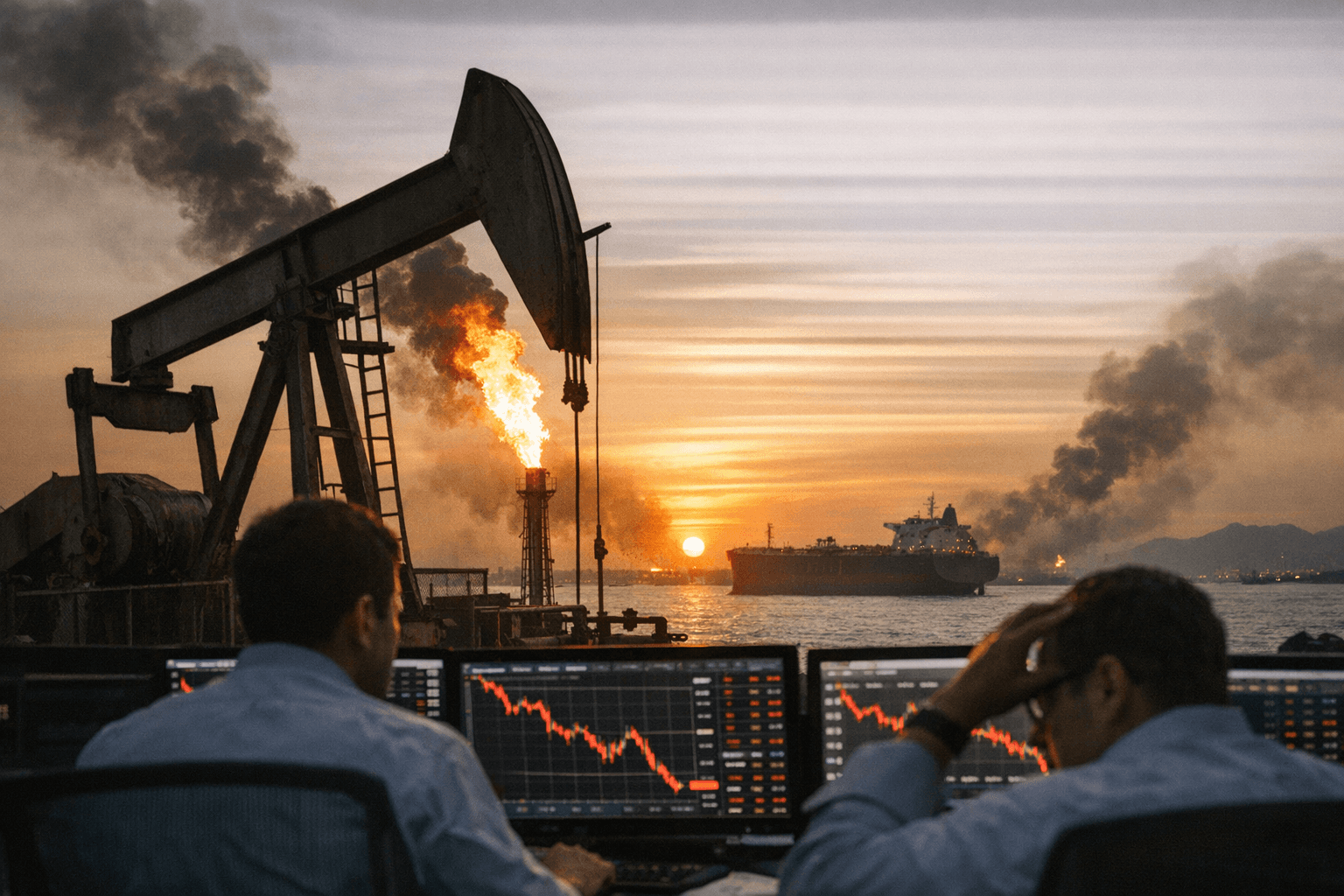
The United States knew nothing about this particular attack," Donald Trump posted to social media as Brent crude hit $115 a barrel, a sentence that landed on markets like confirmation of worst fears: no government has reliable control over what happens next.
Israel's strike on Iran's South Pars gas field ignited the sequence. Iran responded with attacks on energy facilities across the Middle East, driving Brent futures to a session high of $115.10 on March 19. By 0814 GMT that morning, the benchmark was $113.46, up $6.08 or 5.7%, while WTI crude rose more than $3 in parallel. The conflict began in late February; since then Brent has climbed more than 50%, a cumulative move embedding itself into every cost structure connected to energy.
Asian equity markets registered the shock before Western trading desks opened. South Korea's KOSPI sank 6.2% in a single March 9 session, and Japan's Nikkei 225 fell by around 5.2% that same day. The KOSPI has since shed more than 16% since the Iran war began, with Japan's Nikkei 225 and Australia's ASX 200 down around 10% and 6% respectively over the same period. These declines are not abstract sentiment; they price in what Asian manufacturers, heavily exposed to Gulf energy imports and Strait of Hormuz shipping lanes, will pay for inputs, and therefore what American consumers will see at the pump and on shelves weeks later.
The domestic transmission was already underway before March 19. On March 1, the day after the U.S. and Israel began attacking Iran, gas was averaging $2.94 a gallon in the U.S. The national average had since risen more than $1 per gallon in a single month. Goldman Sachs raised its Brent forecast to $110 a barrel for March and April, conditional on Hormuz flows remaining at just 5% of normal for a further six-week period. The Federal Reserve held rates steady at its most recent meeting but projected higher inflation because of the war, offering households no institutional cushion against the squeeze.
The Strait of Hormuz is the chokepoint around which the next 30 days pivot. Roughly 20% of the global oil supply normally passes through the approximately 100-mile-long waterway bordering Iran. Most shipowners were already avoiding transits after insurers canceled war risk coverage for vessels in the region; roughly one-third of seaborne crude oil trade moves through the waterway, alongside 19% of global LNG flows and 14% of global refined products. The disruption required no additional military action; the insurance withdrawal achieved the same result. The U.S. and allied governments are now releasing 400 million barrels of oil from strategic reserves, the biggest such release on record, to absorb the shortfall.
Two forces pull at the price from here. Brent tumbled more than 14% on March 23, with the global benchmark closing below $100 for the first time in almost two weeks, after Trump said he was holding off on striking Iranian power plants and was negotiating a potential end to the war. A ceasefire agreement, restored shipping insurance, or reopened corridors through Hormuz would carry similar deflationary force. Pulling in the other direction: expanded port attacks, permanent insurance bans on Hormuz transits, or the deployment of thousands of U.S. troops the Trump administration was, per Reuters, actively considering, against Iran's explicit warning of any ground incursion. CNBC framed the stakes plainly: "The next few weeks of war will be decisive for the economy."
What began in late February as a localized strike has since become a daily referendum on global inflation, industrial input costs, and the price of moving goods between continents. Asian markets vote first; American consumers receive the result weeks later.
This article was produced by Prism’s automated news system from verified source data, official records, and press releases, then run through automated quality and moderation checks before publishing. The system is built and supervised by the people who set the standards it runs under. Read our full AI policy.
Did this article answer your question?

