Old cellphone photos help solve Iowa teen’s disappearance and murder case
An old cellphone with recovered photos helped investigators reconstruct how Jade Marie Colvin vanished from a farm near Decorah, ending an eight-year search for answers.
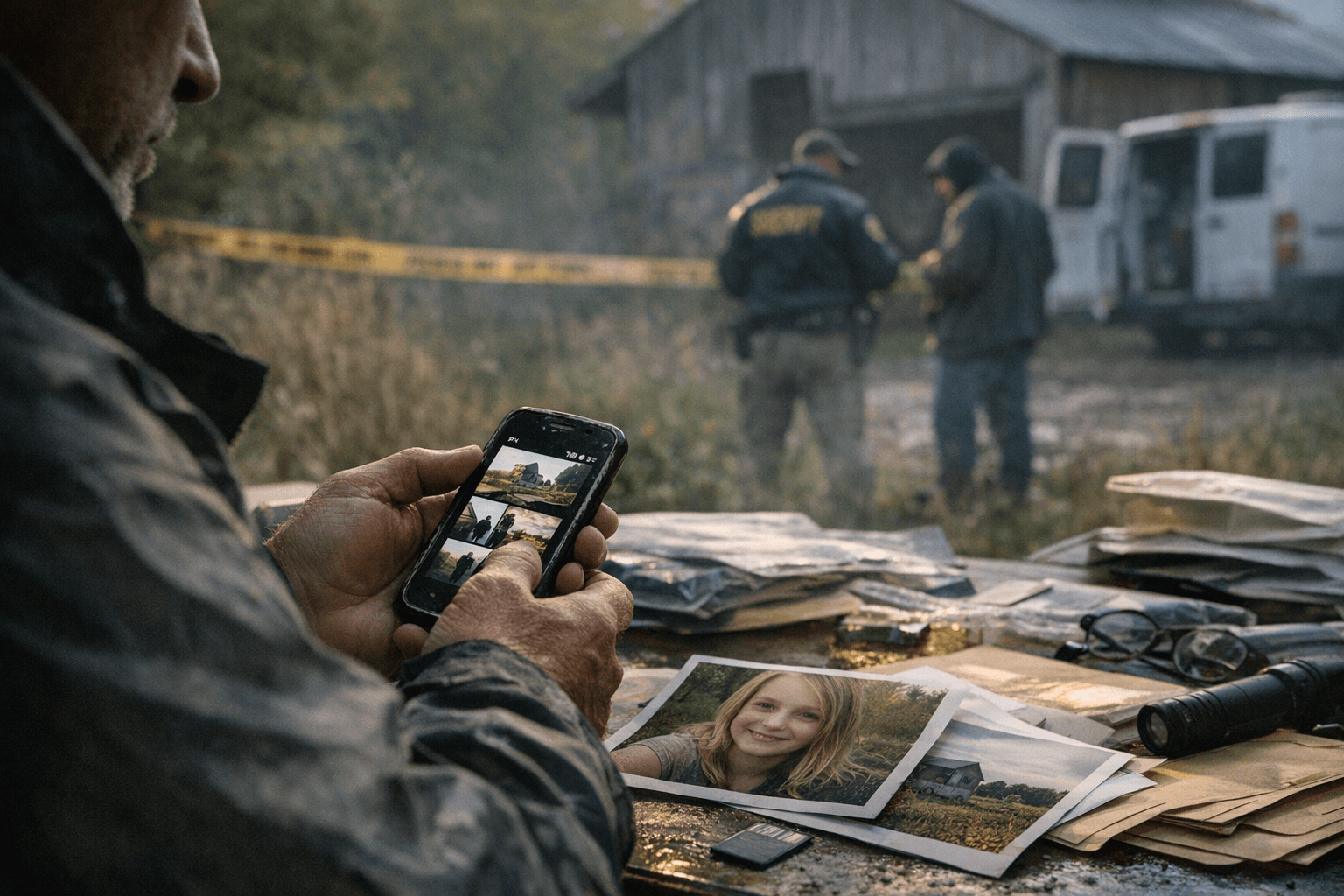
An old cellphone and the photos recovered from it became the key to piecing together what happened to Jade Marie Colvin, the Iowa teenager who vanished after arriving at a rural farm near Decorah. Investigators later used those images, along with witness accounts and old communications, to rebuild a timeline that led to murder charges and a conviction years after the girl disappeared.
Jade disappeared in March 2017, when she was 15, after traveling from Arizona to live at the farm of James David Bachmurski, Sr., in Winneshiek County. Court records say Jade and Bachmurski had been communicating online for at least a month before she arrived. The case remained cold for years, with no confirmed sightings and no recovered remains, leaving investigators and family members without the most basic answer: where Jade went.
Authorities charged Bachmurski in August 2024 in connection with Jade’s death. On September 4, 2025, the Iowa Attorney General’s Office announced a second-degree murder conviction. He was later sentenced to up to 50 years in prison, with a mandatory 35 years before parole eligibility. Jade’s body has never been found, making the digital trail especially important in a case that otherwise might have remained unresolved.
The human toll was as stark as the legal one. CBS reporting described Jade as having had a difficult childhood, with both of her parents struggling with substance abuse. Her mother, LaDawn Colvin, died three years after Jade went missing, and her father, Kevin Colvin, had lost contact with her. Friends remembered Jade as upbeat and easygoing, a teenager whose disappearance left a widening hole in the lives around her.
The case also shows how investigators now depend on evidence that can survive long after a phone is discarded, forgotten or powered off. In this case, photos on an old cellphone helped fill in gaps around Jade’s movements and her time at the farm south of Decorah. That kind of evidence can be decisive in missing-person investigations, especially when years pass before arrests, witnesses grow harder to locate and memories fade.
For Jade Colvin, the phone images helped supply what the ground search never could. They did not bring back her body, but they helped turn a missing-child case into a homicide prosecution and, eventually, a conviction.
Know something we missed? Have a correction or additional information?
Submit a Tip