Old Glory book traces 50 iconic flags in American history
Roland Miller’s 50-flag sweep shows Old Glory moving from rebellion and war to protest, mourning, and statehood, while Americans keep renegotiating patriotism.

1. Liberty Tree banner.
A banner of alternating red and white stripes hung on Boston’s Liberty Tree before the United States existed, giving the Revolution a political emblem before the republic had one.
2. Grand Union Flag.
The Grand Union Flag kept the British Union in the canton while adding colonial stripes, a visual reminder that independence began as a break still partly framed by empire.
3. Bunker Hill flag.
New Englanders used the pine tree symbol at Bunker Hill, tying regional identity, local commerce, and armed resistance into one revolutionary banner.
4. Bedford flag.
The Bedford Minutemen carried this banner into the first phase of the Revolution, making it one of the clearest battlefield flags of the opening war.
5. Pine Tree flag.
The pine tree became a shorthand for New England independence and the timber economy that fed shipbuilding, trade, and rebellion.
6. Gadsden flag.
Christopher Gadsden’s rattlesnake and “Don’t Tread on Me” motto turned anti-British warning into a lasting political symbol of defiance.
7. Taunton flag.
The Taunton banner put a Massachusetts town into the Revolution’s visual language, showing how local communities helped build national symbolism.
8. Appeal to Heaven flag.
A white field, green pine tree, and the motto “An Appeal to Heaven” fused piety and resistance in one of the era’s most pointed emblems.
9. Betsy Ross flag.
The familiar circle-of-stars story spread after William J. Canby retold it in 1870, but historical institutions treat it as legend rather than settled fact.
10. First Navy Jack.
The rattlesnake jack carried revolutionary warning to sea, giving the early Navy a symbol of its own and extending patriotic imagery beyond the shoreline.
11. Serapis flag.
John Paul Jones raised it after the 1779 naval fight, making the flag part of the story of American audacity as much as the battle itself.
12. 15-star, 15-stripe flag.
The flag that followed Kentucky and Vermont marked the first expansion of the Union after the founding era and carried the young nation toward the War of 1812.
13. Fort McHenry garrison flag.
Mary Pickersgill made the huge 30-by-42-foot flag in Baltimore in July and August 1813 for Fort McHenry commander George Armistead, and its scale was itself a statement of national resolve.
14. Star-Spangled Banner.
Raised over Fort McHenry on the morning of September 14, 1814, it inspired Francis Scott Key, was first loaned to the Smithsonian in 1907, became a permanent gift in 1912, went on display at the National Museum of American History in 1964, and entered a major conservation effort in 1998.
15. Old Glory.
Sea captain William Driver received the flag in 1824, reportedly gave it the name Old Glory, and the original now sits in the Smithsonian’s collection.
16. 20-star flag.
The 1818 flag act restored 13 stripes and added stars for a growing Union, and June 14, the birthday of the Stars and Stripes, later became Flag Day when Woodrow Wilson formalized the observance in 1916.
17. 21-star flag.
Illinois statehood pushed the flag to 21 stars, a sign that every legal change in the Union reached the cloth of the republic.
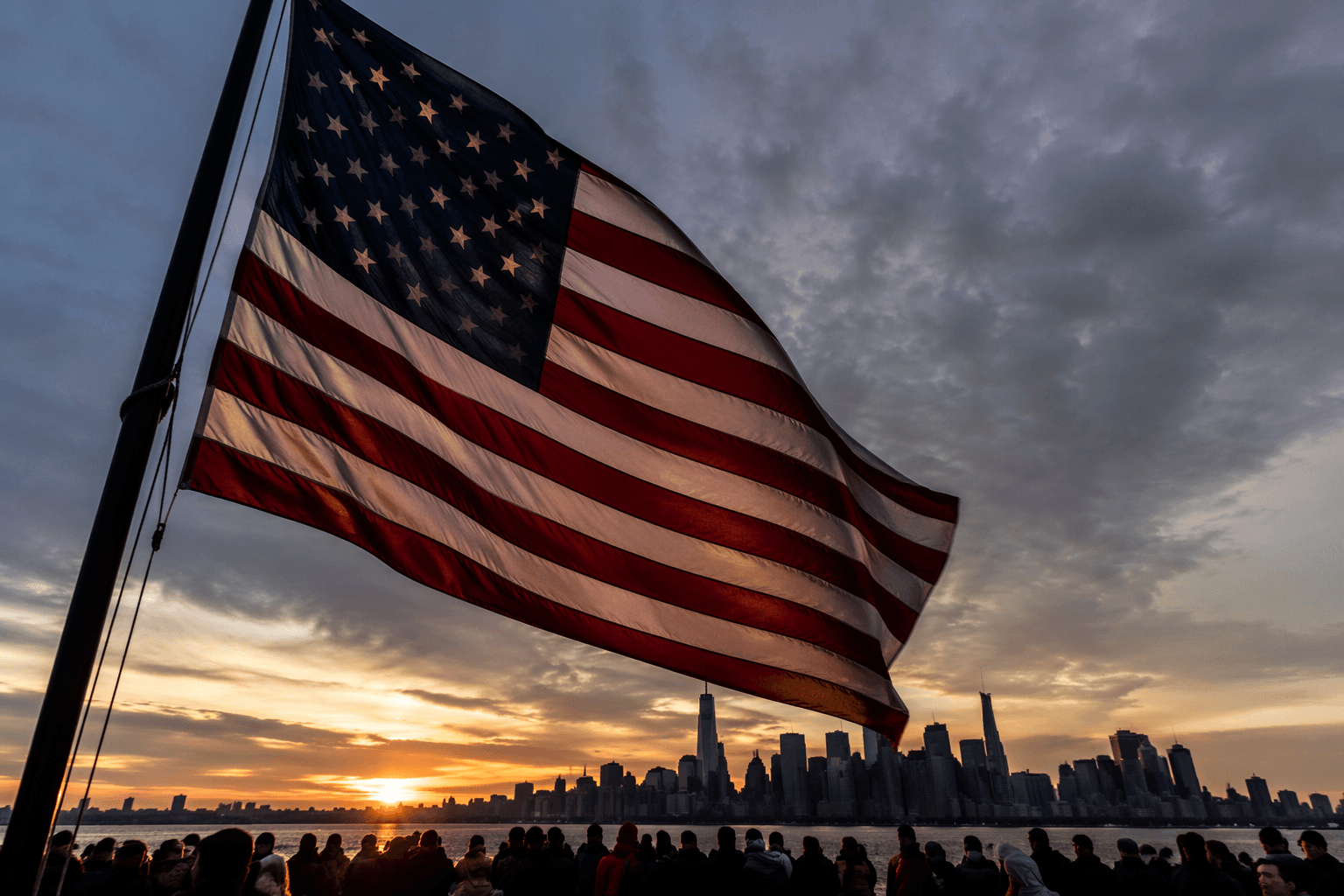
18. 23-star flag.
Alabama and Maine lifted the count to 23, showing how the flag followed the map as the nation widened.
19. 24-star flag.
Missouri’s statehood created another revision in the early 1820s, and the new star registered a borderland now bound more tightly to federal authority.
20. 25-star flag.
Arkansas added its star in 1836, carrying the flag farther into the era of expansion, settlement, and sectional tension.
21. 26-star flag.
Michigan’s admission in 1837 pushed the design again, another quiet change that recorded national growth more precisely than speeches did.
22. 27-star flag.
Florida’s statehood in 1845 gave the flag another star, and the republic kept extending toward the Gulf and the Pacific.
23. 28-star flag.
Texas entered the Union in 1845, and the flag absorbed one of the era’s most contested annexations.
24. 29-star flag.
Iowa’s 1846 statehood moved the count again, a small design change that reflected the country’s broadening federal footprint.
25. 30-star flag.
Wisconsin’s admission in 1848 gave the flag its 30-star form, the version that carried the nation through the 1850s.
26. 31-star flag.
Minnesota added a star in 1858, a sign that statehood was still marching west even as sectional politics hardened.
27. 32-star flag.
Oregon’s 1859 admission pushed the emblem toward the Pacific, underscoring how the flag tracked continental expansion.
28. Fort Sumter 33-star garrison flag.
The 33-star flag flew over Fort Sumter as the Civil War opened in 1861, making the banner an emblem of a Union under attack.
29. Lincoln deathbed flag.
The flag that cradled Abraham Lincoln at the end of his life turned national cloth into a ritual of mourning and succession.
30. 34-star flag.
West Virginia’s statehood in 1863 added a star even as the war split homes and governments apart.
31. 35-star flag.
Nevada joined in 1865, and the flag registered the Union’s survival at the moment of Confederate defeat.
32. 36-star flag.
Nebraska’s 1867 admission moved the count again, keeping the republic’s visual identity in step with Reconstruction-era growth.
33. 37-star flag.
Colorado’s statehood in 1877 gave the flag another star and closed the postwar decade with a symbol of westward momentum.
34. 42-star flag.
The western state rush of 1890 produced a crowded revision, and the flag’s changing count made the rapid enlargement of the Union visible.
35. 43-star flag.
Wyoming’s admission kept the flag in motion, proof that statehood still mattered as the nation’s civic contract.
36. 44-star flag.
Utah’s 1896 statehood pushed Old Glory to 44 stars, a version tied to the late 19th century’s push for national consolidation.
37. 48-star flag.
The 1912 standard settled the stars into six rows of eight and stayed in place for 47 years, spanning two world wars and the New Deal.
38. Suffrage four-star flag.
One suffrage banner used four stars to represent the first four states that gave women the vote, folding the ballot fight into flag symbolism.
39. Blue Star service flag.
Families hung blue star service flags in windows to mark relatives in uniform, moving patriotism into domestic space.
40. Gold Star flag.
When a family replaced a blue star with gold, the flag became a public sign of wartime loss and a private measure of sacrifice.
41. Upside-down distress flag.
Flown inverted, the flag signals distress, and its use in protest has made a rescue signal part of modern political argument.
42. World War I service banner.
Home-front banners multiplied during the First World War, tying enlistment, factory work, and civic duty to visible cloth.
43. World War II service banner.
The Second World War deepened that practice, as households and institutions used flags to track who was serving and who was waiting.
44. Iwo Jima flag.
Joe Rosenthal photographed Marines raising the American flag on Mount Suribachi on February 23, 1945, and the image won the Pulitzer Prize for Photography.
45. Marine Corps War Memorial.
The Iwo Jima image became the basis for the memorial in Arlington, Virginia, turning a battlefield scene into a fixed national monument.
46. Apollo 11 moon flag.
NASA planted the American flag on the Moon in July 1969, giving the symbol a setting that was as technological as it was patriotic.
47. Ground Zero flag.
Firefighters raised the flag over the World Trade Center ruins on September 11, 2001, and the image quickly became a shorthand for endurance and rebuilding.
48. POW/MIA flag.
The black-and-white banner keeps prisoners of war and those missing in action visible in public space, reminding officials that military service can end without closure.
49. 49-star flag.
Alaska’s 1959 statehood briefly reshaped the flag before Hawaii followed, showing the symbol was still flexible in the late 20th century.
50. 50-star flag.
Hawaii made the 50-star flag official in 1960, and that version remains the longest-running emblem of the nation, even as its meaning is still argued over in public life.
This article was produced by Prism’s automated news system from verified source data, official records, and press releases, then run through automated quality and moderation checks before publishing. The system is built and supervised by the people who set the standards it runs under. Read our full AI policy.
Did this article answer your question?