One killed as freight trains collide on Munich railway bridge
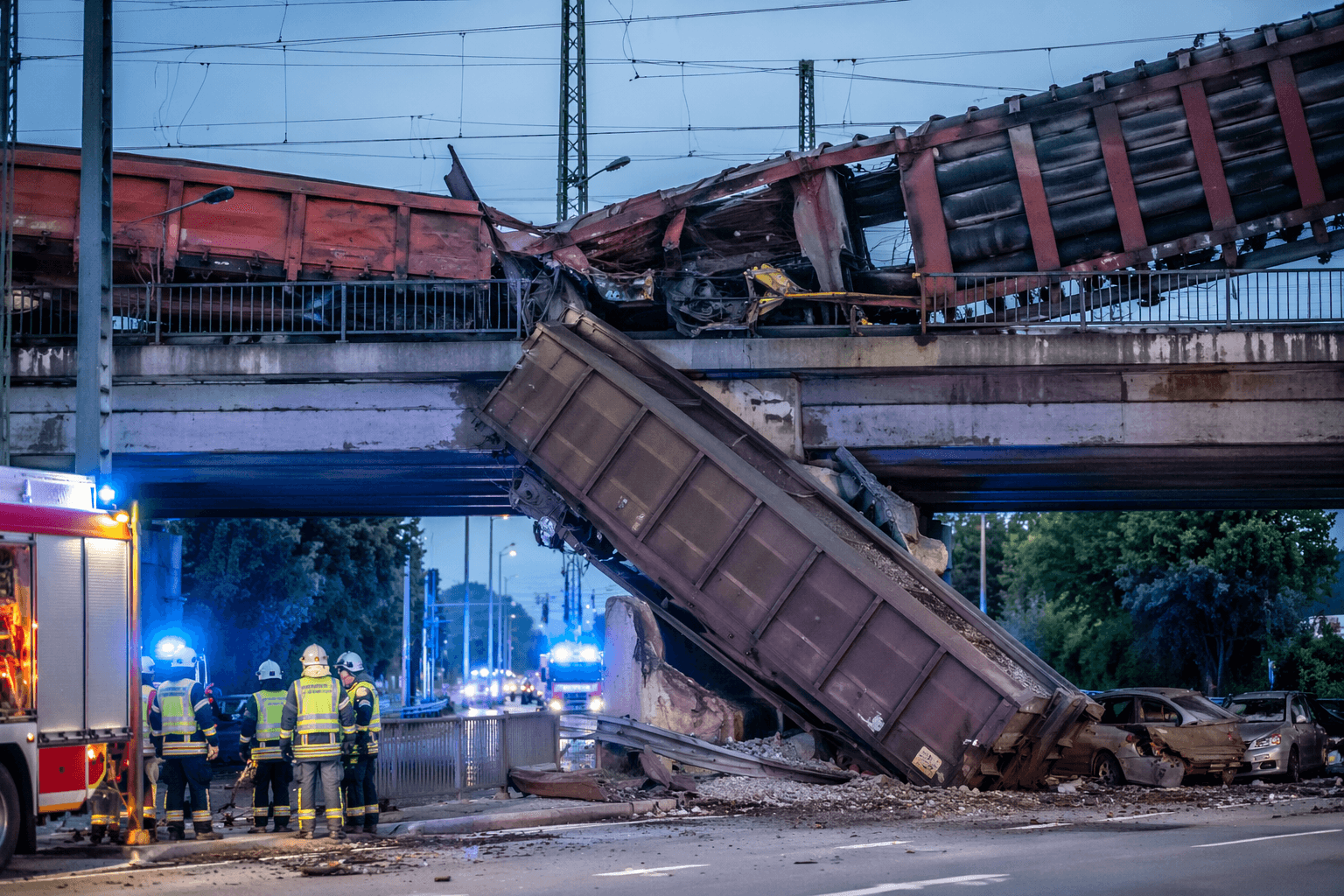
Two freight trains collided on a Munich bridge, killing one person and sending two empty wagons 5 meters onto the street below.

Two freight trains collided on a railway bridge in Munich’s Milbertshofen district, killing one person and hurling two wagons about 5 meters, or 16 feet, down onto the street below. Emergency services were alerted at 1:40 a.m. local time, and around 60 first responders were sent to the scene as police shut the road beneath the bridge.
The dead victim was not immediately identified by the German news agency dpa, and no other injuries were reported. Munich police said the street under the bridge remained closed while recovery and clearing operations continued, keeping one of the city’s northern traffic links sealed off through the response.
The cause of the collision was still under investigation. That uncertainty matters well beyond this one bridge: two freight trains should not end up on the same stretch of track in a dense urban rail corridor, and investigators will need to determine whether a signaling problem, routing error or other operational failure put the trains in conflict.
The immediate hazard was limited by a detail that also underscores the accident’s public-safety stakes. According to dpa, the derailed wagons were not carrying cargo, and officials said there was no threat to public safety. Had the cars been loaded, the consequences could have extended far beyond the fatality already recorded, especially on a bridge over a city street.
Even without spilled freight, the crash highlighted how vulnerable heavily used rail corridors can be when freight traffic moves through built-up neighborhoods. Munich sits inside one of Europe’s busiest rail systems, where freight trains, commuter traffic and urban roadways all intersect under tight operating margins. One collision on a bridge can cascade into road closures, emergency deployment and days of disruption while crews clear wreckage and inspect the line.
For Germany’s freight network, the question now is not only what failed in Milbertshofen, but whether traffic density, routing discipline and infrastructure oversight are keeping pace with the demands placed on them. The empty wagons may have spared the city from a larger hazardous-materials emergency, but the crash still exposed how thin the margin for error remains on urban freight routes.
This article was produced by Prism’s automated news system from verified source data, official records, and press releases, then run through automated quality and moderation checks before publishing. The system is built and supervised by the people who set the standards it runs under. Read our full AI policy.
Did this article answer your question?