Only Five Ships Pass Through Strait of Hormuz as War Disrupts Shipping
Only five ships crossed the Strait of Hormuz in 24 hours, a collapse from about 140 a day before the war and a warning of broader energy shocks.
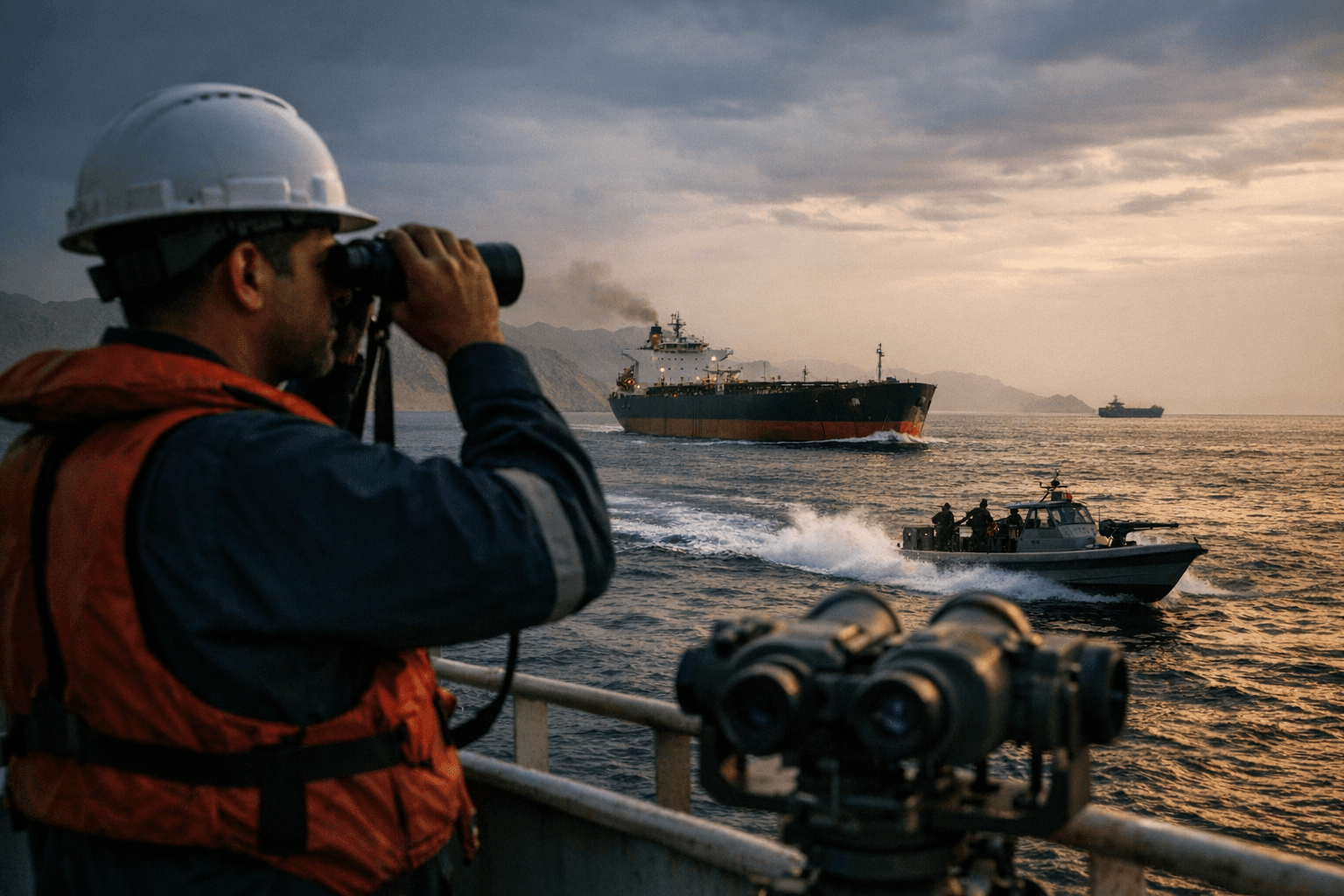
Five ships moved through the Strait of Hormuz in the previous 24 hours, including one Iranian oil-products tanker, a stark measure of how war has throttled one of the world’s most important maritime chokepoints. Before the fighting began on February 28, about 140 ships a day were passing through the waterway. Even after a cease-fire, traffic has remained far below normal, with Reuters-based coverage saying volumes had at one point fallen to less than 15 percent of the prewar average.
The shipping industry’s message has been blunt: normal traffic will not return without durable security guarantees. Jakob Larsen, BIMCO’s chief safety and security officer, said most shipping companies would need a stable cease-fire and assurances from both sides that the strait is safe before they resume normal transits. BIMCO said vessels have been pushed onto routes close to the Iranian and Omani coasts, where the narrow geography makes it impossible to handle ordinary volumes safely. The group also said ships perceived as friendly or neutral are not being blockaded by Iran, but they can transit only on routes defined by Tehran close to the Iranian coast, underscoring how tightly access is being controlled.
The deeper economic risk is not simply that traffic has slowed, but that the waterway may not be fully usable for weeks or longer. BIMCO said a mine-clearance effort would likely be needed to reopen the strait fully, and a press report on a Pentagon briefing said clearing mines could take up to six months. That timeline matters far beyond the Gulf: prolonged disruption would keep pressure on oil and liquefied natural gas flows, lift insurance premiums and freight rates, and feed higher costs into fuel markets that reach consumers and allies far outside the region. Even temporary calm has not erased the risk premium, because the physical route still depends on enforceable security guarantees.
The political fight over the strait remains unresolved. Iran has said the Strait of Hormuz is fully open to commercial vessels, while Reuters reported that an Iranian official said ships crossing Hormuz need coordination with the Islamic Revolutionary Guard Corps. The United States has kept its blockade of Iranian ships and ports in place until Tehran reaches a deal. The danger is amplified by history: the 2019 Gulf of Oman tanker attacks drew condemnation from the International Maritime Organization for the grave danger they posed to life, navigation and the environment, and the 1980s Tanker War showed how quickly the United States could be drawn into escorting neutral tankers through the same waters.
This article was produced by Prism’s automated news system from verified source data, official records, and press releases, then run through automated quality and moderation checks before publishing. The system is built and supervised by the people who set the standards it runs under. Read our full AI policy.
Did this article answer your question?