Iranians Cross Into Turkey for Food as War Deepens Economic Crisis
At a Turkish border gate near Van, Iranians queued for food and fuel as war and inflation turned bread and cooking oil into cross-border necessities.
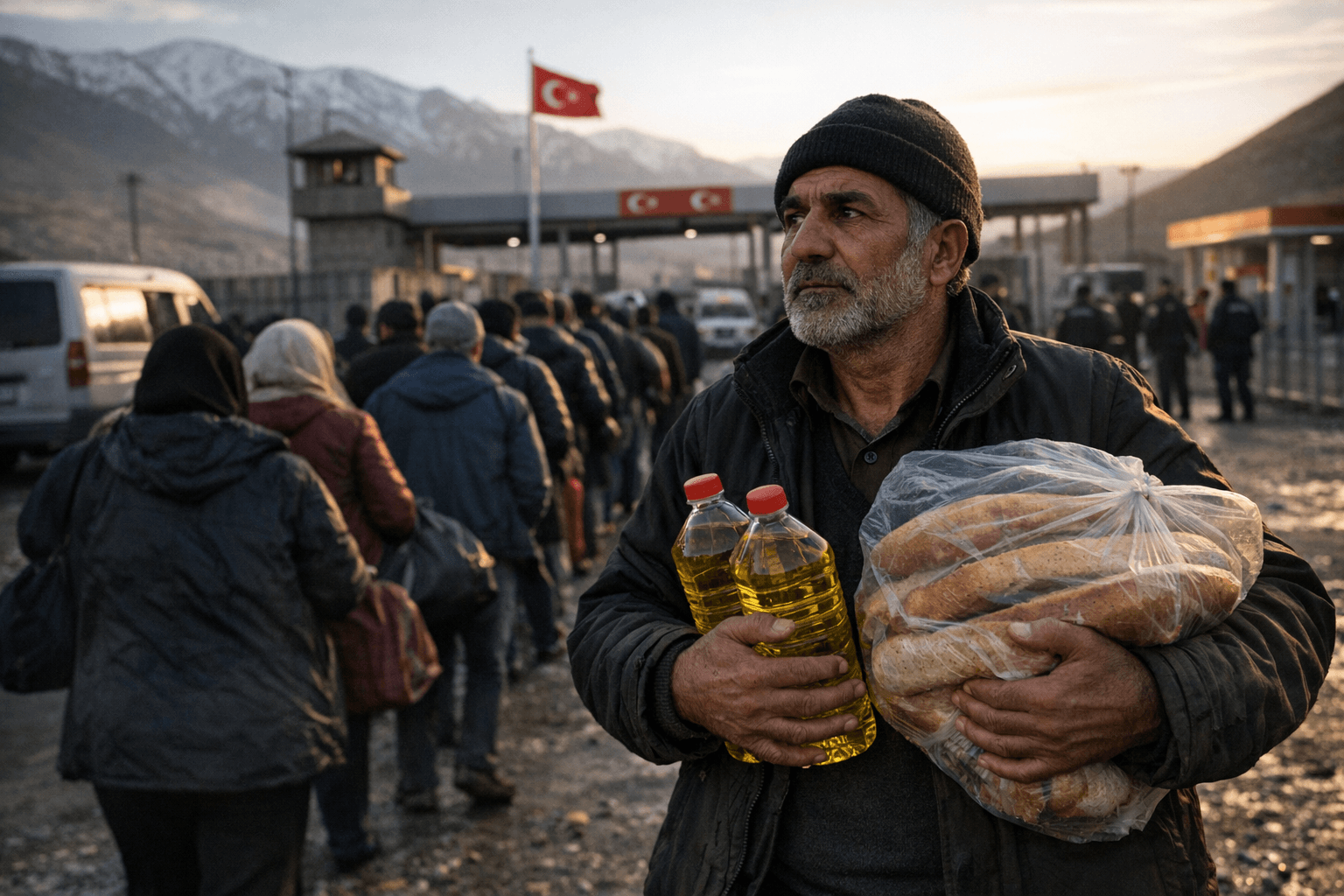
At the Kapikoy border gate near Van province, Iranians crossed into Turkey with shopping lists that had shrunk to essentials: food, petrol, gas, diesel, gasoline and bread. The scenes on the Turkey-Iran border showed how war pressure and economic breakdown had turned ordinary household staples into goods people were willing to travel across a frontier to find.
The crossings came as Türkiye and Iran mutually suspended same-day passenger traffic at all three customs gates on March 2, 2026, a sign of how quickly fighting was reshaping movement along the 500-kilometer frontier. Turkish authorities said they had contingency plans for a possible inflow of up to 90,000 people if conditions worsened. Türkiye’s interior minister said 5,010 people entered Turkey and 5,495 exited between March 1 and 3, suggesting a border under strain but still functioning as a pressure valve.
For many Iranians, the border was less about travel than survival. At Kapikoy, people described queues for basic supplies, and one border-crosser said that in some war-hit areas, shopkeepers had not opened their stores, leaving families to search elsewhere for food. The need to cross into Turkey for bread and fuel underscored how shortages had moved from household inconvenience to a daily crisis.
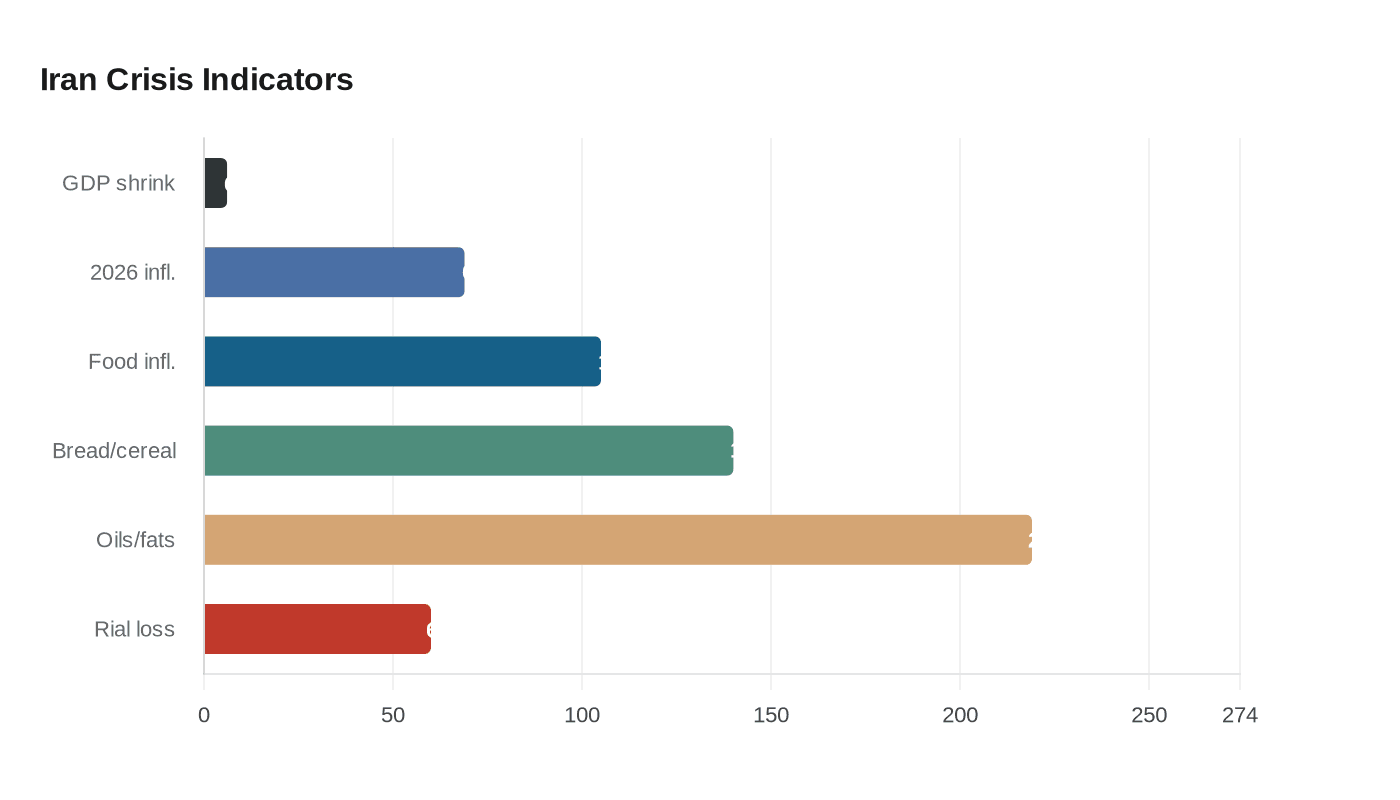
The deeper economic picture in Iran is grim. The International Monetary Fund expects the economy to shrink by 6.1% in 2026, while inflation is projected to reach 68.9%. Inflation had already exceeded 50% in 2025, and food prices were rising even faster. By February 2026, food inflation had reached 105%, with bread and cereals up 140% over the year through March and oils and fats up 219%.
The currency collapse has widened the damage. Iran’s rial had lost about 60% of its value in the months after the 12-day war against the United States last July, intensifying pressure on wages, savings and imports. Banks began distributing a 10-million rial banknote, the largest denomination in Iran’s history, a practical admission that prices and cash shortages had outgrown the old money supply.
Taken together, the border queues, the currency slide and the food-price surge point to a system buckling under war and inflation. When Iranians leave the country to buy cooking oil and bread, the crisis is no longer abstract economic data. It is a measure of how far state capacity and household resilience have both been pushed.
This article was produced by Prism’s automated news system from verified source data, official records, and press releases, then run through automated quality and moderation checks before publishing. The system is built and supervised by the people who set the standards it runs under. Read our full AI policy.
Did this article answer your question?


