OPEC+ delegates signal likely Q1 output pause despite Saudi-UAE rift
Delegates said on Jan. 3 that OPEC+ is expected to keep its current output policy unchanged at a video meeting scheduled for Jan. 4, likely confirming a pause on further production increases through the first quarter of 2026. The decision would slow near-term supply growth while the group implements a longer-term, gradual reversal of earlier voluntary cuts, a trajectory that markets and policymakers will watch amid rising Saudi-UAE tensions.
Delegates to the OPEC+ alliance told reporters on Jan. 3 they expect the group to maintain its existing production policy at an online ministerial meeting scheduled for Jan. 4, effectively pausing further increases through the first quarter of 2026. The anticipated confirmation would leave in place a November decision to hold supply steady after a period of rapid output restoration last year.
The pause would not halt a separate, pre-agreed mechanism to reverse voluntary cuts by eight core producing members. Analysis by Enerdata that OPEC+ members have circulated envisages those eight countries, including Saudi Arabia, Russia, Iraq, Kuwait, the United Arab Emirates, Algeria, Kazakhstan and Oman, adding an average 137,000 barrels per day each month from April 2025 through September 2026. That 18-month glide path amounts to roughly 2.5 million barrels per day of incremental capacity over the period and includes a designated 300,000 bpd uplift for the UAE. Enerdata’s figures align with earlier policy choices to unwind roughly 2.2 million bpd of voluntary reductions that had been in place.
Market participants note the incremental plan contrasts with the more aggressive ramp-up seen in mid-2025, when monthly increases reached about 555,000 bpd in August-September and roughly 411,000 bpd in June-July. Before the recent adjustments, the alliance managed two layers of cuts: approximately 1.65 million bpd of voluntary reductions by key members and an additional near-2 million bpd cut by the broader group that was scheduled to run into 2026. The expected Q1 pause will slow the cadence of fresh supply while those larger parameters are reconciled.
Delegates and analysts cited mounting signs of global oversupply and a cautious demand outlook as primary reasons for holding output steady in the near term. With inventories and refining flows still adjusting to last year’s production restorations, OPEC+ appears reluctant to add further immediate barrels that could widen a surplus and depress prices.
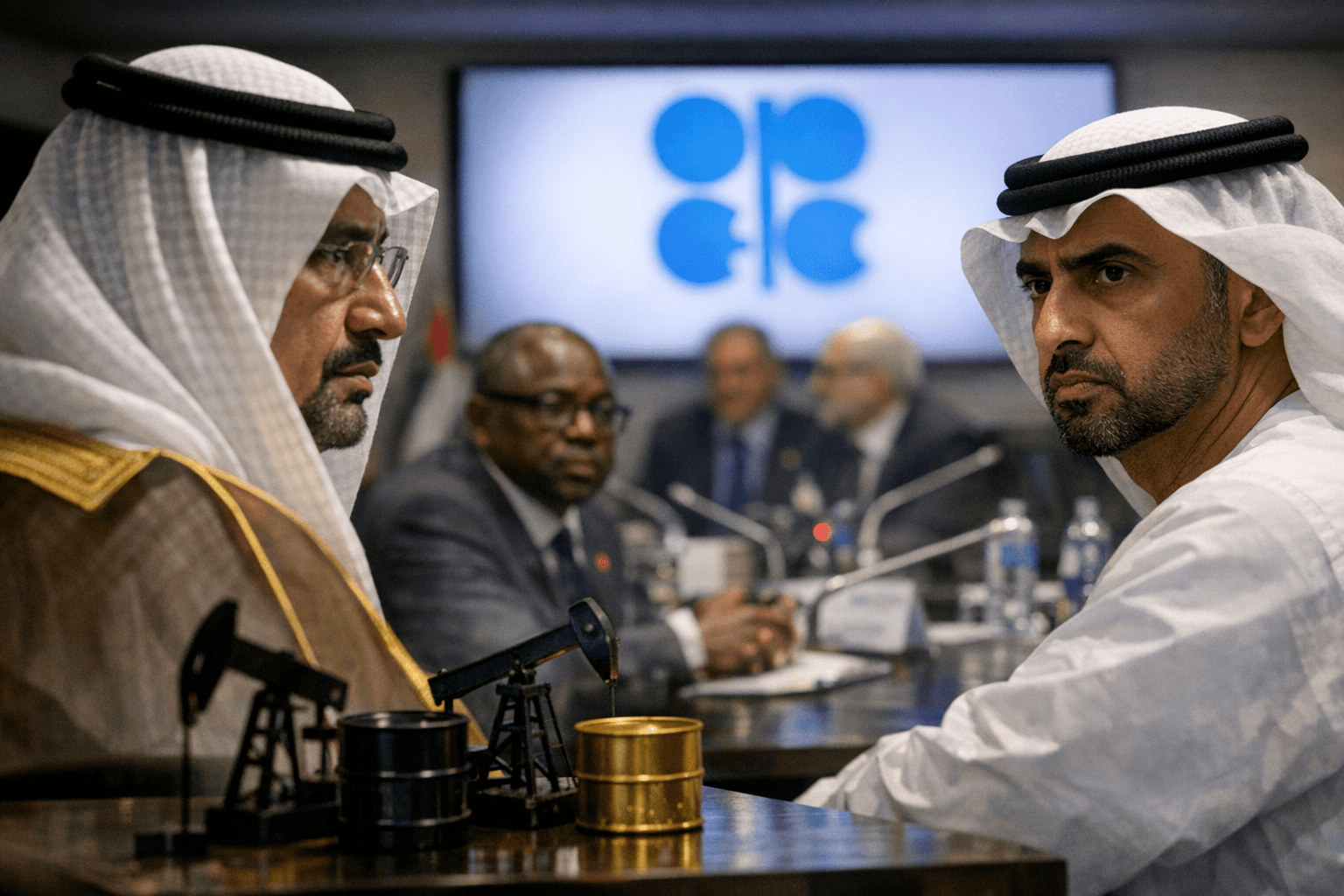
Complicating the technical calculus are heightened political tensions between Saudi Arabia and the UAE. Multiple sources described a public spat between the two top Gulf producers, though delegates emphasized that the larger alliance retains the capacity to coordinate policy even as bilateral relations fray. The rift raises longer-term governance questions: sustained discord among leading members could make future adherence to agreed monthly ramps more uncertain and complicate any collective response to market shocks.
The immediate market test will come when ministers formally review the November pause and supply-demand indicators at Sunday’s video conference. Traders, refiners and consuming-country policymakers will be watching not only whether the Q1 hold is reaffirmed, but how the 137,000 bpd monthly schedule is implemented or adjusted in response to near-term oversupply signals and the political strains within the producer camp. The balance OPEC+ strikes in January will shape oil market trajectories and policy options well into 2026.
This article was produced by Prism’s automated news system from verified source data, official records, and press releases, then run through automated quality and moderation checks before publishing. The system is built and supervised by the people who set the standards it runs under. Read our full AI policy.
Did this article answer your question?