Open-Source Analysis Links Bahrain Explosion to U.S. Patriot Interceptor Missile
Researchers say a U.S. Patriot interceptor, not an Iranian drone, likely caused a pre-dawn Bahrain explosion that injured 32 people, including children — directly contradicting what both governments claimed.
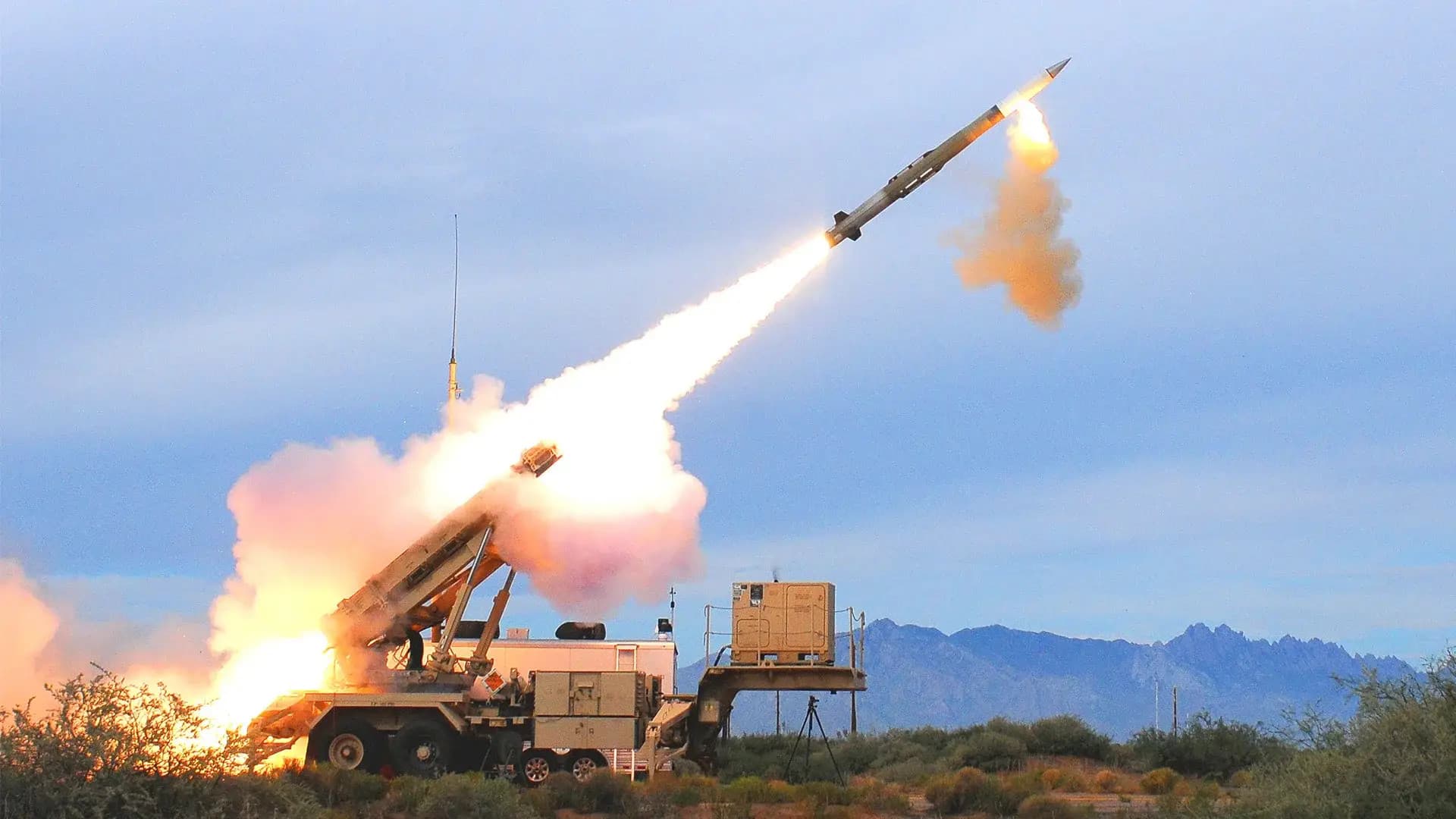
A video shared on social media captured a Patriot missile roaring across the Bahraini night sky at low altitude, angling downward and out of sight before a flash of light marked its detonation 1.3 seconds later. That footage became a cornerstone of an open-source analysis that now directly challenges what both the United States and Bahrain told the public about what tore through the Mahazza neighborhood on Sitra island in the early hours of March 9.
Research associates Sam Lair and Michael Duitsman and Professor Jeffrey Lewis of the Middlebury Institute of International Studies at Monterey concluded with moderate-to-high confidence that the suspect missile was likely launched from a U.S. Patriot battery located about 4 miles (7 km) to the southwest of the Mahazza neighborhood. The conclusions of the three American munitions and open-source intelligence researchers were based on their review of open-source visuals and commercial satellite imagery, and Reuters showed their analysis to two target-analysis experts and one Patriot system missile researcher, who found no reason to dispute its conclusion.
Wes Bryant, a former senior targeting advisor and policy analyst at the Pentagon, said Lair, Duitsman and Lewis's conclusions were "pretty undeniable."
Both Bahrain and Washington had blamed an Iranian drone attack for the March 9 blast, which the Gulf kingdom said injured 32 people including children, some seriously. In an X post on March 9, U.S. Central Command denounced Iranian and Russian news reports that said the incident in Mahazza was the result of a failed Patriot, calling it a "LIE," and said an Iranian drone struck a residential neighborhood.
In response to questions from Reuters, Bahrain acknowledged for the first time that a Patriot missile was involved in the explosion over the Mahazza neighborhood on Sitra island. A Bahraini government spokesperson said the missile successfully intercepted an Iranian drone mid-air, saving lives. The spokesperson added that "the damage and injuries sustained were not a result of a direct impact to the ground of either the Patriot interceptor or the Iranian drone." Bahrain's government declined to say whether the missile that detonated on March 9 was fired by its own forces or by the United States.
The Middlebury analysis told a different story about what likely happened over those four streets. The direction of the damage and the lack of available evidence of a drone over the neighborhood suggested that "the explosion was the result of the detonation of the warhead and unexpended propellant of a Patriot interceptor," the analysis said, with researchers concluding it was less likely the missile made contact with a drone. The analysis also allowed for a secondary possibility: in the flight video, the Patriot appears to pass a much steeper smoke trail that researchers said likely belonged to a first interceptor fired moments earlier, since Patriots are often fired in pairs to increase the chances of a hit. Neither the researchers nor Reuters could establish what happened to the first missile, and the low trajectory of the second missile and its deviation from the earlier launch route could be signs of a possible problem, the researchers said.
Hany Farid, a professor at the University of California at Berkeley specializing in digital forensics, reviewed the video to determine if it was generated by artificial intelligence, and found "no obvious evidence that the video is fake."
The analysis described the intercept attempt in stark terms. If a Patriot was aimed at a low-flying drone and the combined detonation caused civilian casualties, the researchers wrote, it was "an irresponsible intercept attempt as it endangered the lives and the homes of allied civilians in a residential area."
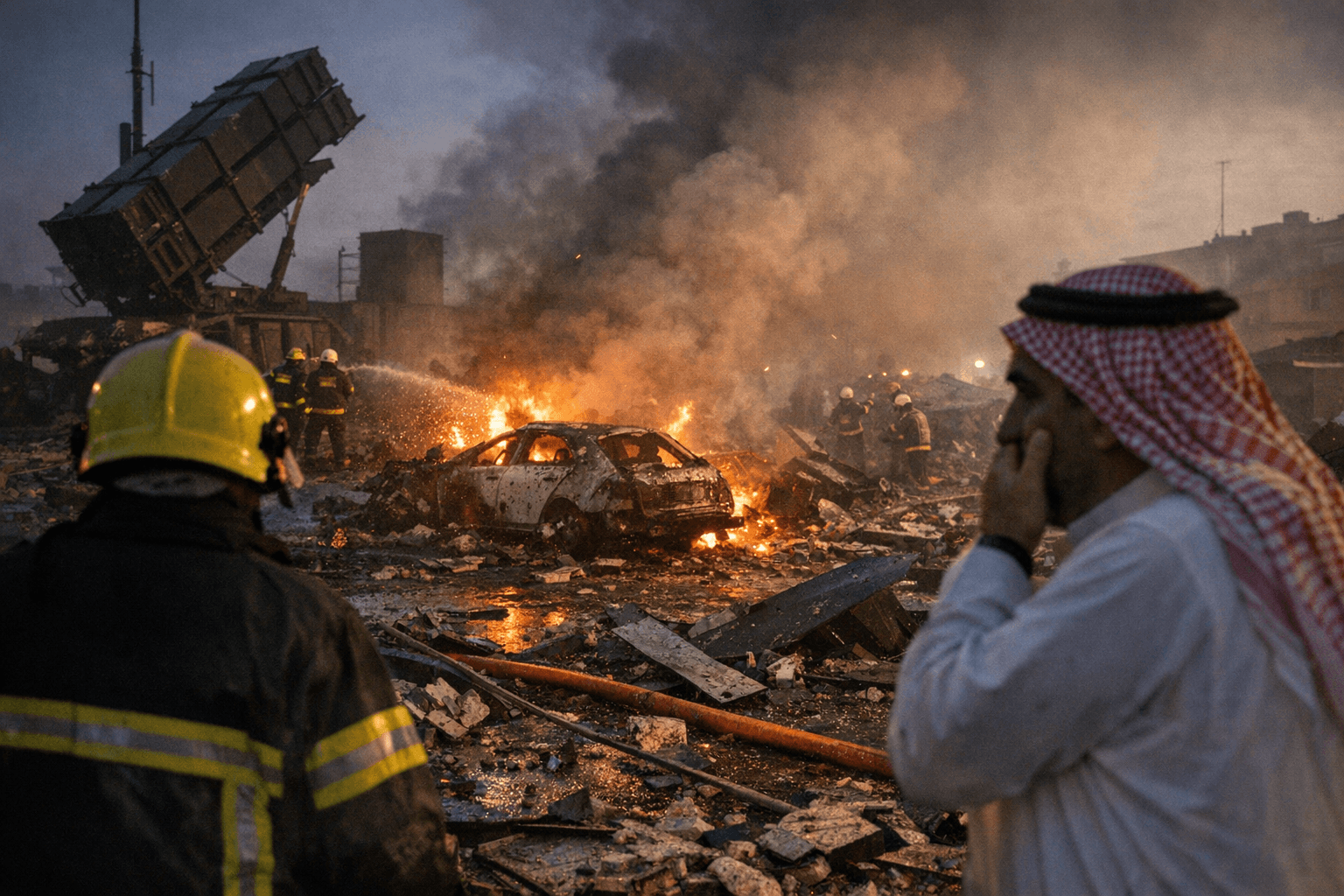
The blast from the powerful Patriot, whether or not it intercepted a drone, contributed to widespread damage and casualties, while Bahrain's air defenses were unable to prevent strikes that night on the nearby oil refinery, which declared force majeure hours later.
The Pentagon referred Reuters to Central Command, which did not immediately reply to questions. A White House senior official said the United States was "crushing" Iran's ability to shoot or produce drones and missiles, adding that the U.S. military "never targets civilians," but did not address specific questions about the Patriot blast.
Neither Bahrain nor Washington provided evidence that an Iranian drone was involved in the Mahazza incident. Reuters and the Middlebury researchers were also unable to obtain or review any visual evidence of missile or drone fragments. Reuters attempted to contact witnesses in Bahrain, but several people declined to speak, citing fear of reprisals, as Human Rights Watch has documented arrests of people in Bahrain during the war for posting videos on social media of attacks. Raytheon, the RTX unit that produces the Patriot, the U.S. Army's primary high-to-medium-range aircraft-and-missile interceptor system, did not respond to a request for comment about the incident.
This article was produced by Prism’s automated news system from verified source data, official records, and press releases, then run through automated quality and moderation checks before publishing. The system is built and supervised by the people who set the standards it runs under. Read our full AI policy.
Did this article answer your question?