OpenAI says AI solved famous geometry problem, raising math career questions
OpenAI says a general-purpose model disproved a 1946 geometry problem, forcing mathematicians to rethink who gets credit for the next breakthrough.
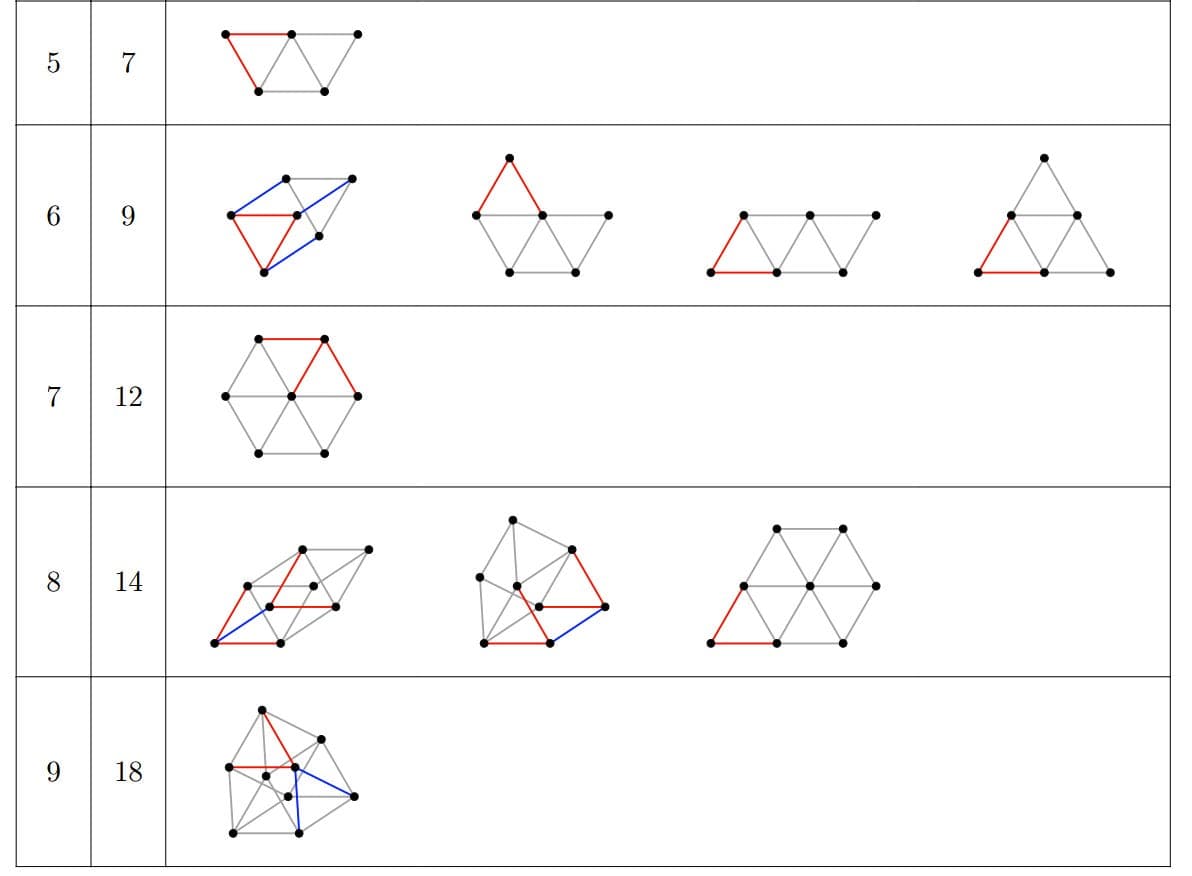
OpenAI says an internal reasoning model has done something mathematicians long treated as a human rite of passage: it disproved the planar unit distance problem, a 1946 conjecture by Paul Erdős. The company said the proof was checked by external mathematicians and relied on ideas from algebraic number theory, not a system built only for mathematics.
The claim matters because the unit distance problem was widely understood as the kind of difficult but bounded work that helps young mathematicians earn credibility. OpenAI said its model produced an infinite family of examples that improved on the long-standing square-grid intuition, suggesting that AI is starting to move beyond benchmark-style puzzles and into original research territory. Fields medalist Tim Gowers called the result “a milestone in AI mathematics,” while number theorist Arul Shankar said current AI models can have original ideas and carry them through to fruition.
That possibility lands at a sensitive moment in the academic pipeline. The International Mathematical Olympiad has been held every year since 1959, and about 600 students compete annually in six problems over two days, with roughly 8 percent earning gold medals. For decades, the IMO has functioned as a proving ground for future mathematicians, a place where sharp problem-solving could open doors to graduate school, jobs and reputations. Google DeepMind said in July 2025 that an advanced version of Gemini Deep Think reached gold-medal level at the IMO, solving five of six problems for 35 points within the 4.5-hour limit, while its 2024 AlphaGeometry and AlphaProof systems reached silver-medal level with 28 points.

The reaction has been split between excitement and caution. MIT mathematician Pavel Etingof warned in May 2026 that AI can be productive but also counterproductive, and that models can hallucinate mathematically plausible but wrong arguments, which means every result still needs full human verification and understanding. That caution hangs over OpenAI’s announcement, especially as later reporting showed U.S. mathematician Will Sawin followed the same line of reasoning to obtain an improved result.
The larger issue is no longer whether AI can solve isolated problems. It is whether universities, journals and funders will continue to reward the same proving-ground work if machines can clear it faster, and whether the next generation of mathematicians will be judged more for insight, judgment and synthesis than for grinding through problems that once built careers one proof at a time.
This article was produced by Prism’s automated news system from verified source data, official records, and press releases, then run through automated quality and moderation checks before publishing. The system is built and supervised by the people who set the standards it runs under. Read our full AI policy.
Did this article answer your question?


