Orbán loses Hungary election as pro-EU Tisza wins landslide
Orbán’s 16-year run ended with a Tisza landslide, as Péter Magyar turned anti-corruption anger and voter fatigue into a projected supermajority.
Viktor Orbán’s 16-year grip on Hungarian power cracked not because the country suddenly swung to a new ideology, but because a worn-out governing system finally met a credible challenger at the same moment voters were ready to punish overreach.
In the parliamentary vote on April 12, Péter Magyar’s centre-right, pro-EU Tisza party surged ahead in a result projected to deliver a supermajority in Hungary’s 199-seat parliament. With nearly half the votes counted, the National Election Office said Tisza was on course for 135 seats; later reporting put the party at about 138 seats and 53.1% of the vote. Fidesz-KDNP, the alliance Orbán has led to four consecutive landslide victories since 2010, was down to roughly 38.4% and 55 seats.
The scale of the defeat was striking because Orbán had returned as prime minister in 2010 after first taking office in 1998, and for years he faced no serious national threat. That changed only in 2024, when Magyar, once an Orbán insider with mid-level roles in Fidesz-linked organizations, broke with the government after the presidential clemency scandal and began recasting himself as the voice of anti-corruption anger and institutional renewal.
Magyar’s path to power depended less on a sudden conversion by Hungarian voters than on the slow accumulation of practical frustrations. He toured the country relentlessly, reached beyond Budapest, and chipped away at Fidesz’s dominance in the countryside and across much of the media environment. His rise also showed how quickly a once-unknown figure can become dangerous to an entrenched incumbent when scandal, fatigue and a disciplined opposition line up at the same time.
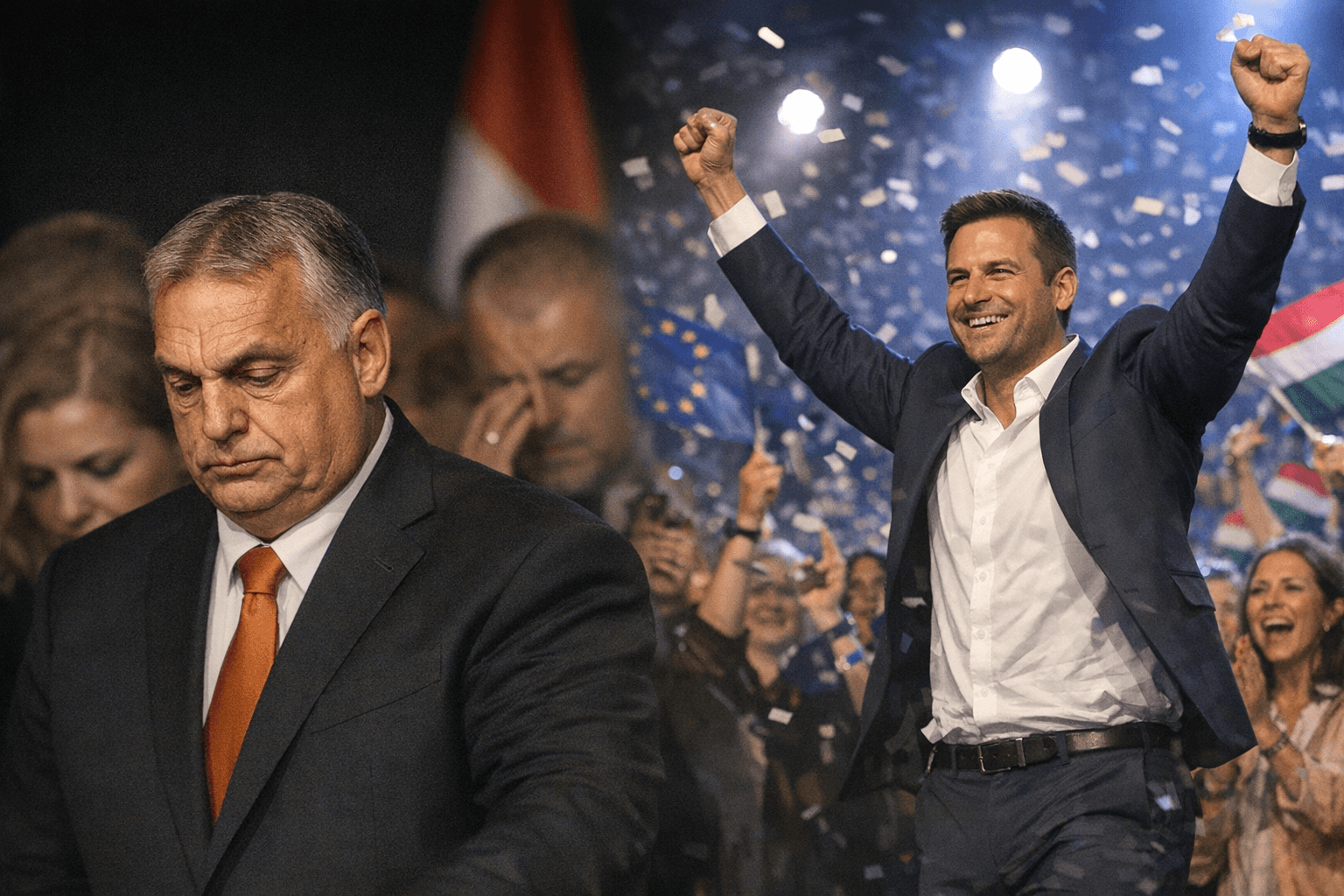
Orbán conceded defeat within hours of polls closing and congratulated Magyar. The result immediately carried implications well beyond Hungary’s borders. Orbán has been one of Vladimir Putin’s closest allies inside the European Union and a persistent opponent of EU support for Ukraine, making the election a potential reset for Hungary’s role in Brussels, NATO and the debate over Russia’s influence in Europe. It also landed as a warning to the broader global right, including politicians aligned with Donald Trump.
European Commission President Ursula von der Leyen called the outcome a victory for fundamental freedoms and linked it to Hungary’s 1956 anti-Soviet uprising and its 1989 break with communism. For Orbán, the loss was a political reckoning. For Hungary, it looked less like an ideological revolution than the moment an incumbent model finally collided with corruption fatigue, economic strain and the limits of political domination.
This article was produced by Prism’s automated news system from verified source data, official records, and press releases, then run through automated quality and moderation checks before publishing. The system is built and supervised by the people who set the standards it runs under. Read our full AI policy.
Did this article answer your question?