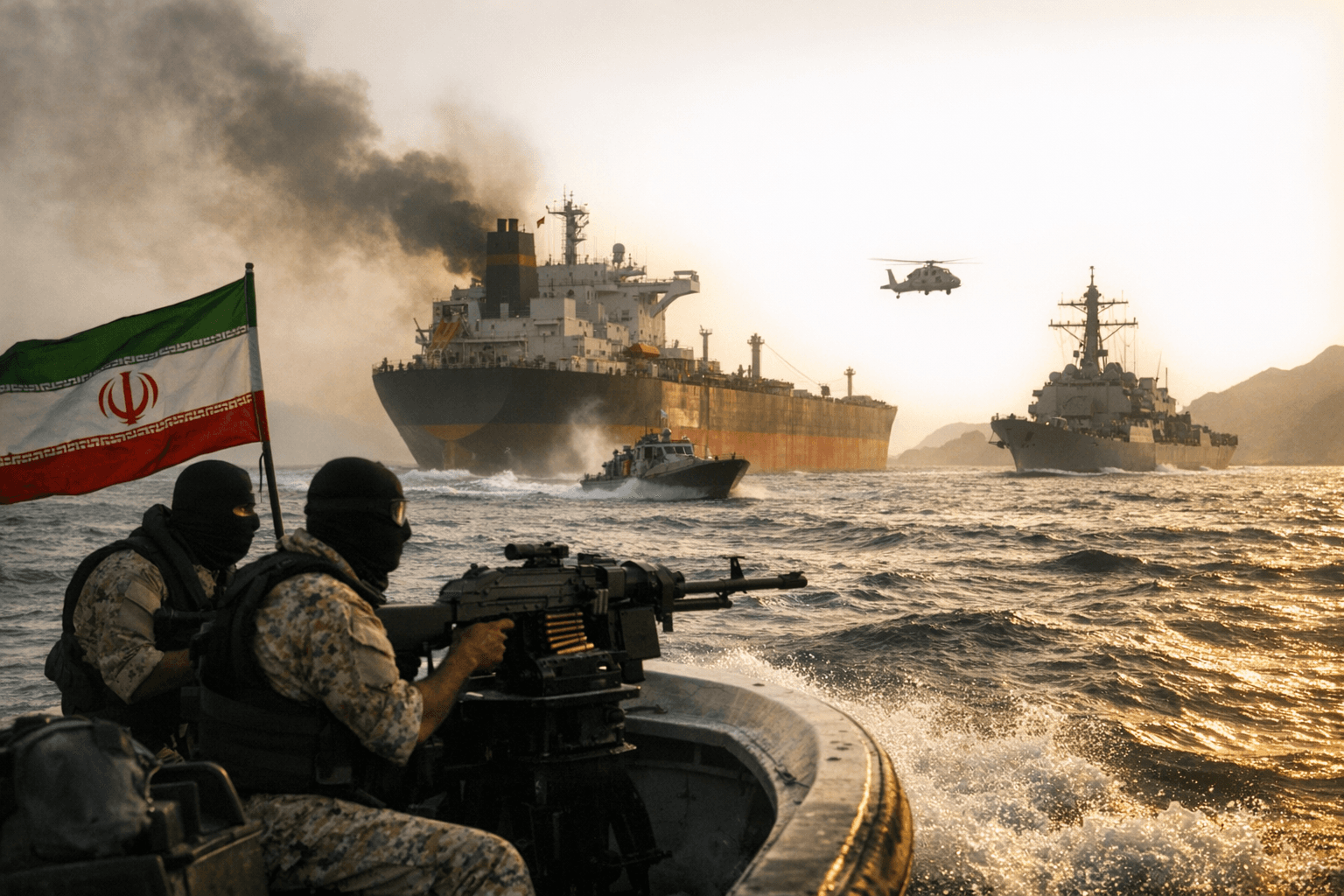
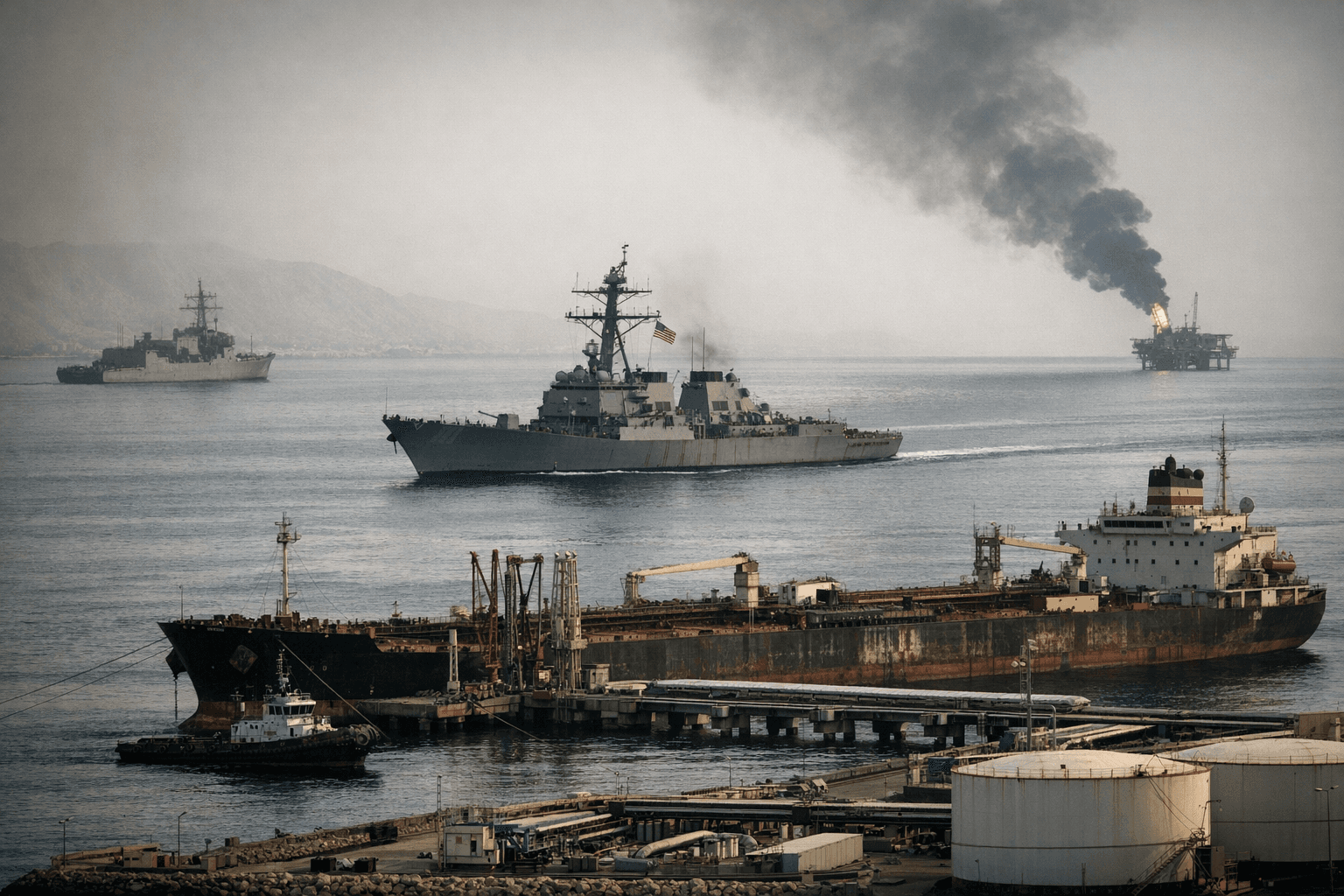
US begins blockade of Iranian ports, raising stakes in Hormuz
The U.S. military began blocking traffic to Iranian ports at 10 a.m. ET, tightening pressure on a chokepoint that carries about 20 million barrels of oil a day.
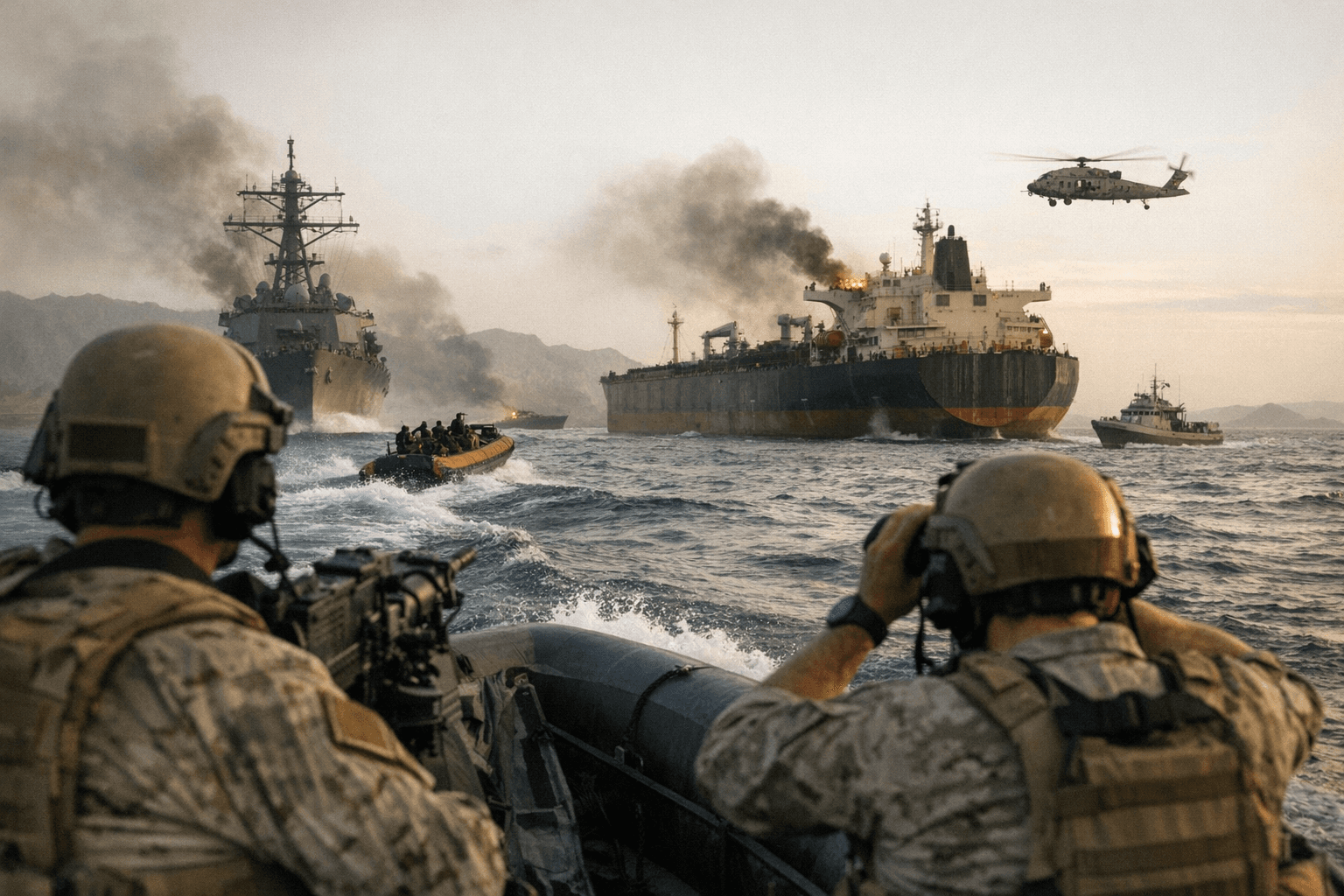
The U.S. military began enforcing a blockade on maritime traffic entering and exiting Iranian ports and coastal areas on the Arabian Gulf and Gulf of Oman, a step that immediately raised the risk of a wider confrontation even as commanders said transit through the Strait of Hormuz to and from non-Iranian ports would remain open. U.S. Central Command said the measure took effect April 13 at 10 a.m. ET and would be enforced impartially against vessels of all nations.
The move matters because it targets waters tied to one of the world’s most important energy corridors without formally sealing the strait itself. At its narrowest point, Hormuz is just 29 nautical miles wide, with limited navigable channels. The International Energy Agency says about 20 million barrels a day of crude oil and oil products moved through the strait in 2025, roughly a quarter of all seaborne oil trade. The agency also says nearly 19% of global liquefied natural gas trade passes through the same passage.
Even a partial disruption can ripple far beyond Iranian waters. The U.S. Energy Information Administration says the strait averaged about 20 million barrels a day of oil flow in 2024, equal to roughly 20% of global petroleum liquids consumption, and that first-quarter 2025 flows were relatively flat from last year. It also estimates only 3.5 million to 5.5 million barrels a day of pipeline capacity could potentially bypass the strait, a narrow alternative for Saudi Arabia, the United Arab Emirates, Kuwait, Qatar, Iraq, Bahrain and Iran.
Markets responded fast. CNBC reported West Texas Intermediate futures jumped more than 8% to $104.40 and Brent rose more than 7% to $101.86 after the announcement, while Reuters-linked market coverage said prices pushed above $100 a barrel and raised the prospect of broader inflation pressure. The IEA says China and India together received 44% of the crude oil exports that passed through Hormuz in 2025, underscoring how quickly the shock could spread into Asian supply chains.
The blockade also sharpened the chance of direct military escalation. CNN live coverage said the Islamic Revolutionary Guard Corps vowed to retaliate, and ABC News reported that U.S.-Iran talks in Pakistan failed to produce a peace deal before the announcement. Analysts cited by CNBC warned of legal challenges and a wider supply squeeze, while Trita Parsi of the Quincy Institute warned prices could climb toward $150 a barrel if more Persian Gulf supply were taken off the market. Even without closing Hormuz outright, Washington has put the region’s most consequential shipping lane under extraordinary strain.
Know something we missed? Have a correction or additional information?
Submit a Tip