OSHA-based checklist helps restaurants reduce violence, protect staff, prepare for emergencies
An OSHA-based checklist translates engineering, administrative, and training controls into concrete steps restaurants can use to reduce violence, protect staff, and sharpen emergency response.
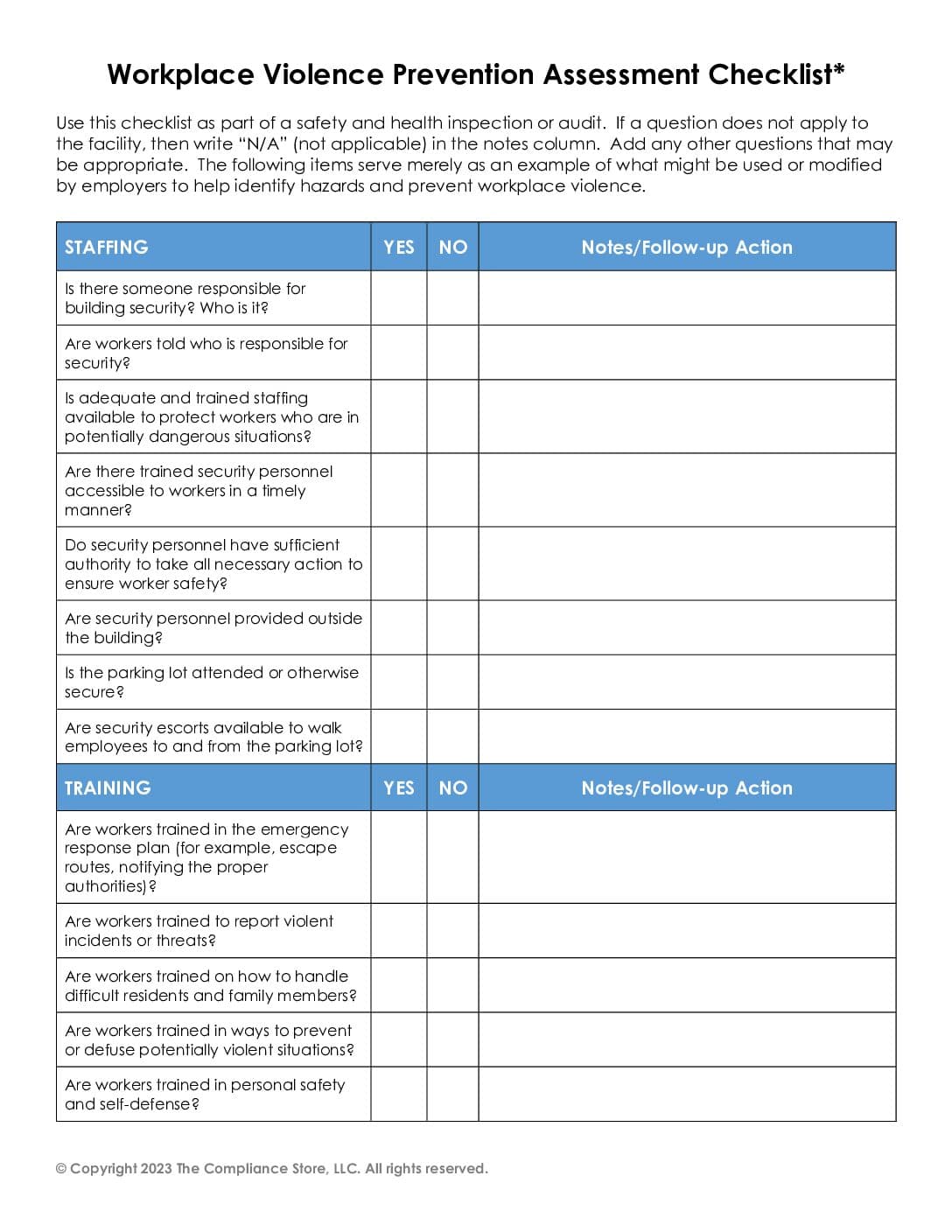
An OSHA-rooted checklist gives restaurant managers a clear, practical roadmap for preventing violence and preparing staff for emergencies. Built around engineering controls, administrative policies, and training, the checklist converts workplace-safety guidance into daily routines and investments owners can implement at the floor level.
Why an OSHA-based approach matters for restaurants
OSHA frames workplace violence as a preventable hazard, and its guidance is designed to match the fast-paced, public-facing realities of restaurants. Using an OSHA-based checklist aligns a restaurant’s practices with established safety principles and helps managers prioritize measures that address the most common risk vectors—cash handling, late-night service, alcohol-related incidents, and confrontations at the host stand or drive-through. For owners, that means turning abstract safety goals into actionable controls that reduce employee injury, liability, and turnover.
Engineering controls: physical changes that lower risk
Engineering controls are the first practical layer on the checklist because they alter the environment to reduce opportunities for violence. Typical engineering items include improved exterior and parking-lot lighting to reduce risks during late shifts, clear sightlines between dining areas and the kitchen or manager station, and secure barriers at takeout windows or registers for high-risk locations. Cameras and monitored video systems are also listed as controls—used not only for evidence after incidents but as a deterrent when visibly installed and maintained. Where feasible, consider redesigning entrances to limit rapid crowding and adding single-point cash drops or lockboxes to minimize visible cash on hand.
- Install tamper-resistant lighting and regularly inspect bulbs and fixtures.
- Position POS systems and manager stations to maximize visibility of dining room and entry points.
- Use plexiglass screens or low-profile barriers in high-risk pickup windows while maintaining service speed.
Administrative controls: policies and practices that shape behavior
Administrative controls cannot be outsourced to technology; they rely on clear policies, staffing choices, and incident procedures. The checklist encourages restaurants to adopt written policies for cash management (e.g., no more than a set amount of register cash), customer removal and trespass procedures, and clear guidance on handling intoxicated customers. Scheduling practices—such as avoiding lone closing shifts in high-risk neighborhoods and rotating staff so no single person is routinely left alone—are explicit administrative steps. Also essential: a documented incident-reporting protocol so every event, no matter how minor, is logged for trend analysis and follow-up.
- Set a maximum register cash amount and a no-cash policy for late-night shifts if practical.
- Require at least two staff present for closing duties in locations identified as higher risk.
- Maintain an incident log with time, location, people involved, description, and follow-up actions.
Training: what staff must know and practice
Training turns policy into muscle memory. OSHA-based checklists emphasize regular, role-specific training sessions that cover de-escalation techniques, situational awareness, emergency evacuation routes, and how to use safety devices (panic buttons, radios, CCTV monitoring). New-hire orientations should include hands-on practice for the most likely scenarios—aggressive customers, robbery, medical emergencies—while quarterly refreshers keep skills current. For managers, training should include incident documentation, how to interact with first responders, and decisions about temporary closures or staff support after traumatic incidents.
- Run short scenario drills for front-of-house and back-of-house teams quarterly.
- Train every manager on incident reporting forms and the threshold for contacting law enforcement.
- Include mental-health first-aid referrals as part of post-incident training for supervisors.
Emergency response planning and drills
An OSHA-based checklist treats emergency response as a living plan. The checklist specifies written emergency procedures tailored to the restaurant’s layout—evacuation routes from the dining room, shelter-in-place locations for drive-through workers, and an assigned staff member to call emergency services and meet first responders outside. Drills should be scheduled, documented, and varied (e.g., fire, active assailant, major medical event) so staff can apply de-escalation, evacuation, and first-aid protocols under stress. Restaurants should also map communications: who notifies corporate leadership, how to reach on-call managers, and which staff will handle customer-facing explanations after an incident.
Coordination with external responders and partners
Part of preparing for emergencies is building relationships off-premises. The checklist recommends meeting with local police, fire, and EMS to review access points, typical call response times, and protocols for responding to the restaurant’s address. If the restaurant is part of a neighborhood with higher domestic-violence or substance-use concerns, creating a liaison with local social services and worker-support programs can speed post-incident care. For franchisees, the checklist encourages coordination with brand safety teams to ensure consistent reporting and insurance notification.
Post-incident support, documentation, and continuous improvement
After any incident, OSHA-based guidance prioritizes immediate medical care and mental-health support for staff, followed by a structured after-action review. The checklist requires documenting injuries, property damage, witness statements, and timestamps; it also calls for a management-led review to identify failed controls and adjust policies. That continuous-improvement loop—update the engineering fixes, change schedules, add training, or revise incident thresholds—keeps the plan current as the business and neighborhood evolve.
- Provide employees access to confidential counseling after violent incidents.
- Keep a rolling log to spot patterns by daypart, location, and incident type.
- Review the checklist twice a year and after any significant event.
Step-by-step implementation for managers and owners
1. Conduct a baseline risk assessment of the restaurant using the checklist’s sections (engineering, administrative, training).
2. Prioritize fixes that reduce immediate harm (lighting, staffing, cash controls) and set a timeline and budget.
3. Roll out written policies and deliver initial staff training that covers the most likely scenarios.
4. Install or update safety equipment (locks, cameras, panic buttons) and test them monthly.
5. Schedule quarterly drills and semiannual reviews with local emergency responders.
6. Implement a post-incident review process and update the checklist items based on findings.
Implementing a safety checklist is an operational decision with clear ROI: fewer incidents, lower turnover, and reduced legal and reputational risk. For restaurants, where the public and staff share a confined space and situations can escalate quickly, an OSHA-based checklist translates safety principles into concrete, day-to-day actions. Managers who treat the checklist as part of operations—budgeting for lighting and cameras, building schedules around safety, and training like they mean it—protect staff, preserve service quality, and prepare the business to respond when it matters most.
Know something we missed? Have a correction or additional information?
Submit a Tip