OSHA eTool offers restaurants a playbook for teen crew safety
OSHA’s Young Worker Safety in Restaurants eTool consolidates hazards and prevention steps for teen and entry-level crew, offering practical training materials that matter for managers and franchisees.
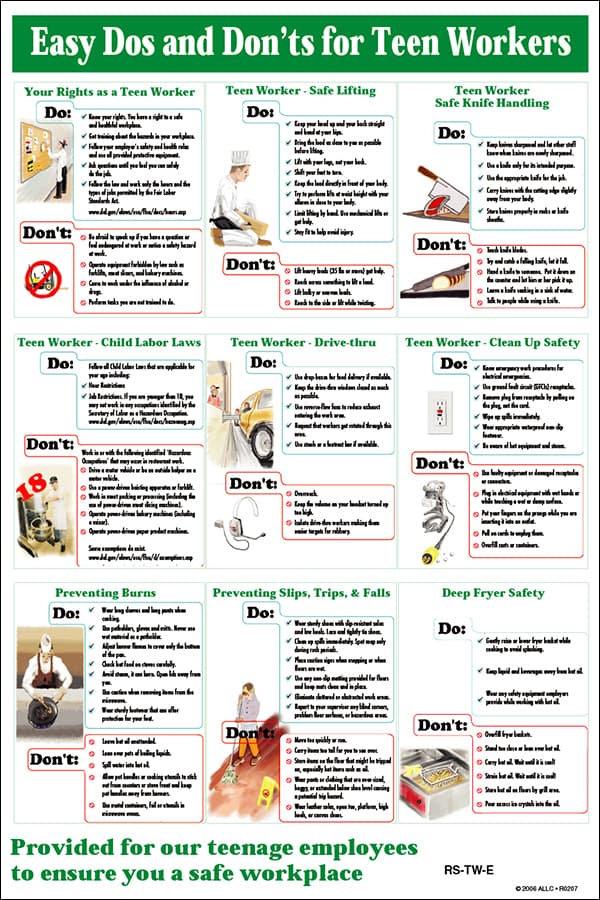
OSHA’s Young Worker Safety in Restaurants eTool provides a concentrated, practical reference for restaurant operators and managers aiming to protect teen and entry-level crew from common on-the-job hazards. The resource lays out typical risks found in quick-service kitchens and offers concrete prevention measures, downloadable posters and training quizzes that can be adapted for local stores.
The guidance identifies core hazards that shape day-to-day operations: cooking and food-prep burns, deep-fat fryer risks, knife and slicer dangers, slips and trips, chemical exposures from cleaning, heat stress in kitchens, drive-thru and delivery safety, and ergonomic strain from repetitive tasks. For each area the eTool suggests controls that are directly actionable for McDonald’s crew teams, including appropriate personal protective equipment, machine guards, separation of duties for minors, and safe scheduling practices to limit fatigue and overexposure to heat or repetitive work.
Beyond technical fixes, the resource stresses workforce-centered practices that affect crew dynamics. It urges training in the worker’s language, consistent first-aid readiness, and clear task assignments so minors are not asked to perform prohibited or high-risk work. For franchisees and shift managers, that translates to auditing job assignments, adjusting who handles fryers or power food-prep equipment, and ensuring new hires—especially teens—receive documented, understandable training before they touch hot oil or slicers.
The eTool also underscores worker rights that matter on the ground: the right to training, the right to a safe workplace, and the ability to file confidential safety complaints. For McDonald’s restaurants, where a large share of the crew is under 18 or newly employed, those protections intersect with company scheduling, supervisory practices, and compliance with federal child-labor rules tied to permissible tasks and hours.
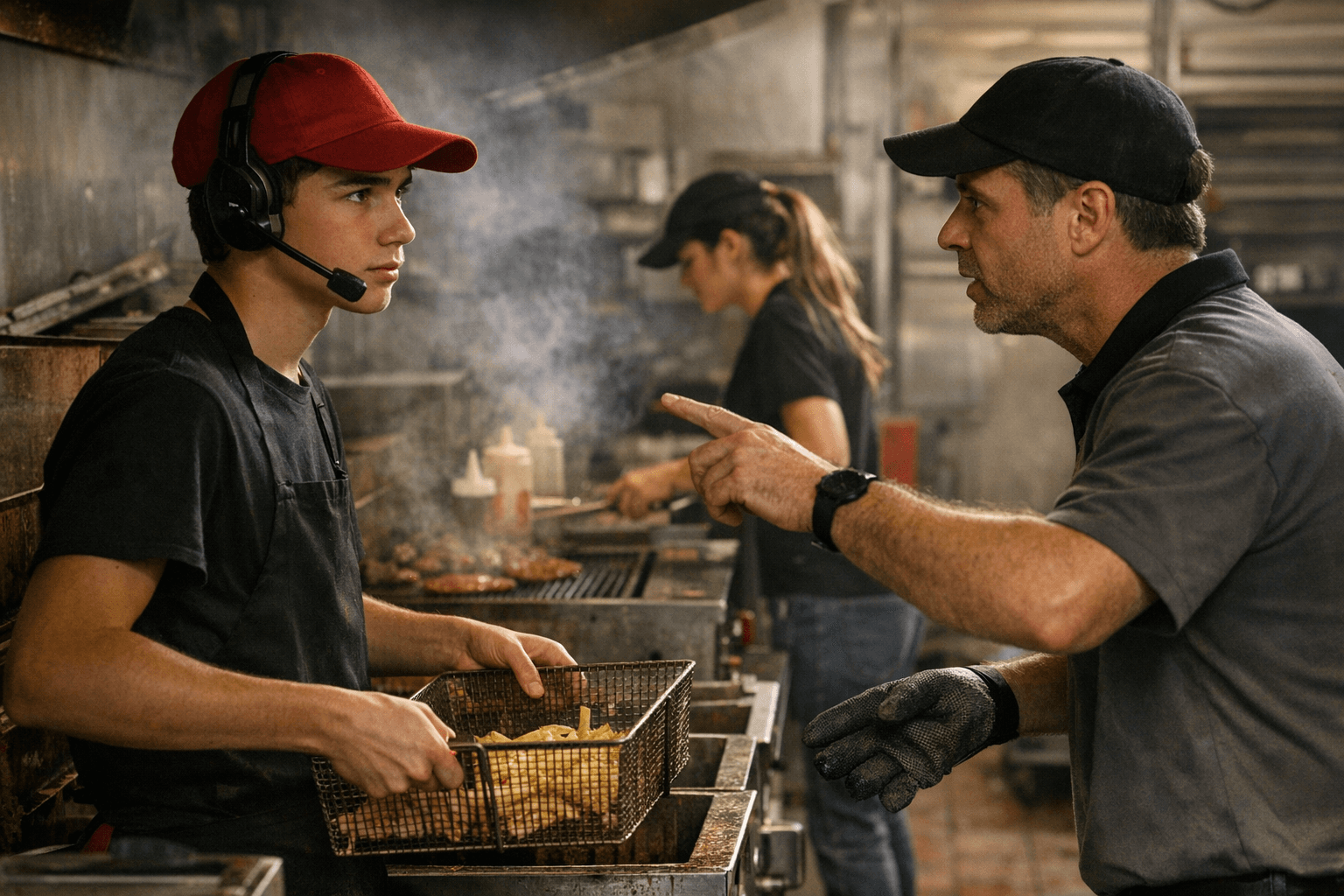
Operationally, adopting the eTool’s recommendations may require short-term investments: retraining shifts, reassigning higher-risk tasks to older employees, installing or verifying machine guards, and providing translated materials. The payoff for managers and franchise owners is lower injury risk, fewer disruptive incidents that can sideline crew, and reduced exposure to regulatory scrutiny and advocacy complaints about prohibited tasks.
For crew members and shift leaders, the eTool is usable as a training and checklist tool to standardize safety briefings, post clear posters in crew areas, and run quick quizzes during onboarding. As restaurants balance speed and safety, the guidance serves as a practical playbook to keep young workers on shift and out of harm’s way. Implementing its steps now can cut injuries, protect teen crew, and smooth operations as regulators and worker advocates continue to focus on youth safety in fast-food settings.
Sources:
Know something we missed? Have a correction or additional information?
Submit a Tip