OSHA Safety Tool Offers Practical Guidance for Pizza Hut Operations
OSHA’s "Young Worker Safety in Restaurants" eTool provides actionable guidance on common restaurant hazards and employer controls that franchisees and managers can incorporate into onboarding and safety programs. The resource is particularly relevant for protecting younger workers, meeting child-labor and FLSA requirements, and reducing workplace injuries in front-of-house, kitchen, and drive-thru settings.
OSHA’s "Young Worker Safety in Restaurants" eTool offers a practical, area-by-area safety framework that Pizza Hut franchisees, HR teams, and store managers can use to strengthen worker protections and regulatory compliance. The eTool breaks the restaurant into discrete zones—serving areas, kitchen, drive-thru and delivery—and lists the most common hazards for each space, alongside specific employer and worker controls.
The guidance covers a broad set of risks that routinely affect pizza operations, including burns, cuts, slips, trips and falls, strains and sprains, workplace violence, drive-thru safety, and equipment-related dangers. For each hazard the eTool recommends concrete measures: use of non-slip shoes, safe knife handling procedures, machine guarding for slicers and mixers, insulating delivery bags for carryout and delivery safety, and targeted training on safe work practices. It also highlights compliance issues tied to child-labor rules and FLSA restrictions, a critical concern for franchises that employ younger staff.
Beyond task-level recommendations, the eTool points managers to the OSHA standards to follow and supplies links to additional resources such as state-plan differences and frequently cited standards. That layered approach makes the resource suitable for inclusion in onboarding, shift-level briefings, and ongoing safety training modules. For franchise operators working across multiple states, the state-plan guidance helps align store-level policies with local enforcement priorities.
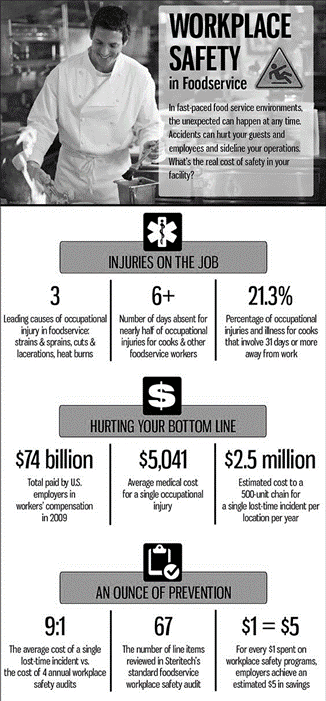
The practical implications for Pizza Hut workers are direct. Implementing the eTool’s controls can reduce on-the-job injuries, cut down lost-time incidents, and improve staff confidence in safety practices—factors that influence retention and scheduling. For managers, adopting the resource supports a documented safety program that can lessen the risk of citations and streamline training for high-turnover roles. Drive-thru and delivery guidance can inform staffing decisions, protective equipment purchases, and route or pickup protocols that mitigate exposure to traffic and weather hazards.

Adoption will require action at the store and franchise level: integrating the eTool’s topics into orientation checklists, scheduling routine refresher training, performing area-specific hazard assessments, and ensuring equipment safeguards and personal protective items are available. For multiunit operators and HR departments, the eTool serves as an authoritative template to tailor corporate safety policies to store realities while remaining mindful of state-specific labor rules.
For Pizza Hut locations seeking to strengthen safety practices, OSHA’s eTool provides a ready-made, standards-linked playbook that can be adapted into practical, day-to-day procedures to protect workers and support compliance.
Sources:
Know something we missed? Have a correction or additional information?
Submit a Tip