Over 500 Arrested at Trafalgar Square Vigil Backing Banned Palestine Action
523 people were arrested at a Trafalgar Square vigil on Saturday, including Massive Attack's Robert Del Naja, defying a Palestine Action ban a court has already ruled unlawful.
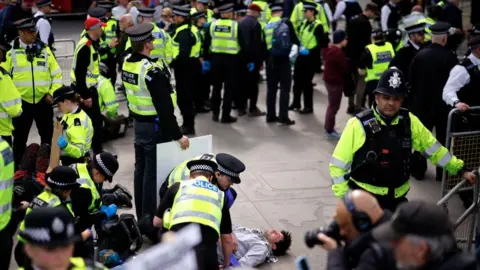
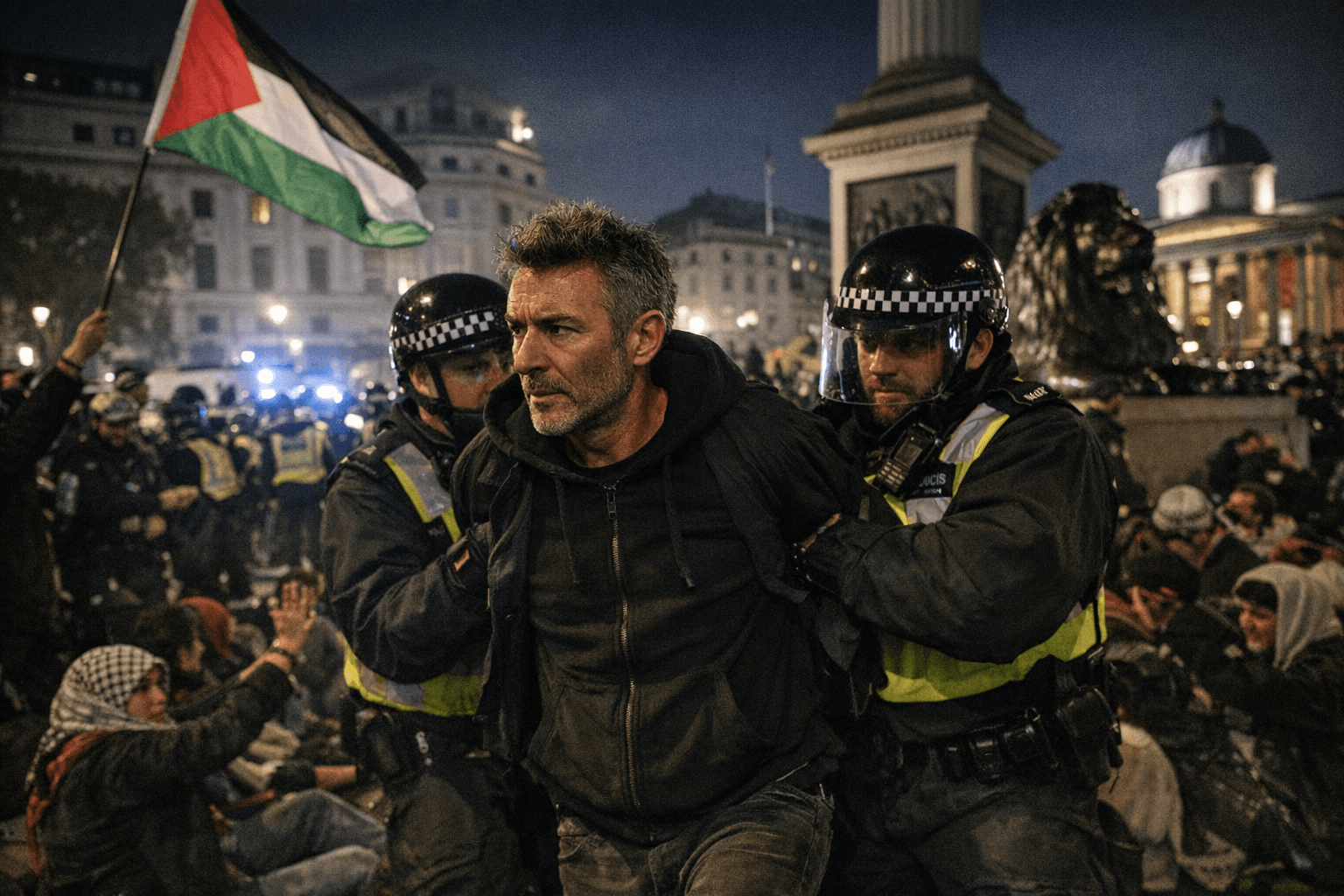
523 people were arrested in Trafalgar Square on Saturday as more than 1,000 gathered for a mass vigil in open defiance of the UK government's ban on Palestine Action, a group whose proscription the High Court ruled unlawful just two months ago. Among those detained was Robert Del Naja, the musician from Massive Attack, who was physically removed from the square after sitting among protesters holding a cardboard sign reading: "I oppose genocide. I support Palestine Action."
The Metropolitan Police confirmed the arrests, which spanned demonstrators aged 18 to 87, with some carried away by officers holding them at their ankles. All 523 were detained under Section 12 of the Terrorism Act 2000 for showing support for a proscribed organisation. The demonstration, named "Everyone Day" and organised by campaign group Defend Our Juries, saw participants hold the same seven-word phrase that has become the central flashpoint of the ban's enforcement since it took effect last summer.
Palestine Action was proscribed as a terrorist organisation on 5 July 2025 by Home Secretary Shabana Mahmood, placing it in the same legal category as al-Qaeda and Hezbollah. The move was triggered by a June 2025 break-in at RAF Brize Norton in Oxfordshire, Britain's largest airbase, in which activists used electric scooters to breach security before vandalising two military aircraft with red paint, causing an estimated £7 million in damage. Since the ban took effect, membership of or support for the group has carried a maximum prison sentence of 14 years. Between July and the end of November 2025 alone, at least 2,545 people had been arrested under it.
The legal backdrop to Saturday's protest is extraordinary. On 13 February 2026, the High Court ruled the proscription was unlawful, following a judicial review challenge brought by Palestine Action co-founder Huda Ammori at the Royal Courts of Justice. Despite that ruling, the ban remained in place while Mahmood was granted permission to appeal. Law firm Hodge Jones & Allen publicly argued that arrests at Saturday's event were themselves therefore unlawful.
Criticism of the ban has accumulated from multiple directions. UN High Commissioner for Human Rights Volker Türk described the proscription as a "disturbing" misuse of counter-terrorism legislation, warning it imposed an impermissible restriction on freedom of expression, peaceful assembly, and association, in violation of the UK's obligations under international human rights law. Amnesty International, Liberty, and the Trades Union Congress have all opposed the ban publicly. Reporting by Declassified UK journalist Matt Kennard revealed that senior figures within MI6 were similarly opposed.
Defend Our Juries framed Saturday's vigil as a direct challenge to what it called the government's "cat and mouse" approach to mass arrests, asserting the resistance to the ban was "stronger than ever." Saturday's demonstration, one of the largest single-event mass arrests in modern UK protest history, took place against the backdrop of a ban a court has already struck down, a government still pursuing appeal, and a growing coalition of institutions questioning whether the proscription should ever have been imposed.
This article was produced by Prism’s automated news system from verified source data, official records, and press releases, then run through automated quality and moderation checks before publishing. The system is built and supervised by the people who set the standards it runs under. Read our full AI policy.
Did this article answer your question?

